An alternative to restoration
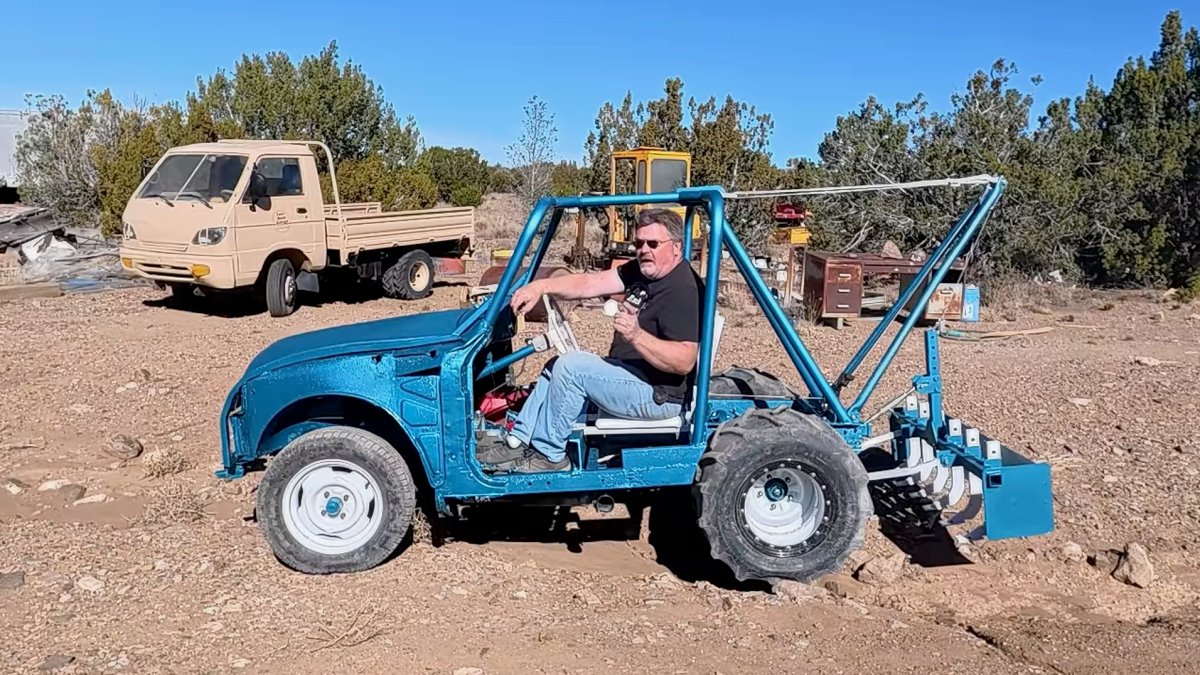
Not every old car can, or should, return to factory condition. The latest project from the YouTube channel Low-Buck Garage makes that case with a 1950s Hillman Husky that had been abandoned in the woods. Rather than pursue a conventional restoration, the builder has turned the battered British wagon into a functional doodlebug tractor.
The conversion gives a practical purpose to a vehicle described as too far gone for a traditional restoration to make sense. It also connects an unusual one-off machine to a much older American tradition: repurposing obsolete or damaged cars as tractors and utility machines.
The project is not simply an exercise in making a strange-looking vehicle. The rebuilt Husky is intended to work. Its new life follows decades of changes that had already taken it far from the form in which it left the factory.
What is a doodlebug tractor?
Doodlebugs emerged during the Great Depression and World War II, when money, new machinery and materials could all be scarce. Farmers and mechanics adapted available automobiles into agricultural equipment, often using Ford Model Ts as a starting point. The result was a homebuilt tractor tailored to whatever parts, skills and needs were available locally.
That history makes the category less about a fixed design than about an approach. A doodlebug could be assembled from a car chassis, truck components, industrial hardware and improvised solutions. The purpose was to produce useful low-speed pulling power from equipment that might otherwise have been scrapped.
The Hillman conversion follows the same spirit, even though its donor car came from a later era. The Husky itself was a small three-door wagon built from the mid-1950s into the mid-1960s by Hillman, a Rootes Group brand later acquired by Chrysler. In the United States, the model is an uncommon sight, and the limited availability of parts and specialist knowledge would make a faithful restoration especially difficult.

A machine with an unusual past
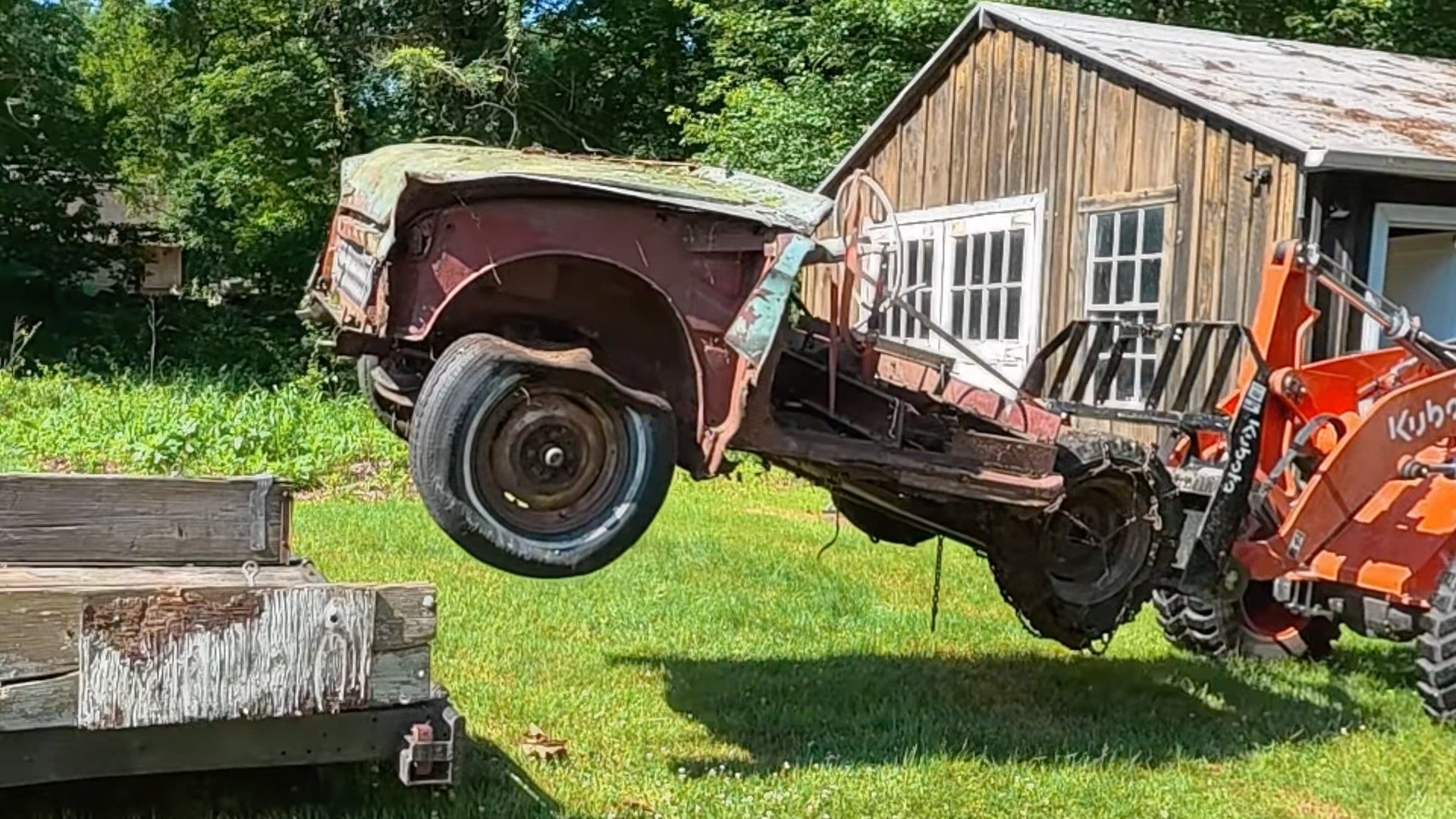
This Husky was not a complete, original survivor awaiting cosmetic attention. In 1967, it was converted into a log skidder, a compact tractor-like machine used to pull logs along the ground. That earlier transformation removed much of the bodywork, cut the car in half and replaced its rear end with one from an industrial tractor.
The industrial rear assembly brought with it a 17:1 worm-gear rear end and solid tires. Those were positioned behind conventional steel wheels and pneumatic tires. By the time the vehicle was recovered from the woods, it had a seized engine, a rotted frame and no working brakes. Its condition illustrates why preservation decisions are not always a simple choice between restoration and disposal.
For an enthusiast, a rare car can have historical appeal even when it is incomplete. But rarity alone does not create a viable restoration path. The cost, missing components, structural deterioration and lack of support can overwhelm a project. A conversion can preserve some of the machine’s mechanical story while acknowledging the life it has actually lived.
Utility over originality
The finished doodlebug does not resemble a standard Hillman Husky, and it is not meant to. The project embraces the altered vehicle’s role as a work tool. That distinction matters because the Husky had already been fundamentally changed decades earlier; treating it as an untouched classic would overlook that history.
There is also a wider lesson in the build. The decision to reuse a vehicle does not always mean returning it to showroom specification. In some cases, the most durable form of preservation is a new job. A machine that can perform useful work is more likely to be maintained than one left waiting indefinitely for an expensive restoration.
This is particularly relevant for cars with weak parts support, severe corrosion or extensive past modifications. Those factors do not erase their value, but they can change what a realistic future looks like. The Husky’s value in this project lies in its availability as a platform and in the unusual lineage that led it from small British wagon to log skidder and then to doodlebug tractor.
A continuation of hands-on engineering
The project also highlights the appeal of practical, small-scale engineering. Doodlebugs historically grew from necessity, but modern builds can preserve the same problem-solving mindset: assess the material at hand, identify what can be saved and make a machine suited to a real task.
That does not make every neglected car a candidate for radical modification. Originality, rarity, condition and cultural significance still matter. But the Hillman Husky demonstrates that there can be a meaningful middle ground between a show-quality restoration and the scrapyard.
For this particular vehicle, a second working life may be the most fitting outcome. It retains the resourceful character that defined doodlebug tractors in the first place, while giving an abandoned and heavily altered car a reason to keep moving.
This article is based on reporting by The Drive. Read the original article.
Originally published on thedrive.com