A big-block reputation built on more than power
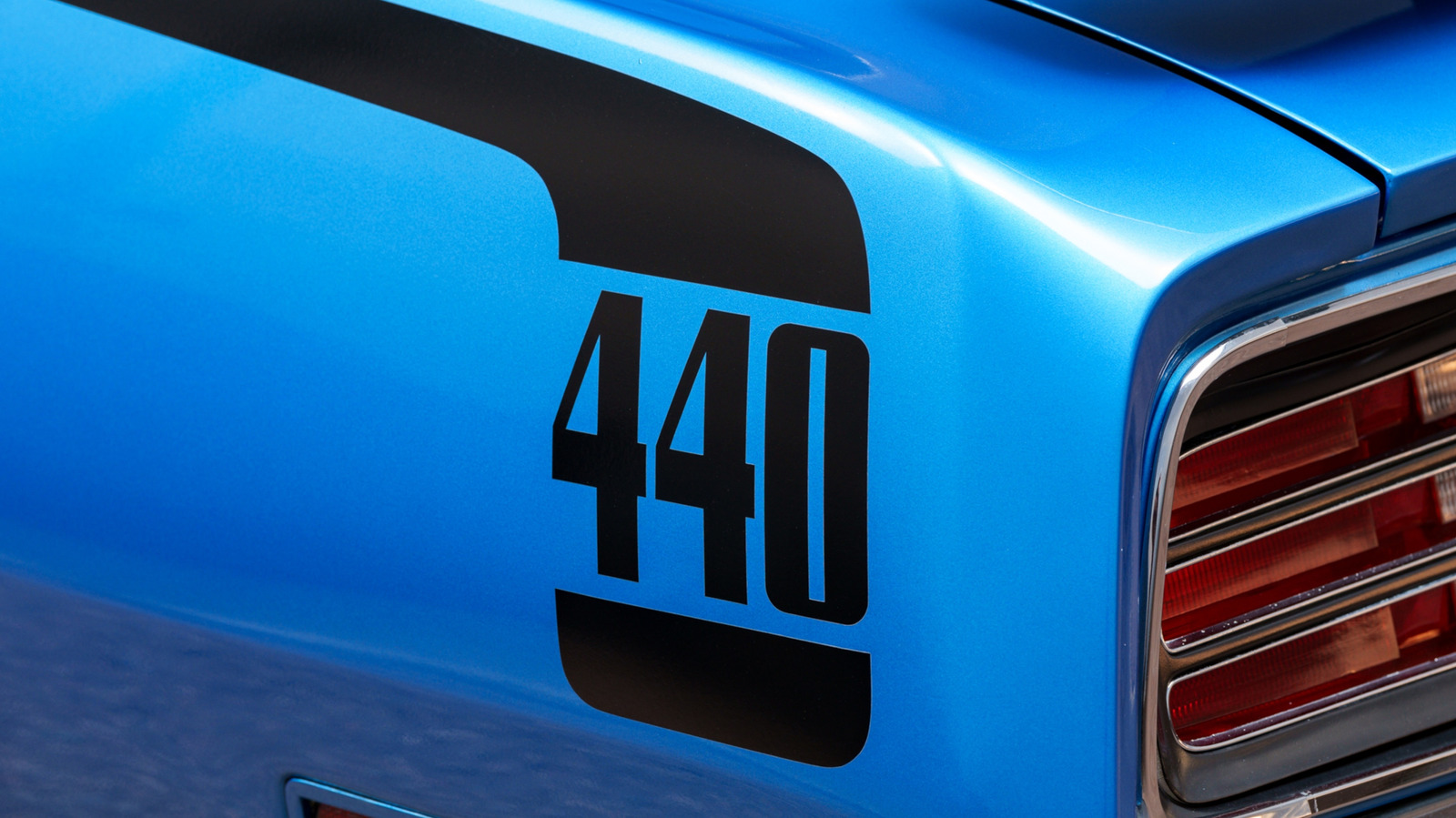
Chrysler’s 440 cubic-inch V8 is remembered as one of the defining engines of the American muscle-car era, but its appeal was not limited to straight-line performance. The engine developed a reputation for being durable, comparatively straightforward to repair and useful across more than one kind of Chrysler vehicle.
Introduced in 1966, the 440 arrived during an era in which Detroit manufacturers competed with ever-larger engines. By 1970 it shared the big-block landscape with engines such as Buick’s 455 and Ford’s 429. Chrysler’s design, however, paired large displacement with a set of engineering and ownership characteristics that helped the 440 remain notable long after the muscle-car era ended.
Production continued until 1978, and Chrysler built more than 750,000 examples over the engine’s lifetime. That broad production run reflected the 440’s reach beyond dedicated performance models. Its usefulness in different applications, together with a robust block and relatively simple layout, helped make the engine a familiar choice to owners and mechanics.
The raised-block RB architecture
At the foundation of the 440 was Chrysler’s RB, or raised-block, engine architecture. The RB design evolved from the company’s earlier B-block layout. Its deck height measured 10.725 inches, or 0.745 inches taller than the B-block deck, a distinction that gave the family its raised-block name.
Mopar enthusiasts also know these engines as wedge engines because they use wedge-shaped combustion chambers. In the case of the 440, the block itself became a major part of the engine’s durability story. The design incorporated ribs intended to stiffen the block and improve its ability to withstand torsional stress.
There is an important production-year distinction. Chrysler began adding this reinforcement in 1968, meaning earlier 440 blocks are described as somewhat more susceptible to cracking under heavy load. That detail matters to restorers and builders because a 1966 or 1967 engine should not automatically be treated as structurally identical to a later 440.
The reinforced later blocks also contributed to the engine’s reputation among modifiers. The source notes that some owners report outputs above 700 horsepower from modified 440 blocks. That is not a factory rating, and it depends on the specific build and condition of the engine, but it illustrates why the block is regarded as capable of handling substantial additional power.

Simple hardware, practical ownership
Durability is only one part of reliability in real-world ownership. An engine also needs to be understandable and serviceable. The 440 benefited from a relatively simple design, particularly when compared with Chrysler’s contemporary 426 Hemi.
The 426 Hemi required Hemi-specific parts for repairs and needed more frequent valvetrain adjustment. The source describes a 440 overhaul as costing about half as much as an overhaul of a 426 Hemi. That difference helped make the 440 a more approachable proposition for owners who wanted large-displacement performance without the expense and specialized maintenance associated with the Hemi.
Mechanical simplicity does not mean an engine needs no care. Age, prior modifications and the quality of replacement parts still matter greatly for a classic powertrain. But fewer specialized components and less demanding routine adjustment can reduce the barriers to keeping an older engine running.
Low-rev torque as part of the formula
The 440’s character also supported its durable image. Rather than depending on extremely high engine speeds, it made substantial torque at low revs. The engine produced as much as 480 pound-feet of peak torque at 2,800 rpm, according to the source.
That broad, low-end pulling power suited an engine used in a range of Chrysler products. It could deliver strong acceleration without requiring the driver to keep the engine near a high redline. A lower rev limit and low-rpm torque are not a guarantee of long life, but they fit the 440’s general emphasis on large displacement and forceful, accessible output.
This distinction also helps explain why the 440’s legacy differs from that of the more exotic 426 Hemi. The Hemi remains an iconic performance engine, while the 440 built much of its standing on a combination of power, availability, durability and relative ease of ownership.
What the 440’s legacy shows
The Chrysler 440 illustrates how long-term reputation is shaped by a whole package rather than a single specification. Its raised-deck RB design, later block reinforcement, low-rev torque and straightforward service requirements all contributed to its standing among classic American V8s.
For collectors and enthusiasts, the engine’s history also comes with useful caveats. Not all 440s share the same block details, and pre-1968 examples warrant particular attention when heavy use or high-output modifications are planned. Yet the engine’s large production run and broad application base mean that its reputation was earned through decades of practical use, not merely through a short-lived performance halo.
In an age when muscle-car engines are often judged by peak horsepower, the 440 remains a reminder that enduring appeal can come from robust engineering and maintainability as much as outright output.
This article is based on reporting by Jalopnik. Read the original article.
Originally published on jalopnik.com