Europe’s premium carmakers are changing course on automated driving
BMW and Mercedes-Benz are stepping back from broader deployment of eyes-off Level 3 automated-driving systems in Europe, according to Automotive News, and are instead focusing on less advanced driver-assistance technology that competes more directly with Tesla’s approach. The move marks a notable shift in strategy for two manufacturers that had been among the most visible supporters of Level 3 systems in the premium market.
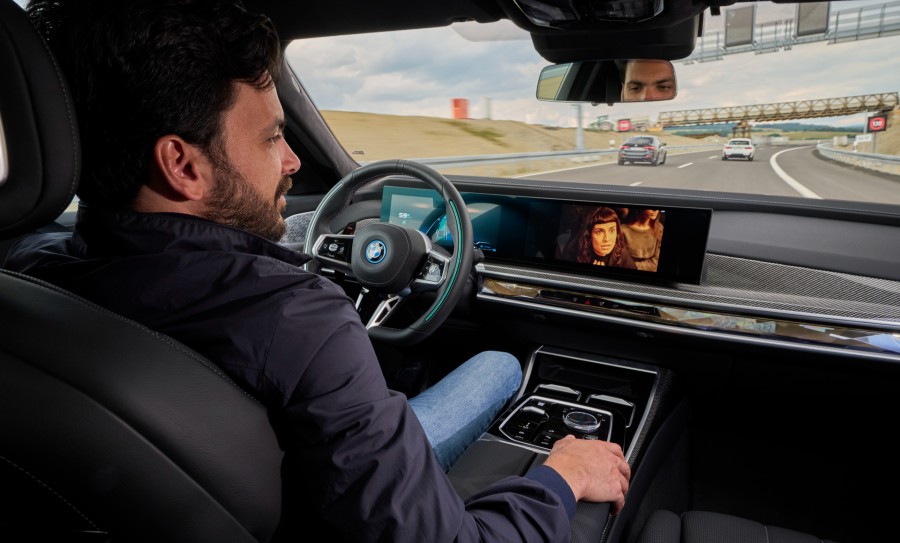
The change matters because Level 3 has long been presented as an important milestone in the road from assisted driving to higher automation. In limited situations, such as traffic jams, BMW’s Personal Pilot Level 3 package allows the driver to do other things rather than continuously supervise the vehicle. That feature set is meaningfully different from more common driver-assistance offerings, which still require the driver to remain engaged and ready to take control.
Now, however, the economics and competitive logic appear to be changing. Rather than expanding that Level 3 capability across key products, BMW and Mercedes are pausing and redirecting effort toward systems that are less advanced in regulatory terms but more directly comparable to Tesla-style supervised automation. That suggests a recalibration around what can be scaled, marketed, and adopted more broadly in the near term.
What the reported pullback actually signals
The clearest immediate detail is product level. Automotive News reports that BMW’s Personal Pilot Level 3 package will not be available on the updated 7 Series. That is a concrete sign that the company is not simply slowing promotion of the technology; it is withholding the feature from a flagship model refresh where it might otherwise have been expected to appear.
Mercedes is described alongside BMW as pausing rollout in Europe, pointing to a wider industry reassessment rather than a one-off product decision. If two of the best-resourced luxury automakers are reducing emphasis on Level 3 expansion, the message to the rest of the industry is difficult to ignore. Even where the technology works in tightly defined conditions, bringing it to market at scale appears to remain challenging.
The source material does not lay out every operational reason behind the pullback, but the shift itself is meaningful. Carmakers are choosing to compete more directly in the large, commercially active segment of advanced driver assistance rather than keep pushing a narrower eyes-off capability whose practical use cases remain limited. That is not the same as abandoning automation, but it does suggest a sharper focus on systems that can be offered to more customers in more vehicles.
Why Tesla-style competition matters
The comparison to Tesla is central. Tesla’s driver-assistance strategy has shaped consumer expectations around what modern vehicles should be able to do, even though those systems are categorized differently from Level 3. By moving attention toward less advanced assistance technology, BMW and Mercedes appear to be responding to the competitive pressure created by a market where broad feature availability, brand perception, and software iteration can matter as much as regulatory prestige.
That creates a strategic tradeoff. Level 3 can be presented as a technical achievement because it permits eyes-off use in limited conditions. But a less advanced system may still be more commercially attractive if it can be deployed across more nameplates, used more often, and understood more easily by buyers. In effect, automakers may be deciding that a widely marketable driver-assistance stack offers a better return than a narrower autonomous feature reserved for a small slice of scenarios.
This does not mean Level 3 is irrelevant. It remains an important capability milestone and a symbol of engineering progress. But the latest move from BMW and Mercedes suggests that being first or best at a tightly constrained autonomy tier does not automatically translate into the strongest product strategy.
A reminder that technical progress and business priorities are not the same
One lesson from the European pullback is that automotive automation does not advance in a straight line. A company can develop a more capable system and still decide that expanding it is not the best use of resources at a given moment. In this case, BMW and Mercedes are not being portrayed as retreating from software-driven driving features altogether. Instead, they are being described as shifting emphasis toward a different part of the automation spectrum.
That distinction matters for suppliers, regulators, and consumers. For suppliers, it can reshape where development dollars and integration work are concentrated. For regulators, it underscores that approval pathways alone do not guarantee mass adoption. For drivers, it may mean that the most visible innovations in the next few years come not from broader availability of eyes-off functionality, but from increasingly capable supervised assistance systems.
The decision also shows how flagship technologies can run into the reality of platform planning. If BMW is excluding its Personal Pilot Level 3 package from the updated 7 Series, even a premium halo product does not automatically justify continued rollout. Automakers ultimately have to decide which technologies deserve engineering attention, validation resources, and customer education efforts across a portfolio.
What to watch next
The next phase of this story will depend on whether the pause remains temporary or evolves into a longer-term strategic reset. What is clear from the current reporting is that Europe’s Level 3 narrative has lost some momentum at the top end of the market. BMW and Mercedes are still investing in automated-driving capability, but they are choosing to compete where customer reach and market relevance may be greater.
If that approach spreads, the industry could spend the next stretch refining advanced driver assistance rather than accelerating widespread Level 3 availability. That would not end the autonomy race. It would simply redefine the near-term battlefield around systems that promise strong convenience and competitive parity without the narrower operational constraints of eyes-off automation.
For now, the reported pause by BMW and Mercedes stands as an important signal: in automotive technology, the most advanced option is not always the one companies decide to scale first.
This article is based on reporting by Automotive News. Read the original article.
Originally published on autonews.com