A second volume for one of racing’s longest careers
A.J. Foyt’s career was too large to fit comfortably into one book, and that is now becoming literal. Publisher Octane Press is taking pre-orders for a second volume of a biography covering the life and career of the American racing legend, with publication scheduled for July.
The new volume follows a first installment that, according to the supplied source text, ran to 656 pages. That scale says something about the subject before a reader even opens the cover. Foyt’s name sits at the center of several eras of American racing, and his resume crosses series and disciplines in a way that remains difficult to match.
Why Foyt still stands apart
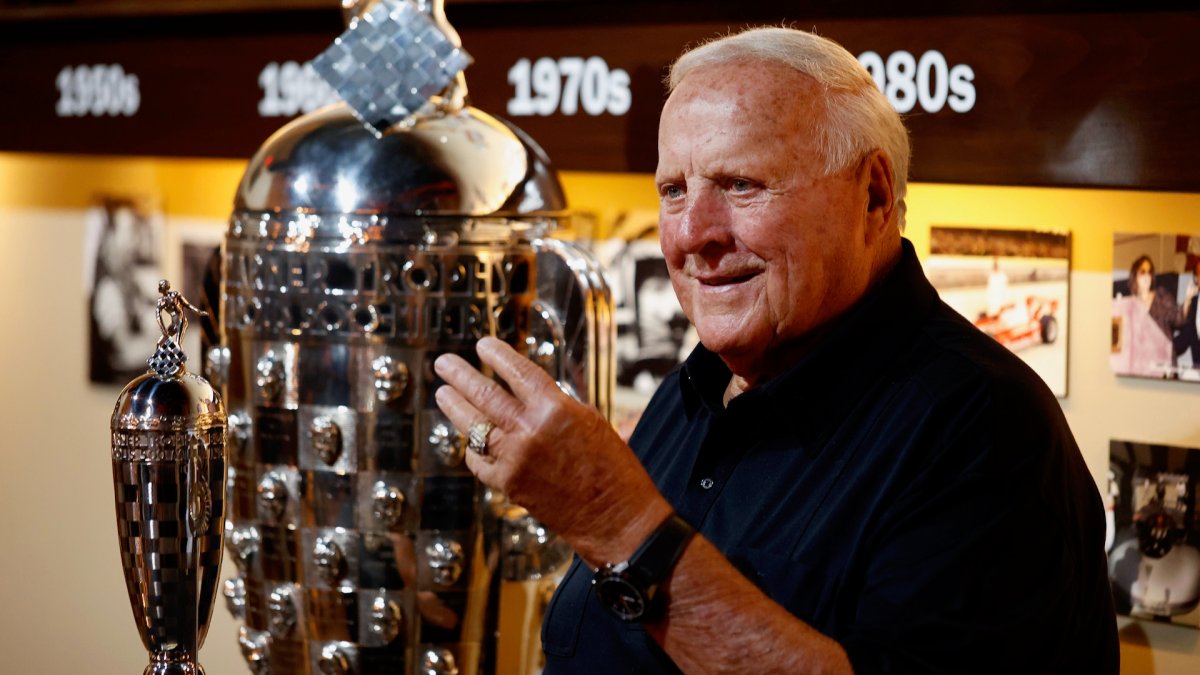
Foyt is best known as the first driver to win the Indianapolis 500 four times, a mark that still represents the event’s ceiling. The source text notes that only three other members have joined that club and that no driver has won the race more than four times. In practical terms, that means Foyt remains tied to the outer edge of what the sport has historically allowed any one competitor to achieve at Indianapolis.
His distinction goes well beyond Indy. The supplied material says he remains the only driver to win the Indianapolis 500, the Daytona 500, and the 24 Hours of Le Mans. That combination is a concise summary of why Foyt’s legacy continues to carry unusual weight: it spans open-wheel racing, stock car competition, and international endurance racing. Most drivers are remembered for greatness in a lane. Foyt is remembered for crossing several.
The source text also points to a closed-course speed record of 257.123 miles per hour set in 1987 in an Oldsmobile Aerotech, a record that still stands. Even detached from the rest of his career, that is the kind of number that signals a driver comfortable at the edge of very different machines and formats.
The focus of the new book
Author Art Garner’s second volume reportedly begins in 1978, the year after Foyt won his last Indianapolis 500. That framing matters because sports biographies often tilt toward peak achievement and compress the more complicated years that follow. In Foyt’s case, those later chapters are not just an epilogue. They are part of the reason his story keeps drawing readers.
The supplied source text says Foyt continued driving competitively into the early 1990s. At age 58, he entered the 1993 Indianapolis 500, then chose to retire immediately after Robby Gordon, who was driving a Foyt-owned car, crashed during practice. The detail is revealing because it captures a pivot that many elite competitors struggle to make: the transition from central actor to owner, manager, or guardian of a team’s future.
Even then, retirement did not become complete disappearance. The source says he returned to Indianapolis for NASCAR’s 1994 Brickyard 400 and attempted, unsuccessfully, to qualify again over the following two years. That persistence is part of the Foyt mythos, but it also reflects an older era of racing in which long careers were sometimes possible in ways that feel rarer today.
A window into changing motorsport eras
The biography’s release is also a reminder that Foyt’s career bridged enormous changes in motorsport. His longevity extended through periods with very different safety standards, technical environments, and ideas about what a driver could or should do across categories. The source text explicitly contrasts that durability with the present day, noting that modern examples of older drivers still competing are treated as remarkable, while earlier eras sometimes normalized longer careers, provided drivers survived them.
That observation helps explain why a second volume is not just more of the same. Foyt’s later years open onto the sport’s institutional changes as much as his personal story. A driver who stayed active across decades becomes a useful lens for understanding how racing itself changed, from the risks competitors accepted to the kinds of roles they occupied after their winning seasons slowed.

Why the publishing news matters
On one level, this is a book announcement. On another, it reflects a continuing appetite for serious motorsport history in a market where such projects once might have been more niche, more expensive, and harder to find. The source text notes that the second volume is currently available to pre-order at a discount ahead of its regular hardcover release price.
That commercial detail is minor compared with the sporting legacy, but it still points to something broader: racing history remains a viable publishing subject when the figure at the center is large enough. Foyt is one of the few names for whom multi-volume treatment feels less indulgent than necessary.
For readers, the attraction is obvious. A career that includes four Indianapolis 500 victories, crossover success at Daytona and Le Mans, speed records, late-career returns, and a handoff into team ownership offers more than nostalgia. It offers a record of a competitor whose story intersects with the evolution of modern motorsport itself.
This article is based on reporting by The Drive. Read the original article.
Originally published on thedrive.com