Exoplanet science is moving from counting worlds to characterizing them
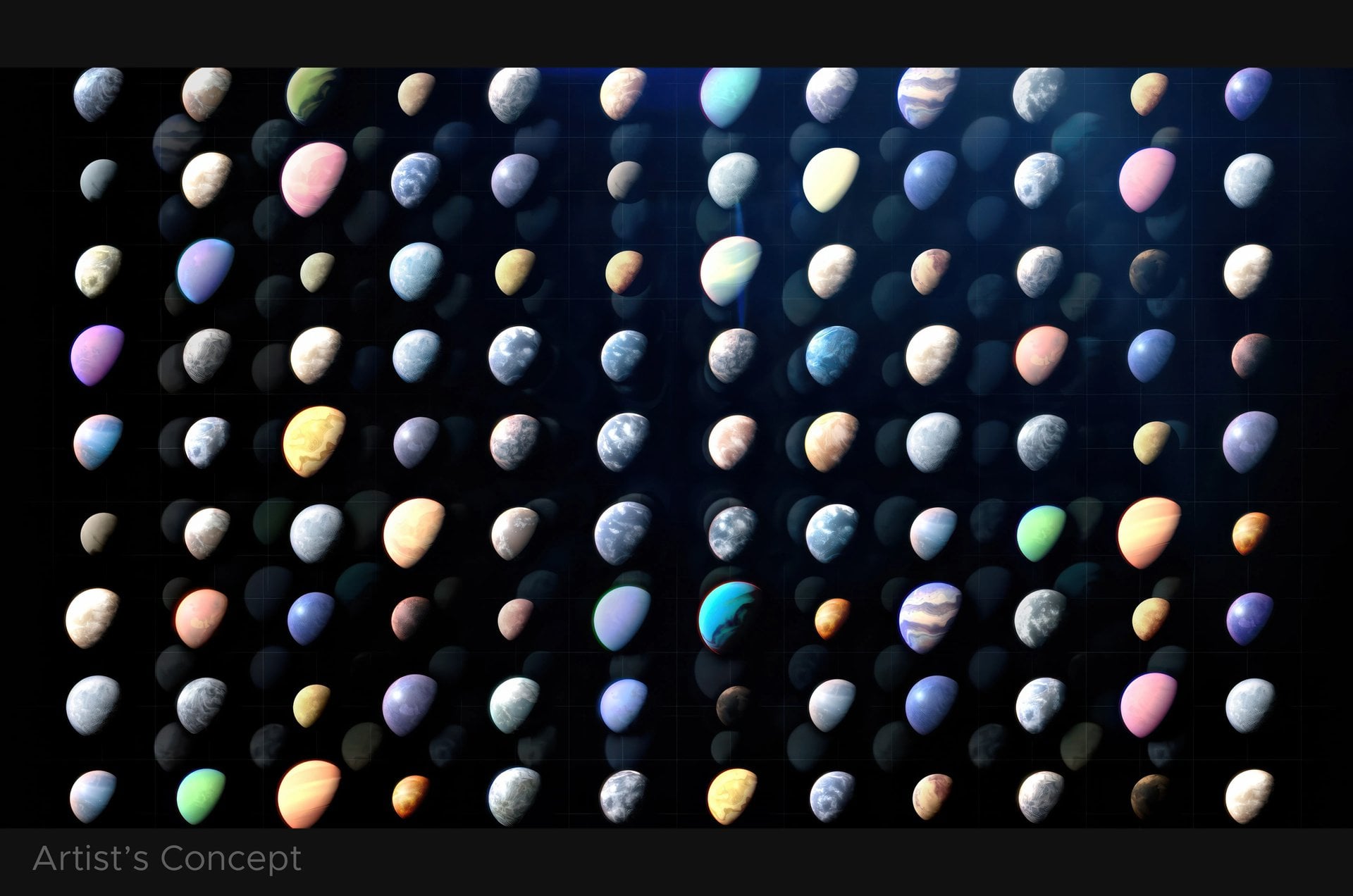
The era of exoplanet discovery is no longer defined simply by whether astronomers can find planets around other stars. They can, and in large numbers. As of the figures cited in the source report, 6,273 exoplanets have been confirmed, with nearly 20,000 more candidates awaiting confirmation. The harder frontier now is characterization: determining what these worlds are like and, in the most ambitious cases, whether any resemble Earth closely enough to be considered potentially habitable.
That transition changes the technical challenge. Large gas giants and many super-Earths have already proven easier to detect than true Earth analogs. Rocky planets orbiting Sun-like stars are smaller, their signals are weaker, and their host stars generate noise that can easily mask the subtle effects astronomers are trying to measure. A new facility at the European Southern Observatory’s Paranal site in Chile is designed to attack that problem directly.
The Paranal solar ESPRESSO Telescope, or PoET, has made its first observations. Its job is unusual but strategically important: collect sunlight and feed it into the ESPRESSO spectrograph on the Very Large Telescope so researchers can better understand the kinds of stellar noise that interfere with the search for Earth-like exoplanets.
Why the Sun is the right calibration target
At first glance, using a telescope to observe the Sun in support of exoplanet research may sound indirect. In practice, it is a precise way to tackle a core limitation in high-resolution spectroscopy. When astronomers search for planets using stellar spectra, they are not only measuring planetary influence. They are also measuring the complex behavior of the star itself.
Stars are not perfectly quiet light sources. Their surfaces are dynamic, with patterns and activity that can create signatures resembling or obscuring those caused by planets. For small rocky planets around G-type main-sequence stars like the Sun, the planetary signal can be so subtle that stellar activity becomes a major obstacle. If scientists want to identify Earth-mass worlds in Earth-like orbits, they need better ways to separate star-driven noise from planet-driven motion.
The Sun is the one star researchers can study in extraordinary detail. By using it as a controlled reference, PoET allows astronomers to observe the exact types of variability that a spectrograph like ESPRESSO must distinguish when it is pointed at more distant stars. In effect, the instrument turns our nearest star into a calibration laboratory for the broader exoplanet hunt.
The instrumentation logic behind PoET
PoET was proposed by an international team led by Nuno C. Santos and colleagues from the Institute of Astrophysics and Space Sciences and the University of Porto, working with researchers from other Portuguese institutions, the University of Geneva, and the European Southern Observatory. The facility channels solar light into ESPRESSO, the high-precision spectrograph installed on ESO’s Very Large Telescope and designed for rocky exoplanet work and highly stable spectroscopic observations.
This matters because exoplanet detection at the precision needed for Earth analogs increasingly depends on incremental gains in stability, calibration, and data analysis. Finding giant planets was a transformative first chapter. Finding smaller, cooler rocky planets around Sun-like stars requires shaving down every source of uncertainty. PoET addresses one of the most stubborn of those sources by helping researchers characterize the star rather than pretending it can be ignored.
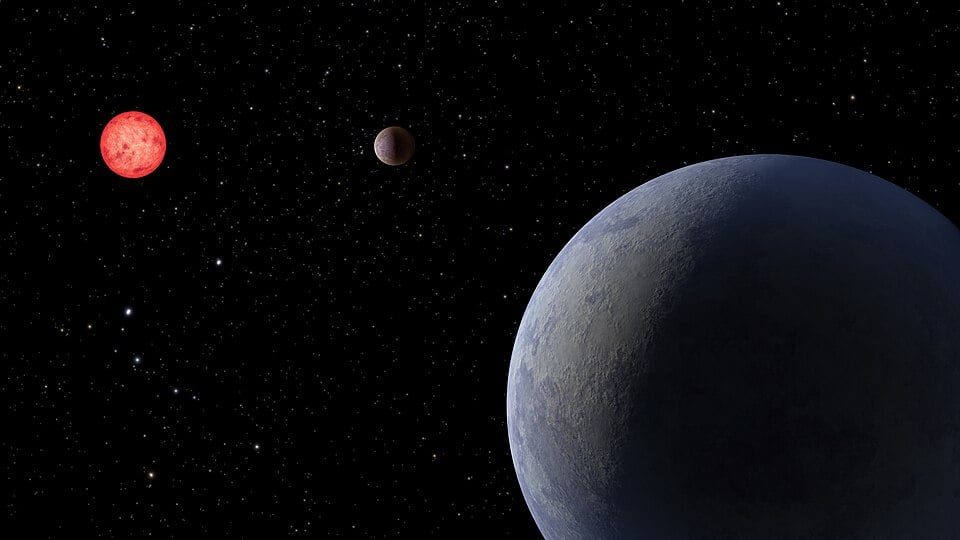
The source article notes that only 223 of the more than 6,000 confirmed exoplanets are terrestrial rocky worlds, and none of those orbit G-type stars like the Sun. Instead, many of the most accessible rocky planets have been found around dimmer M-type red dwarfs, including Proxima b and the TRAPPIST-1 system. Those discoveries are scientifically rich, but they do not fully solve the question many astronomers are chasing: how common are Earth-like planets around Sun-like stars?
Why Sun-like stars remain the harder target
Red-dwarf systems have been fruitful partly because their smaller sizes and lower luminosities can make planetary signals easier to detect. But Sun-like stars pose a tougher observational problem. Earth-like planets around them are relatively small, and their orbits place them in regions where the star’s own variability can dominate the measurement.
That is why PoET’s role could become so valuable. The challenge is not merely building bigger telescopes or more sensitive spectrographs. It is understanding, in high fidelity, what the star is doing to the data. The more precisely astronomers can model solar noise, the better they can recognize similar behavior in other G-type stars and avoid mistaking stellar activity for planetary signatures.
In this sense, PoET is less a planet finder than a planet-enabling instrument. It sharpens the tools and models that other observations depend on. That kind of infrastructure often receives less public attention than a headline-grabbing discovery, but it is exactly what makes the next wave of discoveries possible.
From discovery to habitability science
The maturation of exoplanet science is visible in the priorities behind this project. The field has moved beyond proving that planets are common. Researchers now want to know atmospheric composition, orbital conditions, and whether a world could plausibly support life as we know it. Those questions demand greater observational discipline than the first generation of exoplanet catalogs required.
High-resolution spectroscopy is one of the most promising approaches for both detection and characterization, including work linked to transits and Doppler measurements. But every gain in sensitivity also makes stellar contamination more consequential. Instruments like ESPRESSO can push toward Earth-like precision only if the astrophysical background is understood at comparable depth.
PoET helps close that gap by treating the Sun as a benchmark dataset rather than a familiar backdrop. That is a subtle but powerful step in methodology. Exoplanet science increasingly depends on understanding the ordinary behavior of stars well enough to spot the extraordinary presence of a small rocky world beside them.
What to watch next
The first observations are only the beginning. The value of PoET will depend on how effectively its solar data improve noise models and feed into analyses conducted with ESPRESSO and other high-precision instruments. If that happens, the telescope could play an outsized role in one of astronomy’s hardest pursuits: detecting and characterizing Earth-like planets around stars much like our own.
That would be a meaningful shift. The history of exoplanet discovery has been one of expanding possibility, but not all possibilities are equally accessible. PoET exists because the next targets are the most scientifically compelling and the most technically demanding. Progress now depends on making stars themselves more legible.
In a field crowded with spectacular worlds, that may sound like a modest objective. It is not. Better stellar understanding is one of the clearest paths toward finding the kind of planet the field ultimately cares about most.
This article is based on reporting by Universe Today. Read the original article.

Originally published on universetoday.com