NASA Expands the Science Team Behind Artemis Surface Missions
NASA has selected 10 participating scientists to help plan and support lunar surface science under the Artemis program, adding a new layer of scientific coordination to the agency’s effort to return astronauts to the Moon. The group will help shape work to be performed on the lunar surface, including instrument deployment, observations at the landing site, and collection of rock samples.
The announcement signals an important shift in how Artemis is being framed. While public attention often centers on launch schedules, spacecraft hardware, and the symbolism of renewed human lunar exploration, NASA’s latest move emphasizes something more durable: the creation of a structured science program that treats crewed missions not as isolated demonstrations, but as platforms for sustained field research.
The 10 selected scientists come from universities, research institutes, and NASA itself. According to the supplied NASA source text, the participating scientists are Kristen Bennett of Northern Arizona University; Aleksandra Gawronska of The Catholic University of America; Timothy Glotch of Stony Brook University; Paul Hayne of the University of Colorado Boulder; Erica Jawin of the Smithsonian Institution; Jeannette Luna of Tennessee Technological University; Sabrina Martinez of NASA’s Johnson Space Center; Jamie Molaro of the Planetary Science Institute; Hanna Sizemore of the Planetary Science Institute; and Catherine Weitz of the Planetary Science Institute.
Preparing for Science at the Lunar South Pole
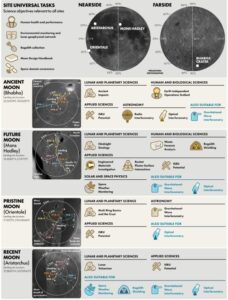
The team’s work will support a science plan focused on the Moon’s south polar region, one of the most strategically and scientifically important destinations in lunar exploration. NASA said the scientists will help support astronauts as they deploy scientific instruments, make observations at the landing site, and collect Moon rocks. These are standard-sounding tasks on paper, but each carries major implications for how Artemis will build knowledge on the surface.
Instrument placement affects what measurements can be taken and for how long. Geological observations at the landing site help determine whether astronauts are reading the terrain correctly and targeting the right samples. Rock collection shapes what material returns to Earth for laboratory analysis and what can be inferred immediately in the field. In practice, these decisions influence the scientific value of the entire mission.
The south pole is particularly compelling because of its difficult lighting conditions, rugged terrain, and potential access to materials that may preserve records of the Moon’s history. NASA’s announcement does not make new claims about specific discoveries, but it makes clear that the agency sees the region as central to both near-term Artemis science and the longer-term goal of learning how to operate sustainably on the Moon.
NASA linked that work directly to future Mars exploration. Joel Kearns, deputy associate administrator for exploration in NASA’s Science Mission Directorate, said the scientists will help ensure crews on the Moon achieve the missions’ science objectives, describing lunar surface exploration as a major step toward sustained operations at the Moon and preparation for human exploration of Mars.

How the New Scientists Fit Into the Artemis Structure
The newly named scientists will join the first Artemis lunar surface science team, led by Noah Petro at NASA’s Goddard Space Flight Center and Padi Boyd at NASA Headquarters. NASA said they will support the inaugural Artemis geology team, which is led by Brett Denevi of the Johns Hopkins University Applied Physics Laboratory.
This layered structure matters because Artemis science is not being organized around a single principal investigator or a narrowly defined experiment. Instead, NASA is building a collaborative framework that combines mission scientists, geology specialists, instrument teams, internal NASA science personnel, and now a wider set of participating researchers. That approach reflects the complexity of crewed planetary fieldwork. Unlike a robotic lander with a tightly scripted sequence, a human mission can adapt in real time, but only if the science architecture behind it is coherent enough to support those decisions.
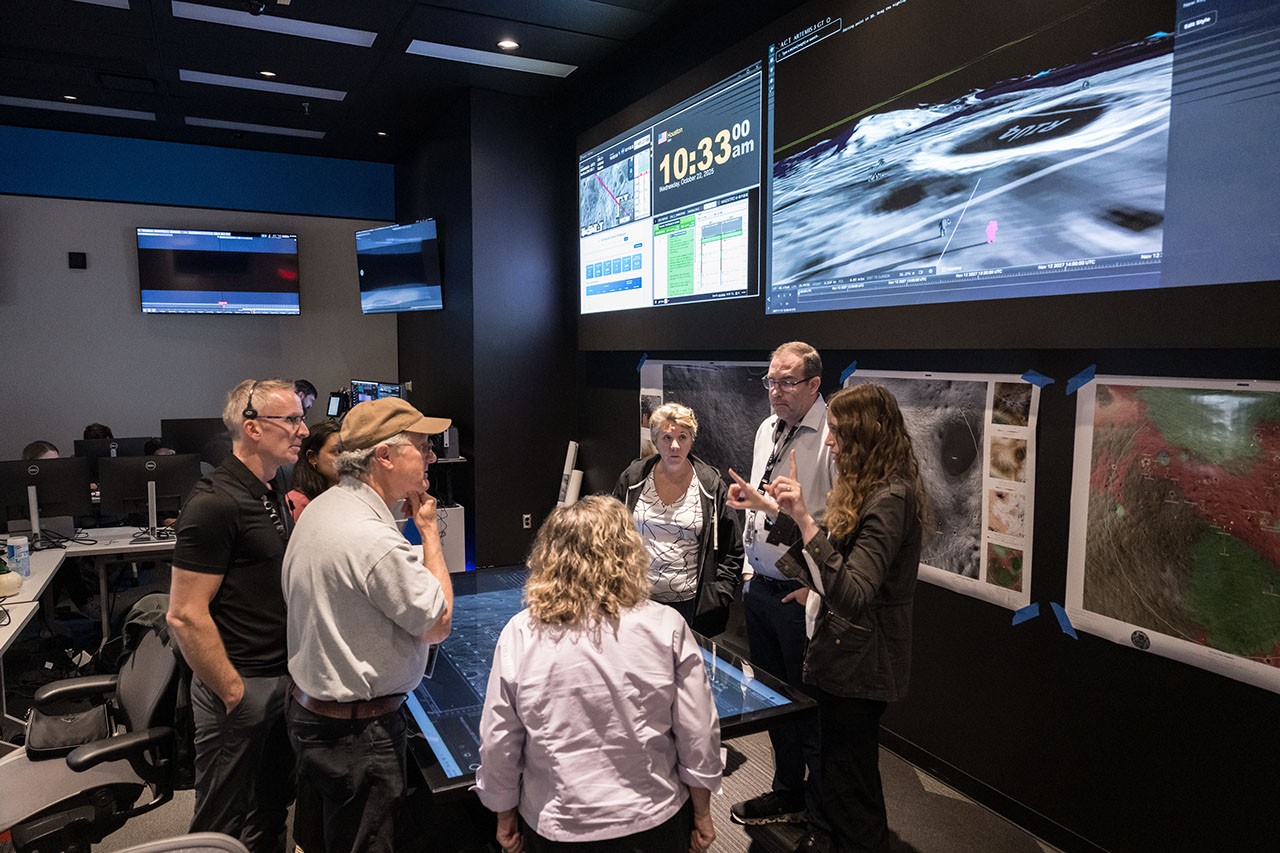
The announcement also hints at the operational intensity of that preparation. NASA referenced mission simulations at Johnson Space Center, where members of the Artemis geology team have already been discussing science objectives. Simulations are crucial because lunar surface operations compress high-stakes scientific decisions into constrained timelines shaped by communications, mobility, terrain, and crew workload. Bringing participating scientists into that process early should improve how objectives are prioritized before astronauts ever reach the surface.
From Symbolic Return to Sustained Lunar Field Science
NASA’s language in the announcement suggests the agency is trying to move beyond the idea of Artemis as simply a return mission. Lakiesha Hawkins, acting deputy associate administrator in NASA’s Exploration Systems Development Mission Directorate, said Artemis is enabling scientific work that can reshape understanding of the Moon and open the door to discoveries not previously possible. She also tied the scientists’ contributions before, during, and after the mission to making the most of every step astronauts take on the lunar surface.
That framing is important. Human lunar exploration is expensive and politically exposed, which means each mission has to justify itself on multiple fronts: technical achievement, geopolitical presence, industrial capability, and scientific return. By expanding the science team now, NASA is strengthening the part of that case that may prove most enduring. Hardware ages, schedules slip, and public attention moves on. Scientific datasets, samples, and field interpretations can continue generating value for decades.
The selection of participating scientists also broadens the institutional base of Artemis science. Researchers from federal institutions, universities, and independent science organizations will help shape the mission from the planning stage. That not only deepens expertise, but also helps distribute ownership of the science agenda across a wider community. In practice, that can improve continuity between mission operations, post-mission analysis, and future surface campaigns.

A Foundation for the Next Phase of Lunar Exploration
The immediate effect of NASA’s decision is organizational, not dramatic. No spacecraft launched with this announcement, no new hardware was unveiled, and no fresh lunar samples arrived. But the selection is still consequential because it reinforces that Artemis is being built as a science program, not only a transportation program.
The south polar missions NASA is planning will ask astronauts to work in one of the Moon’s most challenging and interesting environments. Getting that right depends on more than landing capability. It depends on having the right people define what to observe, what to deploy, what to collect, and how to adapt those choices in the field. That is exactly the layer NASA’s new participating scientists are being brought in to strengthen.
In that sense, the announcement is less about a list of names than about the maturation of Artemis itself. NASA is assembling the scientific infrastructure required to turn short surface stays into a meaningful research campaign. If Artemis succeeds in doing that, the result will be more than another visit to the Moon. It will be the start of a modern lunar field science era built to support long-term exploration, resource understanding, and eventually the harder leap outward to Mars.
This article is based on reporting by science.nasa.gov. Read the original article.
Originally published on science.nasa.gov