Psyche is about to use Mars as a slingshot
NASA’s Psyche spacecraft is nearing a close flyby of Mars scheduled for May 15, a maneuver designed to send the mission onward to its ultimate destination: the metal-rich asteroid 16 Psyche. The encounter is both a navigational milestone and a science opportunity, giving the spacecraft a gravity assist while also letting the mission team test and calibrate instruments against a major planetary target.
Psyche launched on October 13, 2023 aboard a SpaceX Falcon Heavy and is traveling to an unusual world thought to represent the exposed metallic core of a failed protoplanet or an early building block of the solar system. That makes the mission important not only for asteroid science but also for understanding how rocky worlds form and differentiate.
A very close approach
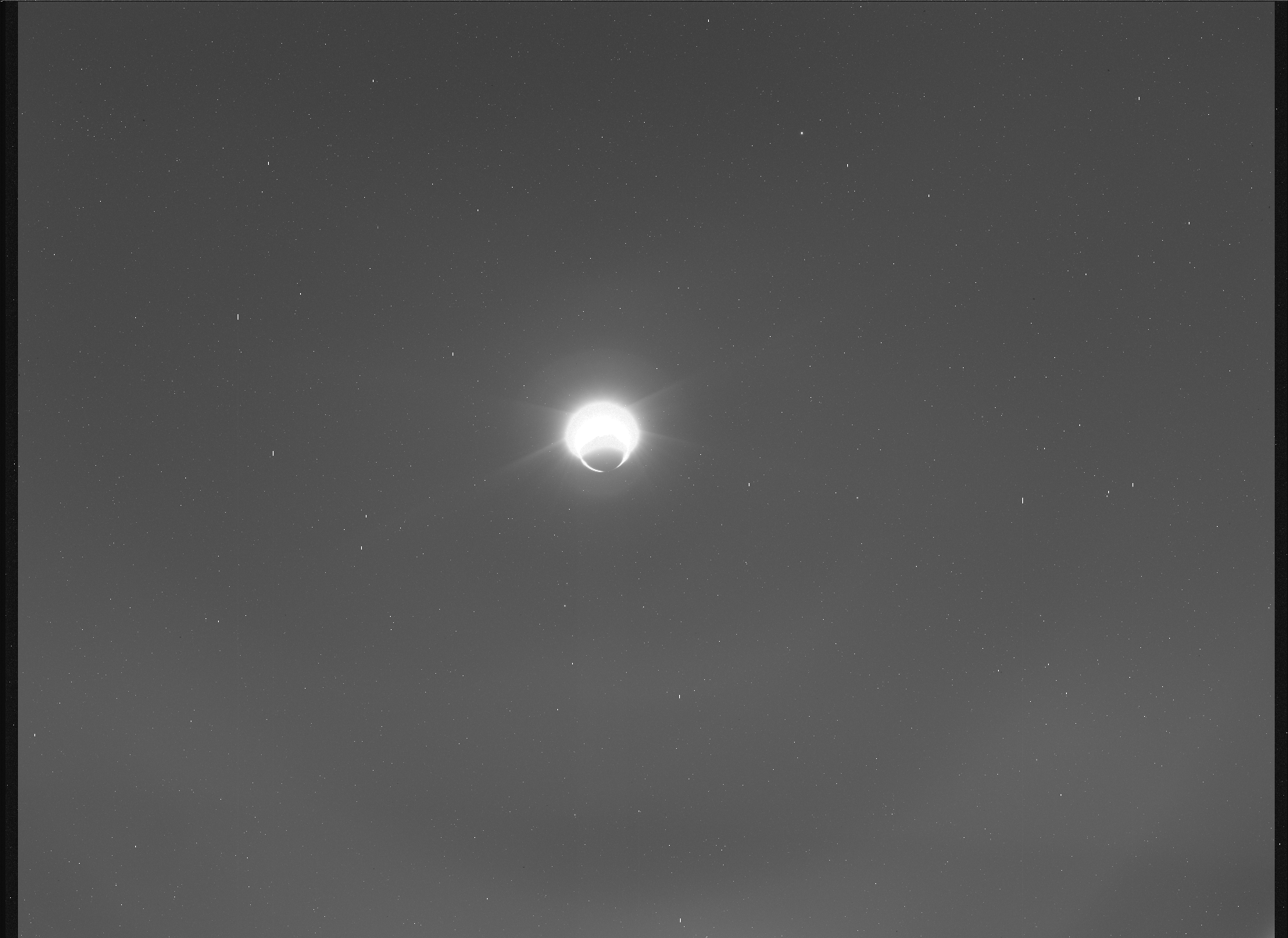
The spacecraft is expected to pass about 4,500 kilometers from Mars, close enough to move inside the orbits of the planet’s two small moons, Phobos and Deimos. Approaching from near the anti-sunward side means Psyche has been seeing the dark side of Mars before closest approach, with the planet growing into a crescent view that is not visible from Earth.
That geometry is one reason the flyby has drawn attention beyond its propulsion value. It offers a perspective on Mars that is visually striking and operationally useful, allowing the mission to gather images under changing lighting conditions before and after the closest pass.
An instrument rehearsal before the main event
Mission engineers plan to use the flyby as a dress rehearsal for the primary science campaign at 16 Psyche. NASA says the spacecraft’s multi-spectral imager will be active throughout the encounter, capturing views of Mars before and after closest approach. The team also intends to use the opportunity to calibrate the mission’s instruments on something far larger and more complex than the small points of light they have observed so far in flight.
That matters because Psyche relies on a suite of instruments that will need to work together precisely once the spacecraft arrives at its target. A Mars flyby provides a real-world systems check under operational conditions, which is more valuable than a purely simulated test.
Electric propulsion, gravity assist
Psyche is also notable for the way it travels. The spacecraft uses solar-electric propulsion fueled by xenon gas, an approach that is highly efficient over long distances but works by delivering gradual acceleration rather than the fast bursts associated with conventional chemical rockets. Gravity assists are therefore especially useful, allowing the spacecraft to borrow momentum from a planet without spending additional propellant.
The Mars encounter gives Psyche exactly that kind of boost, redirecting and accelerating the mission onto the trajectory needed for its eventual arrival at 16 Psyche.

A chance for bonus Mars science
The flyby could produce more than engineering data. The source report notes that the unusual alignment may give Psyche a chance to observe the suspected dusty ring torus around Mars, thought to arise from micrometeoroid impacts on Phobos and Deimos. Even if that remains uncertain, the geometry alone creates a rare observation window for a spacecraft not primarily devoted to Mars science.
Those opportunities are common in interplanetary missions: a navigation requirement turns into a scientific side mission if instruments, lighting and timing line up well enough.
Why this mission stands out
Psyche is one of NASA’s more conceptually intriguing deep-space missions because its destination is so unlike the rocky planets or icy worlds usually highlighted in public imagination. If 16 Psyche really is a metal-rich remnant of early planetary construction, it may offer an indirect way to study processes that are normally hidden deep inside larger worlds.
That is why this week’s Mars flyby matters. It is not just a scenic stop on the way to an asteroid. It is the maneuver that helps turn an ambitious launch into a credible path toward one of the solar system’s strangest and potentially most revealing objects.
This article is based on reporting by Universe Today. Read the original article.
Originally published on universetoday.com