The Ghost Particle That Broke Records
Three years ago, a sprawling underwater detector anchored to the floor of the Mediterranean Sea registered a single event that has since sent ripples through the particle physics community. A lone neutrino, a subatomic particle so elusive it can pass through an entire planet without interacting with a single atom, struck one of the detector's sensors carrying more energy than any neutrino ever previously recorded.
The observation, which has now been thoroughly analyzed and verified by the international collaboration operating the detector, raises profound questions about what astrophysical processes can accelerate these ghostly particles to such extreme energies. The source of the neutrino remains unidentified, adding mystery to one of the most puzzling detections in high-energy astrophysics.
Neutrinos: The Universe's Most Elusive Messengers
Neutrinos are among the most abundant particles in the universe, yet they are extraordinarily difficult to detect. They carry no electric charge and interact with other matter only through the weak nuclear force and gravity, the two feeblest of nature's four fundamental forces. Every second, roughly 100 billion neutrinos from the Sun pass through every square centimeter of your body without leaving a trace.
This ghostly nature makes neutrinos both frustrating and fascinating. Because they travel through matter unimpeded, they can carry information directly from the most extreme environments in the cosmos, the cores of exploding stars, the neighborhoods of supermassive black holes, and the violent collisions of neutron stars. Unlike light, which can be absorbed or scattered by intervening material, neutrinos fly straight from source to detector.

Detecting the Undetectable
The detector that captured the record neutrino is part of a new generation of neutrino telescopes that use enormous volumes of natural water as their detection medium. When a high-energy neutrino does occasionally interact with an atom in the water, it produces a cascade of secondary particles that emit a faint cone of blue light known as Cherenkov radiation. Arrays of sensitive light detectors suspended in the water capture this fleeting flash and reconstruct the energy and direction of the original neutrino.
The Mediterranean detector consists of thousands of optical sensors arranged on vertical strings anchored to the seabed at depths of several kilometers. The enormous depth serves a dual purpose: it provides a massive volume of water for neutrinos to interact with, and the overlying water shields the sensors from the constant bombardment of cosmic ray particles.
Even with these massive detectors, neutrino observations are rare events. The detector may record only a handful of high-energy cosmic neutrinos per year. The record-breaking event stood out immediately because its energy was orders of magnitude higher than the typical detection.
An Energy That Demands Explanation
The energy carried by the detected neutrino was staggering by particle physics standards. The measurement places it well above the previous record held by IceCube, the cubic-kilometer neutrino detector buried in the Antarctic ice sheet. The neutrino carried roughly the kinetic energy of a professional tennis serve concentrated into a single subatomic particle.
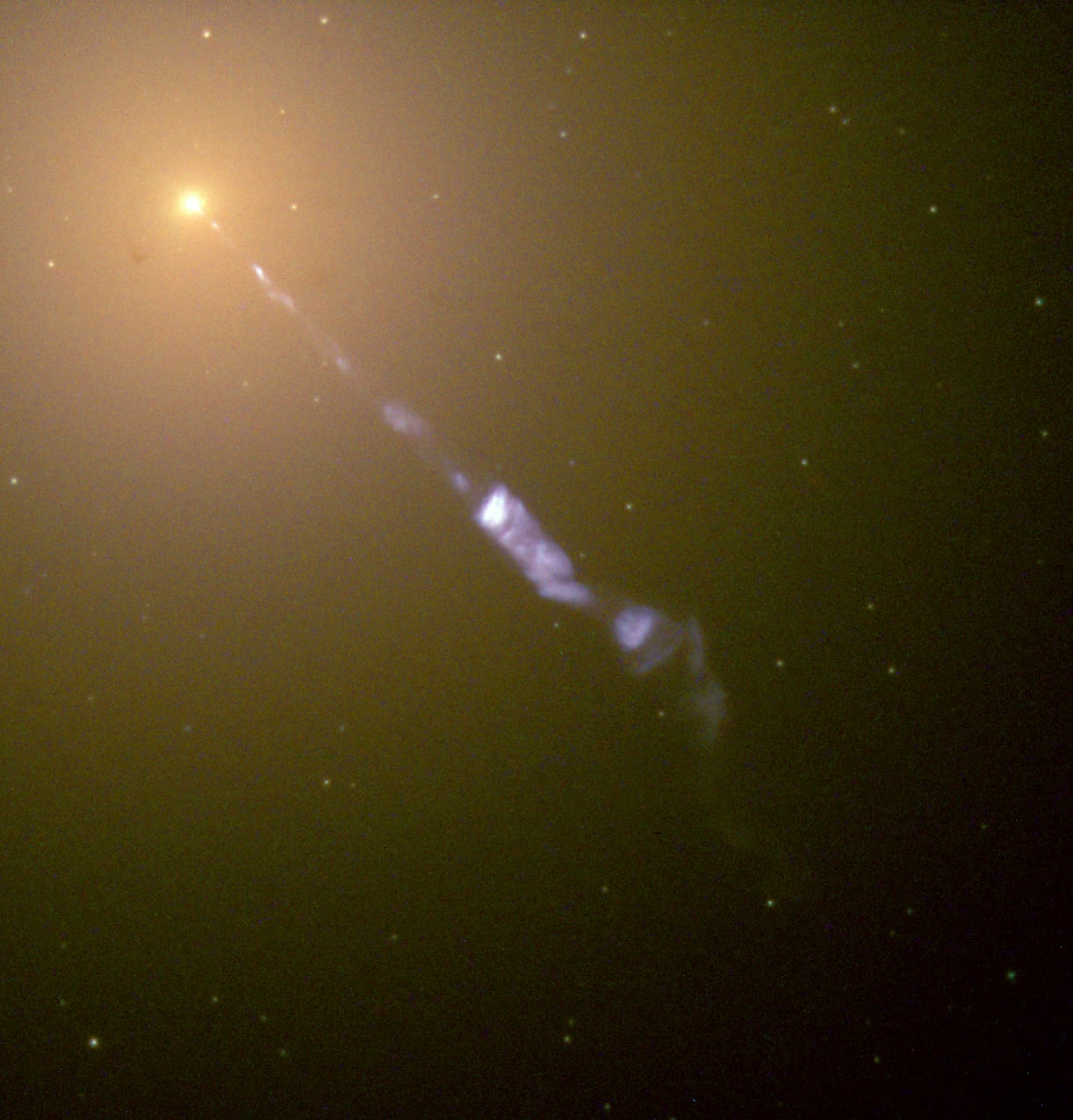
This extreme energy creates a puzzle for astrophysicists. Producing such energetic neutrinos requires particle acceleration mechanisms of extraordinary power. The leading candidates include active galactic nuclei, supermassive black holes surrounded by infalling material that can channel energy into narrow jets moving at near light speed, and gamma-ray bursts, the most energetic explosions in the universe after the Big Bang.
However, when the research team traced the neutrino's arrival direction back across the sky, they found no obvious source. No known active galactic nucleus, gamma-ray burst, or other energetic astrophysical object aligned with the particle's trajectory. This absence of a clear source suggests either an unknown type of cosmic accelerator or a source that was active only briefly and has since faded.
Opening a New Energy Frontier
The detection pushes neutrino astronomy into a new energy regime where theoretical predictions become uncertain. At the highest energies, neutrinos are expected to interact with the cosmic microwave background, creating a theoretical upper limit on how far ultra-high-energy neutrinos can travel. The observed neutrino's energy approaches this limit, meaning it likely originated from a source within our cosmic neighborhood rather than from the distant universe.
This constraint deepens the mystery, because the local universe has been thoroughly surveyed at other wavelengths. If a cosmic accelerator powerful enough to produce such neutrinos exists relatively nearby, it should have been detected through its emissions of light, radio waves, or X-rays. Its apparent absence suggests something genuinely novel may be at work.
The Future of Neutrino Astronomy
The record detection validates the strategy of building ever-larger neutrino detectors in natural bodies of water and ice. Several next-generation projects are in various stages of planning and construction, including expansions of the Mediterranean network and a proposed upgrade to IceCube that would increase its detection volume roughly tenfold.
These larger detectors will capture more neutrinos and provide better angular resolution, making it easier to pinpoint sources of individual particles. As neutrino astronomy matures, it promises to reveal aspects of the universe that are completely hidden from traditional telescopes, a truly new window on the cosmos opened by the most ghostly particles in nature.
This article is based on reporting by Universe Today. Read the original article.

Originally published on universetoday.com