Why Mars will need its own precise clock framework
As plans for sustained activity on Mars become more technologically concrete, a less glamorous but essential question is getting sharper: what time is it on Mars, exactly? A new paper described by Universe Today proposes a framework called Areocentric Coordinate Time, or TCA, intended to provide a standardized Martian time reference that accounts for relativity and can connect local clocks back to broader solar-system timing standards.
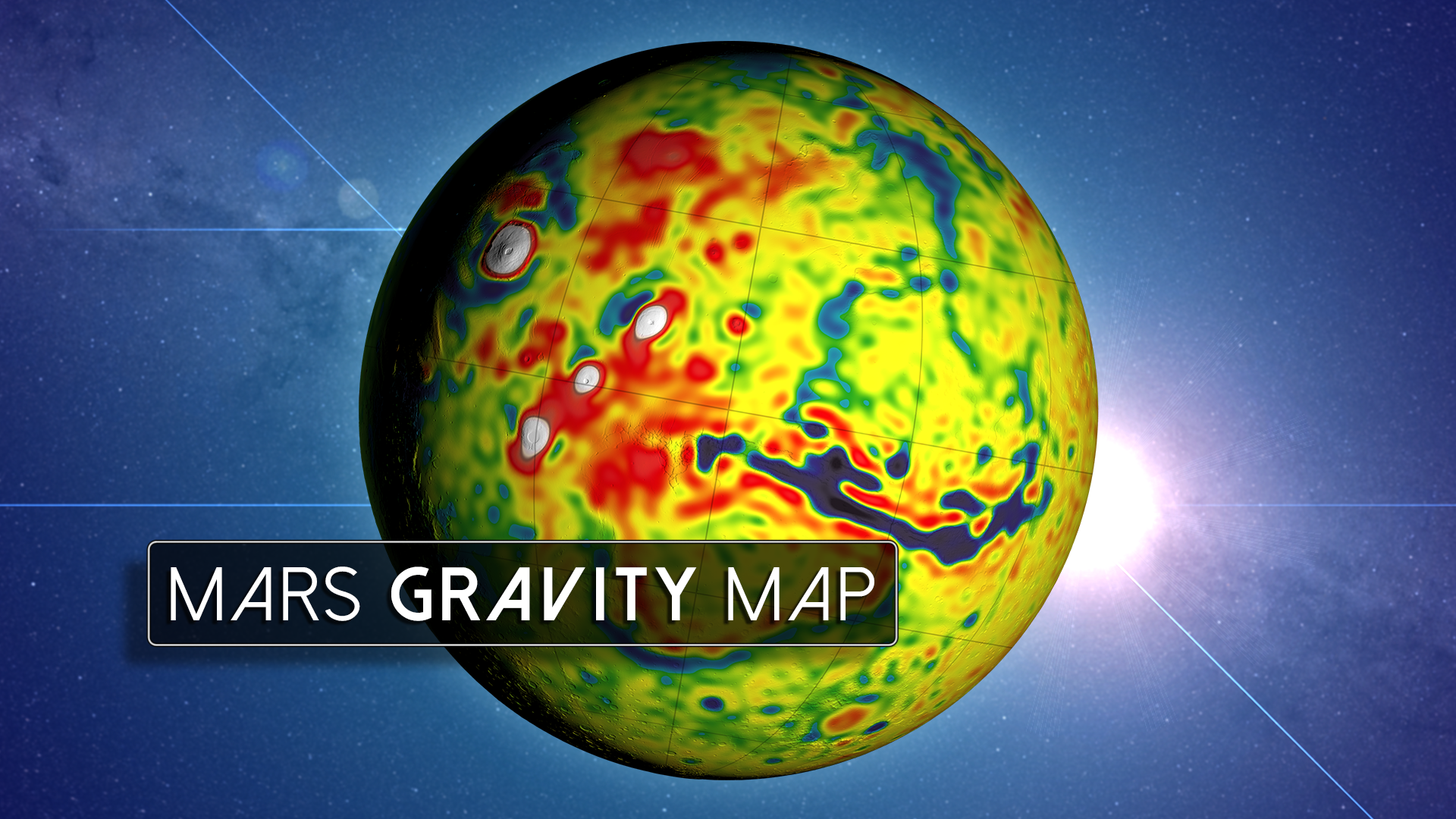
The core issue is simple to describe even if the math is not. Atomic clocks are extraordinarily precise, but they do not escape general relativity. A clock on Mars will not tick at exactly the same rate as one on Earth, because the planets sit in different gravitational environments. The supplied source text explains that a clock on Mars would run slightly faster because it is in a shallower gravity well than Earth. For occasional robotic missions, that difference can be managed operationally. For dense networks of habitats, rovers, satellites, communications relays, and landing systems, it becomes a systems-engineering problem.
The proposed framework comes from NASA Jet Propulsion Laboratory researcher Slava Turyshev. The idea is to define a Martian equivalent to Earth’s Geocentric Coordinate Time and anchor it within the International Astronomical Union’s existing Barycentric Celestial Reference System and Barycentric Coordinate Time formalism. In practical terms, the framework is meant to create a mathematically consistent chain from a local clock on Mars to the larger reference structure used across the solar system.
That may sound abstract, but the source text gives useful examples of why it matters. A satellite in low Mars orbit, at about 300 kilometers altitude, would experience a clock rate around 4.56 microseconds per day slower than one on the Martian surface because of its orbital velocity. Farther out, a spacecraft in areostationary orbit would instead tick faster by 9.13 microseconds per day because of weaker gravity and slower orbital motion. Those are tiny daily differences. Over long operations, however, small discrepancies accumulate into navigation, synchronization, and communications errors.
The proposed standard also sets a precision threshold, ignoring effects smaller than 5x10^-18, which the article describes as an accumulated error of 0.1 picosecond. That is a level of timing fidelity that seems absurdly fine for ordinary life, but advanced space operations are not ordinary life. Precision timing is part of what makes distributed autonomous systems, orbital coordination, surface navigation, and scientific measurement work reliably. As human and robotic activity expands, Mars will need that invisible infrastructure as much as it needs power systems or habitats.
There is a broader significance here too. Time standards are a form of governance embedded in physics. They shape how separate systems interoperate, how data is timestamped, how networks remain synchronized, and how different operators share a common frame of reference. Earth already relies on such invisible standards everywhere from telecommunications to satellite navigation. If Mars develops into a place with multiple missions, agencies, and eventually permanent residents, it will need the same kind of common timing language.
What makes this proposal notable is not that anyone expects colonists to argue about wristwatches soon. It is that the supporting architecture for off-world civilization must be designed before it becomes urgent. Waiting until spacecraft, relays, and settlements are already operating at scale would make standardization harder. By putting forward a Martian timing framework now, researchers are doing the unglamorous advance work that real expansion beyond Earth depends on.
Human presence on Mars is still a future project. But if that future arrives, it will not run on intuition. It will run on carefully defined systems, and one of the most important will be a clock that knows it is no longer on Earth.
This article is based on reporting by Universe Today. Read the original article.
Originally published on universetoday.com