Canada’s long-awaited lunar first
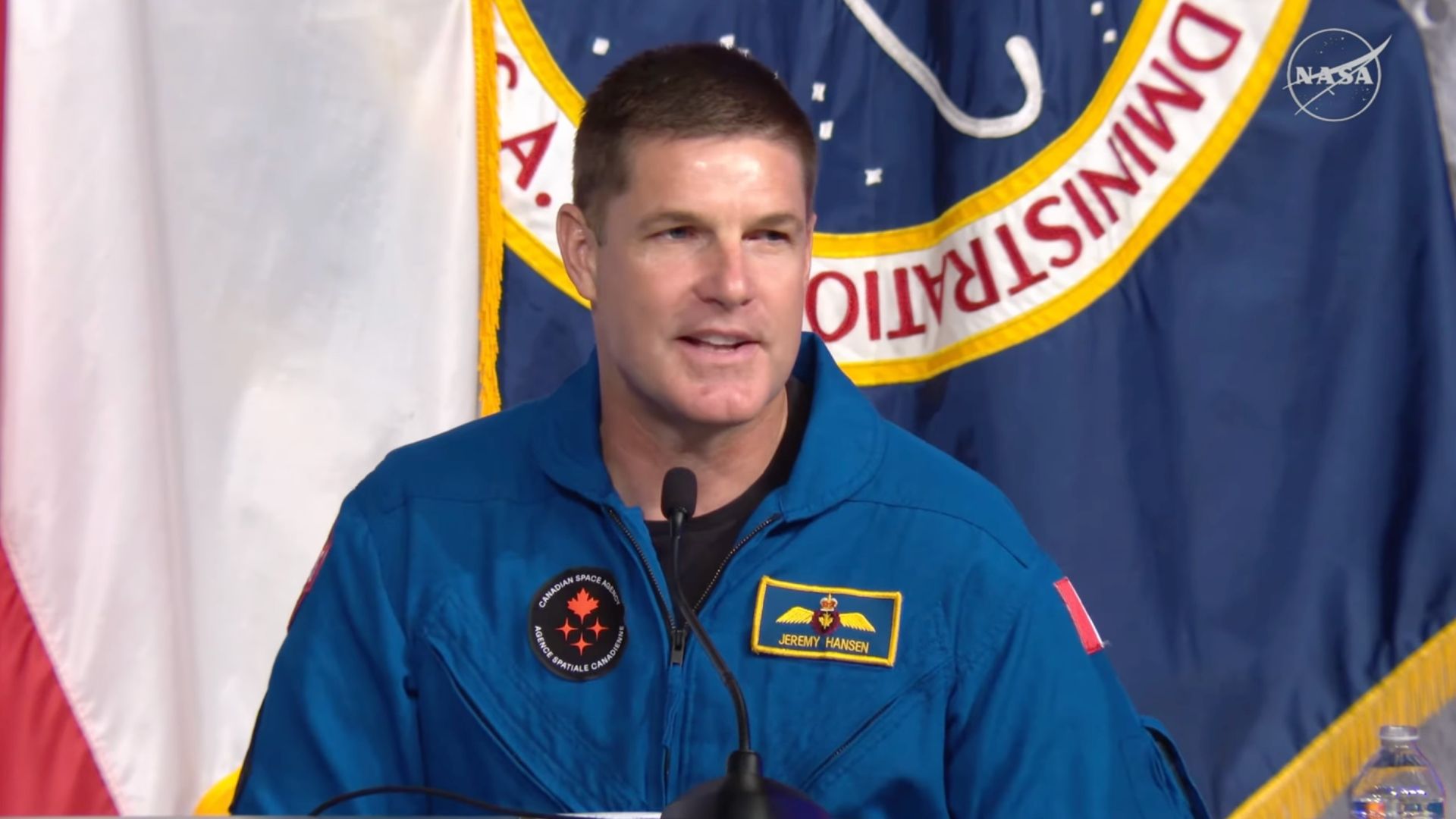
Jeremy Hansen’s assignment to Artemis II is more than an individual career breakthrough. It is a national milestone for Canada and a marker of how the Artemis program is knitting together international partners around the return of crewed deep-space exploration. According to Space.com, Hansen will become the first Canadian to fly around the moon when Artemis II flies, a distinction that carries symbolic weight for a country that has had astronauts in orbit but not on a lunar mission.
The story is also notable for how long it took to arrive. Hansen was selected as an astronaut by the Canadian Space Agency in 2009, when he was a Royal Canadian Air Force fighter pilot with NORAD flight experience. His seat assignment did not come until Artemis II’s crew announcement in 2023. That 14-year gap might sound like a delay, but the record described by Space.com shows a period of sustained technical and organizational work rather than inactivity.
A career built between missions
During the years between astronaut selection and mission assignment, Hansen contributed across several parts of the human-spaceflight system. Space.com reports that he helped develop tools to repair a dark-matter detector on the International Space Station, advised Canadian space policymakers, and became the first Canadian to manage the training schedule for the astronaut class selected in 2017. That last role is especially revealing. It places Hansen not just inside the astronaut corps, but in a coordinating position that shaped how astronauts from both the United States and Canada prepared for future missions.
That mix of operational, policy, and training work helps explain why his Artemis II assignment matters beyond nationality. Crewed lunar programs demand astronauts who can operate in public, technical, and institutional settings at once. Hansen’s record, as outlined in the source text, reflects that blend. He spent years supporting the broader system that makes a mission possible before being named to one himself.

Why Artemis II matters
Artemis II is the first crewed Artemis mission and will send astronauts around the moon and back. Space.com describes Hansen as saying the mission is in the best position to overcome extreme challenges, underscoring how much preparation has already been absorbed into the flight campaign. The assignment places him inside one of the most visible space efforts of the decade, one intended to demonstrate that NASA and its partners can move from tests and hardware integration to human operations beyond low Earth orbit.
The mission has broader political meaning as well. A Canadian astronaut on a lunar flyby is a concrete sign that Artemis is not being presented solely as a U.S. project. Instead, it is functioning as a multinational framework in which partners contribute hardware, expertise, and personnel while receiving visible roles in return. Hansen’s seat is therefore both a personal achievement and a diplomatic artifact of the coalition NASA is building.
The value of patience in astronaut careers
Astronaut biographies often flatten years of invisible preparation into a few headline moments. Hansen’s path is a useful reminder that modern astronaut careers are increasingly long-cycle. The spaceflight system needs people who can support missions they may never fly, manage programs whose payoff is years away, and move between operational and strategic work without losing technical credibility. In that sense, Artemis II is the payoff for more than a decade of institutional service.
There is also a specifically Canadian dimension to that patience. Space.com notes that Hansen grew up in a world with no Canadian astronauts. He later became part of the country’s astronaut corps and is now poised to extend Canada’s human-spaceflight record into lunar space. That arc helps explain why the mission resonates more deeply than a routine crew assignment. It links generational aspiration, national representation, and the slow mechanics of international space cooperation.
What Hansen’s flight represents
When Artemis II flies, Hansen will carry more than a personal biography with him. He will represent a country seeking a more prominent place in deep-space exploration and a model of astronaut work that values long-term contribution before public recognition. The source material shows that his years outside the spotlight were spent on tasks central to mission readiness, astronaut development, and national space policy.
That makes this assignment notable even before launch. It is a story about the maturation of Artemis, the visible inclusion of international partners, and the professional endurance often required to reach a historic flight. For Canada, it is a lunar first. For Artemis, it is another sign that the program’s multinational structure is moving from rhetoric to reality.
This article is based on reporting by Space.com. Read the original article.
Originally published on space.com