From the Corps to the Cosmos
Jaden Caradine's path to a NASA internship looked nothing like the typical aerospace engineering student. He grew up skiing and climbing in Utah, served five years as a Marine Corps mechanic—four of them in Japan—and only then enrolled in Embry-Riddle to study the subject that now pulls him toward the stars. The winding route, he believes, was a deliberate part of the plan.
An Early Spark in Utah
Raised near Salt Lake City, Caradine was placed on a snowboard by his mother at age four and encouraged to try rock climbing soon after. Those active childhood hobbies gave him a sense of physical confidence. But his most important realization came at eight years old, when he was playing with LEGO bricks. The act of building with small plastic blocks unlocked something in him. He later said that he could not see himself becoming anything other than an engineer. That intuition stuck with him, even as he took a roundabout path to make it true.
At school, Caradine's connection to math was not about numbers on a page. He described mathematics as an enabling skill. For him, math was useful only when it helped people make or build something meaningful. He loved science for what it could do, not for its own sake. That pragmatic view guided his eventual choice of a major.
The Marine Years in Japan
Upon graduating from high school, Caradine enlisted in the United States Marine Corps. He trained as a mechanic, working on vehicles and machinery. That job gave him hands-on experience with engines, hydraulics, and mechanical systems—knowledge that would later serve him in aerospace.
Caradine was stationed in Japan for four of his five years of service. Living thousands of miles from home gave him time to think about the future. He began reading books on decision-making, career planning, and long-term thinking. These books pushed him to look beyond his current role and consider how to design a satisfying, purposeful career.
It was in Japan that he encountered ikigai, a Japanese concept that encourages people to identify the point where what they love, what they are good at, what the world needs, and what they can be paid for all overlap. Caradine found the framework instantly appealing. He said that your ikigai is the thing where all of those overlap. With engineering already in the back of his mind, he now needed to figure out which branch of the field would become his ikigai. He was searching for a signal, a topic that would make his heart race and his ambitions align.
Chasing the Signal into Aerospace
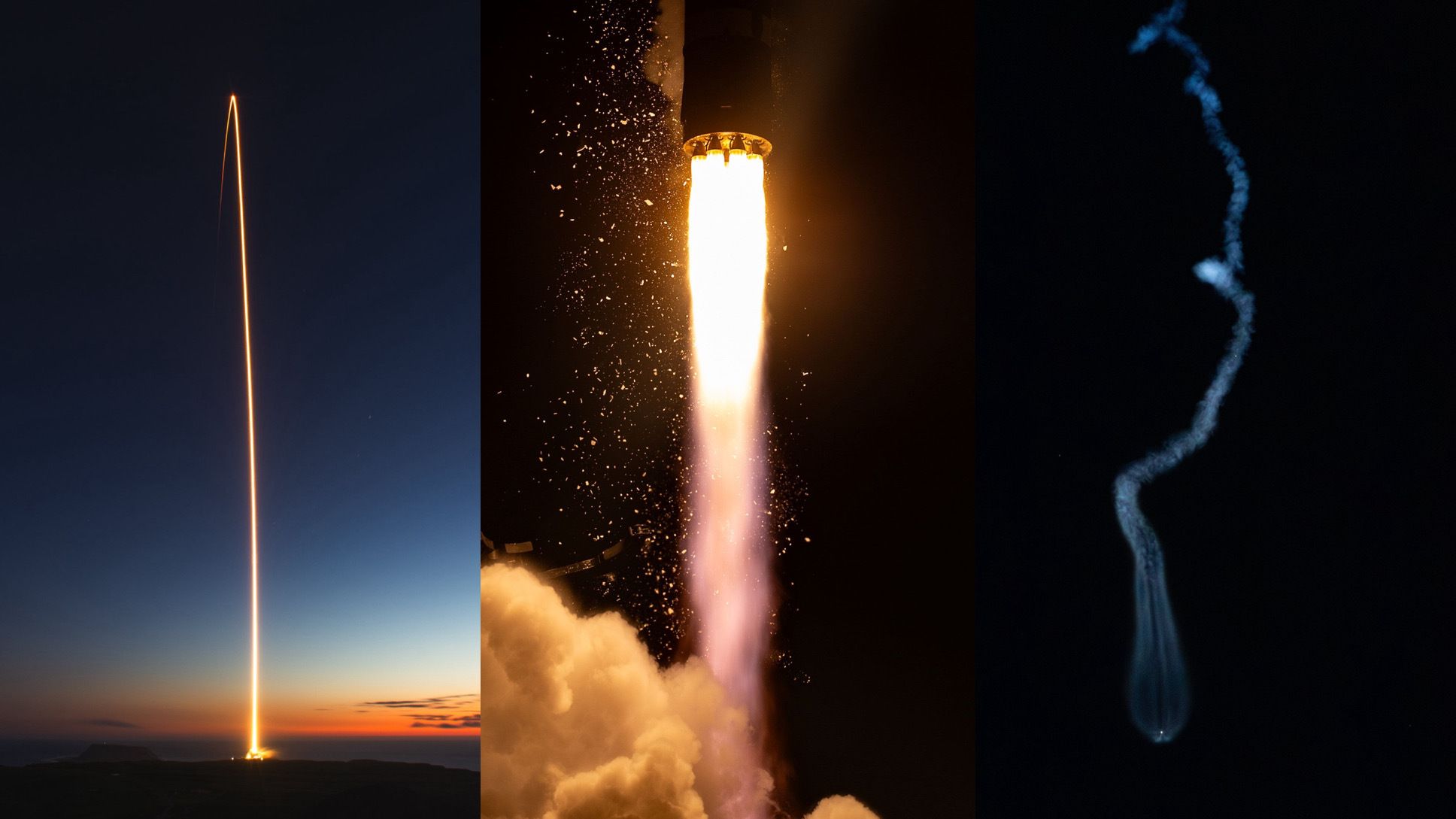
The signal arrived when Caradine discovered a space company working on a radically different launch system. The concept involved using powerful magnets to spin a system to roughly 14,000 to 15,000 revolutions per minute, carrying small payloads. When released, those payloads—small satellites—would be flung into orbit. On the way down, the magnetic system would recapture much of the rotational energy, dramatically improving efficiency.
Caradine was thrilled. He recalled that the concept made him think it was awesome, and he immediately began looking into aerospace engineering. It seemed like a natural fit, a way to combine his mechanical aptitude with a genuinely futuristic application.
His decision made, Caradine applied to Embry-Riddle Aeronautical University in Daytona Beach, Florida. He enrolled to study aerospace engineering, and in doing so he transferred to a new stage in his career. The Marine Corps had given him discipline; Embry-Riddle would give him theory.

Landing at Langley
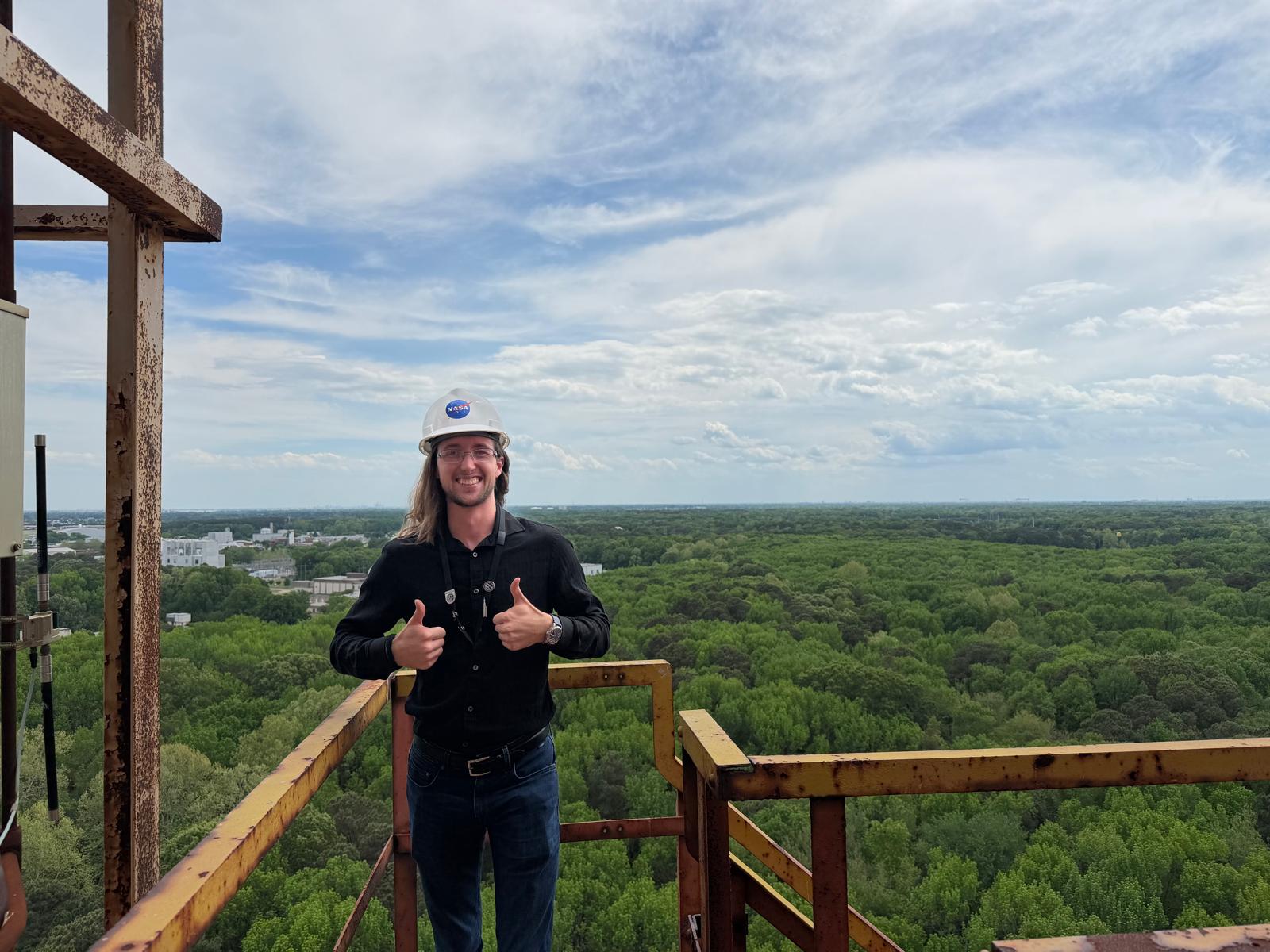
Caradine's journey came into sharper focus when he was selected for a Pathways internship at NASA's Langley Research Center in Hampton, Virginia. The Pathways program allows students to work inside NASA facilities, gaining exposure to active projects and research. For Caradine, reaching Langley was a pivot point. The center has been a hub of aeronautics and aerospace innovation since its founding.
During his internship, Caradine is part of a new generation of engineers who bring diverse backgrounds to NASA. His previous life as a mechanic gives him a different perspective from classmates who went straight from high school to university. He understands failure in a hands-on way—what happens when an engine doesn't start, when torque is off, when a system is unbalanced. That sensibility will be valuable when he helps design craft that must operate in the unforgiving environment of space.
More Than a Straight Line
Caradine's story is a reminder that a STEM career does not require a predictable trajectory. Some people take years to discover the specific niche where their talents and passions meet. For Caradine, the route passed through Japan and the Marines, through books on ikigai and a magnetic launch mystery. Each step shaped the engineer he is becoming.
Here are key milestones in his journey so far:
- Knew at age eight that he wanted to be an engineer.
- Spent five years in the Marine Corps as a mechanic.
- Stayed in Japan for four years during his service.
- Used the Japanese concept of ikigai to guide his career decisions.
- Became fascinated by magnetic spin-launch technology.
- Enrolled at Embry-Riddle Aeronautical University to study aerospace engineering.
- Earned a Pathways internship at NASA Langley Research Center.
The Right Kind of Engineer
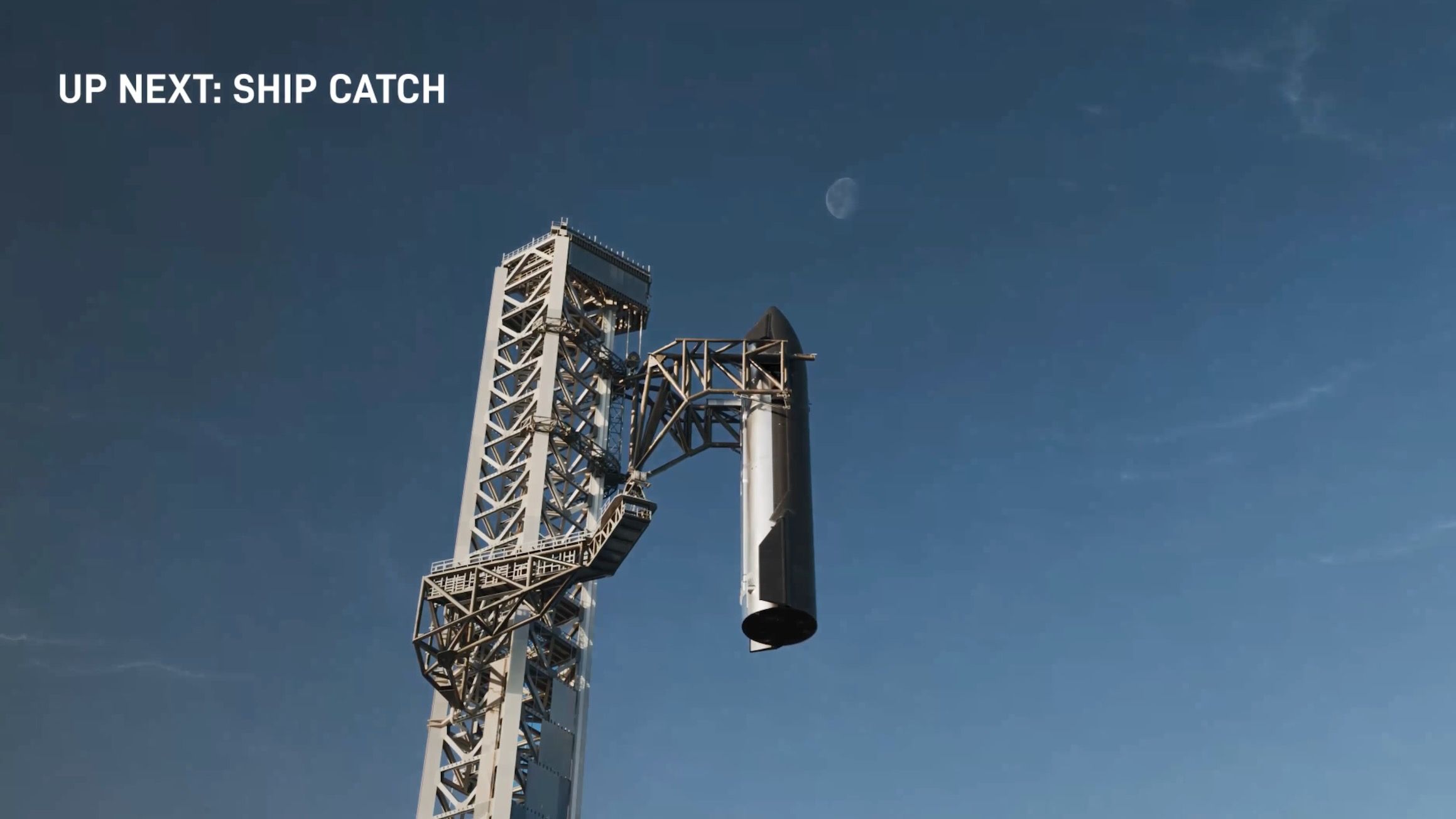
Caradine hasn't stopped building. He continues his education while working at one of the world's most respected aerospace laboratories. The young man who used to construct LEGO creations is now preparing to construct larger projects, possibly the technologies that will drive the next generation of space access.
He still holds the conviction that math is a tool, not a final answer. That belief will help him turn equations into testable hardware. And his five years fixing machines in the Marine Corps mean he is not afraid to get his hands dirty—a trait that aerospace engineers often need when they move from computer models to physical prototypes.
Jaden Caradine's story from the Corps to the cosmos has just reached its next chapter. His advice, delivered through action, is clear: find the place where you want to build and follow that road, even if it bends through unexpected territory. Whether you start with LEGO bricks or engines, the opportunity to build a better future remains within reach.
This article is based on reporting by NASA. Read the original article.
Originally published on nasa.gov