A faster way to chase the universe’s briefest explosions
A radio observatory in Hawaii has shown that it can respond to one of the most fleeting and powerful events in the cosmos on a timescale that would have been difficult for millimeter astronomy until recently. Scientists working with the Submillimeter Array, or SMA, reported that a new semi-automated alert system allowed the observatory to lock onto a gamma-ray burst within minutes of detection, producing what the source describes as the first observations of such an event at millimeter and submillimeter wavelengths through this kind of rapid-response workflow.
The demonstration took place on January 26, 2026, when NASA’s Neil Gehrels Swift Observatory detected a flash of gamma rays from a source about 1.8 billion light-years from Earth. Swift’s alert triggered the SMA’s new system. Within 90 seconds, the observatory’s on-duty operator had been notified. Within 13 minutes, the array’s eight telescopes were on target, while a separate automated analysis pipeline was already generating images of the explosion in near real time.
That speed matters because gamma-ray bursts, or GRBs, evolve rapidly. The initial burst is brief, and the afterglow that follows changes quickly across wavelengths. X-ray and optical instruments have long been able to react in seconds or minutes. Millimeter-wave facilities, by contrast, have often lagged behind, leaving a gap in the earliest observations. The SMA result suggests that gap can be narrowed substantially.
Why gamma-ray bursts are so important
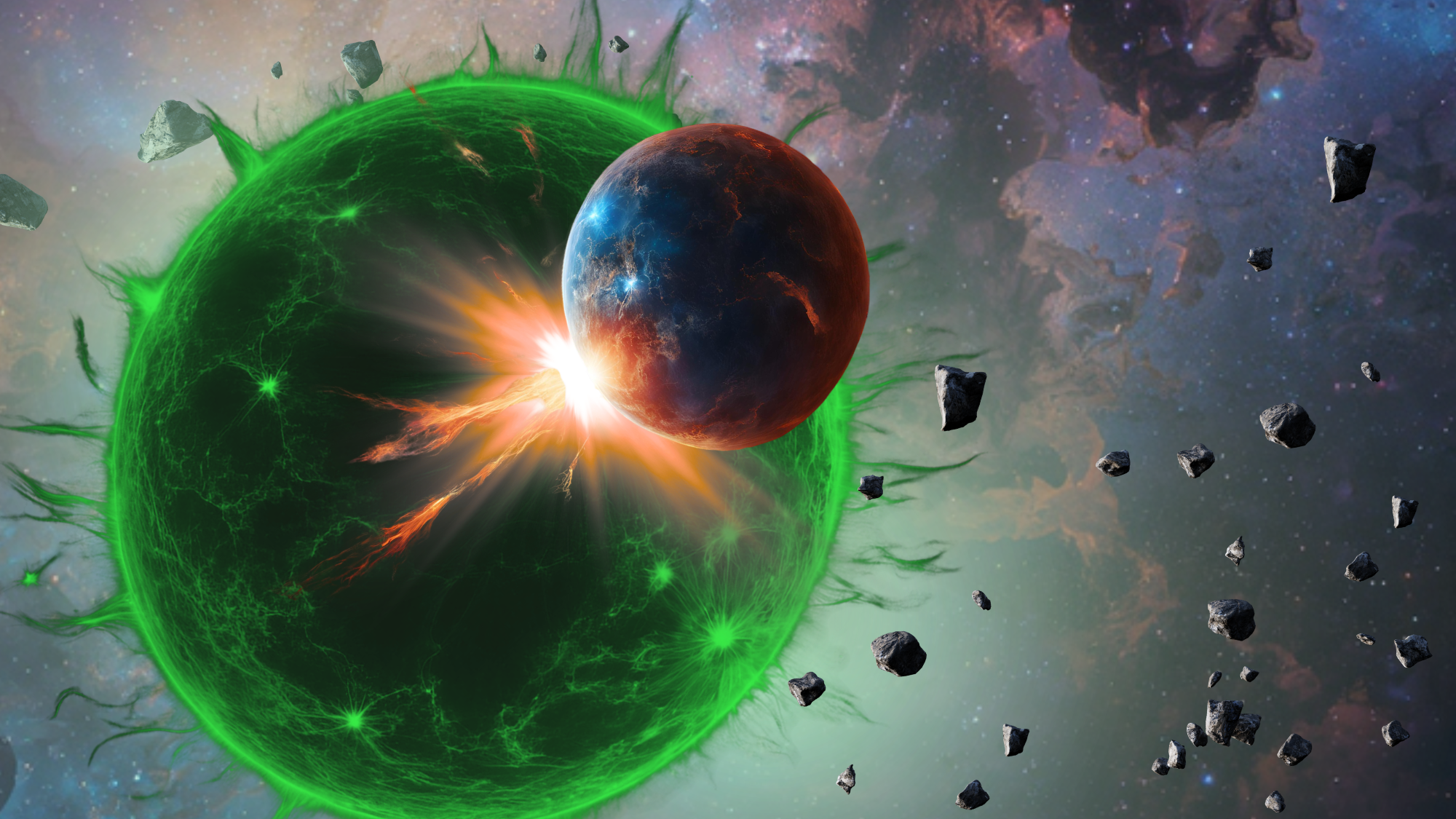
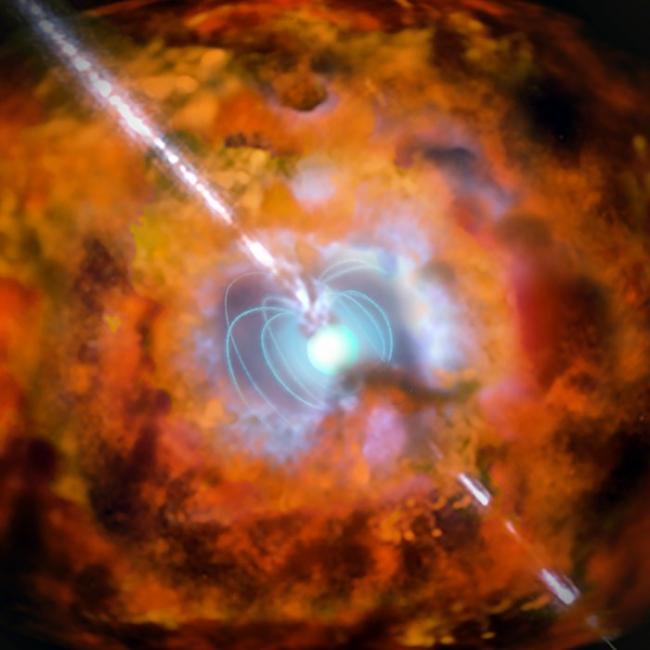
GRBs are among the most energetic events known in the universe. They are associated with relativistic jets, streams of matter moving at close to the speed of light. Those jets can be produced when a massive star collapses in a supernova or when compact objects such as neutron stars merge in a kilonova. Because the events are both violent and short-lived, researchers rely on rapid follow-up observations to extract the maximum amount of physical information before the signal fades.
The scientific value of earlier millimeter and submillimeter measurements lies in the details of the afterglow. According to the source text, the interaction between the jet and its environment generates two related shocks: a forward shock moving into the surrounding medium and a reverse shock propagating back into the ejecta. The forward shock is useful for estimating explosion energy, but the reverse shock is especially important for probing the jet’s composition, its magnetization, and other physical properties.
That makes timing critical. If a radio or submillimeter observatory arrives too late, some of the most diagnostic features can weaken or disappear. A system that turns a space-based alert into a near-immediate ground-based response can therefore do more than improve efficiency. It can change which questions astronomers are able to answer.

What the new SMA system demonstrated
The breakthrough here is not that the SMA observed a gamma-ray burst at all. It is that the observatory demonstrated a workflow close to real-time astronomy for this class of event. The source describes the process as happening almost entirely without human intervention. That matters because astronomy has increasingly become a race against transient phenomena: bursts, mergers, flares, and other signals that can brighten and fade on operationally inconvenient timescales.
In this case, the alert originated with Swift, a space telescope built to catch gamma-ray bursts quickly. The SMA’s new system translated that alert into an observing action fast enough to get the array onto the target within 13 minutes. A separate automated analysis then generated images while the event was still fresh. In practical terms, that turns the observatory from a largely scheduled instrument into something more flexible, one capable of interrupting or adapting to new phenomena as they unfold.
The source also frames the January event as an important milestone for the Harvard & Smithsonian Center for Astrophysics team involved in the rapid-response effort. For facilities that depend on multiple dishes, operators, and coordinated processing, reducing reaction time is not simply a software tweak. It requires reliable alert ingestion, observatory control, prioritization logic, and a data path that can deliver useful outputs immediately.
A sign of how observatories are changing
The broader significance reaches beyond one array or one gamma-ray burst. Astronomy is moving into an era where transient detection is accelerating across the electromagnetic spectrum. Space telescopes, all-sky monitors, and survey instruments are finding more short-lived events, faster and in greater numbers. That flood of alerts creates a new challenge on the ground: which facilities can respond before the most valuable data vanish?
The SMA result shows how radio and submillimeter observatories can fit into that future. Historically, these instruments have been extraordinarily powerful but not always optimized for immediate reaction. Fast-response systems begin to change that balance. They allow researchers to capture the early-time behavior of cosmic explosions, compare observations across wavelengths, and test physical models with more complete datasets.
There is also a methodological lesson here. Modern astronomy increasingly depends on linked infrastructure rather than isolated telescopes. A discovery by one instrument becomes much more valuable when another can react automatically, and a third can analyze the result without waiting for manual processing. What matters is not only sensitivity, but orchestration.
The source notes that the work was described in a paper published in The Astrophysical Journal Letters. That publication context suggests the team is presenting the result not just as an operational update, but as a meaningful advance in observational capability. In effect, the system creates a new observational lane for the study of gamma-ray bursts at millimeter and submillimeter wavelengths.

What comes next
If the system performs consistently, the next step is obvious: more targets, more rapid triggers, and a better statistical sample of GRBs observed early in their evolution. That would help researchers compare events, identify which bursts show strong reverse-shock signatures, and refine models of how relativistic jets form and interact with their surroundings.
Just as important, the same operational approach could be extended to other transient events. The technical value is not limited to one type of explosion. Any phenomenon that benefits from quick submillimeter follow-up could gain from a similar alert-driven response chain.
For now, the January 2026 observation stands as a proof of concept with concrete performance numbers behind it: a 90-second alert to the operator, 13 minutes to get the telescopes on target, and near-real-time image generation. In a field where minutes can decide whether a signal becomes a breakthrough dataset or a missed opportunity, that is a meaningful shift.
Why this matters
- Gamma-ray bursts evolve quickly, so earlier observations can reveal physics that later measurements miss.
- The SMA system linked a Swift detection to telescope retargeting in minutes rather than hours.
- Millimeter and submillimeter data can help researchers study reverse shocks, jet composition, and magnetization.
This article is based on reporting by Universe Today. Read the original article.
Originally published on universetoday.com