A Rare Find From a Troubled Century
A morning walk in southwest Norway turned into a notable archaeological discovery when a hiker found a richly decorated gold sword scabbard fitting beneath a toppled tree. Researchers say the object is about 1,500 years old and likely belonged to an elite warrior before being deliberately deposited, probably as an offering to the gods during a time of severe disruption.
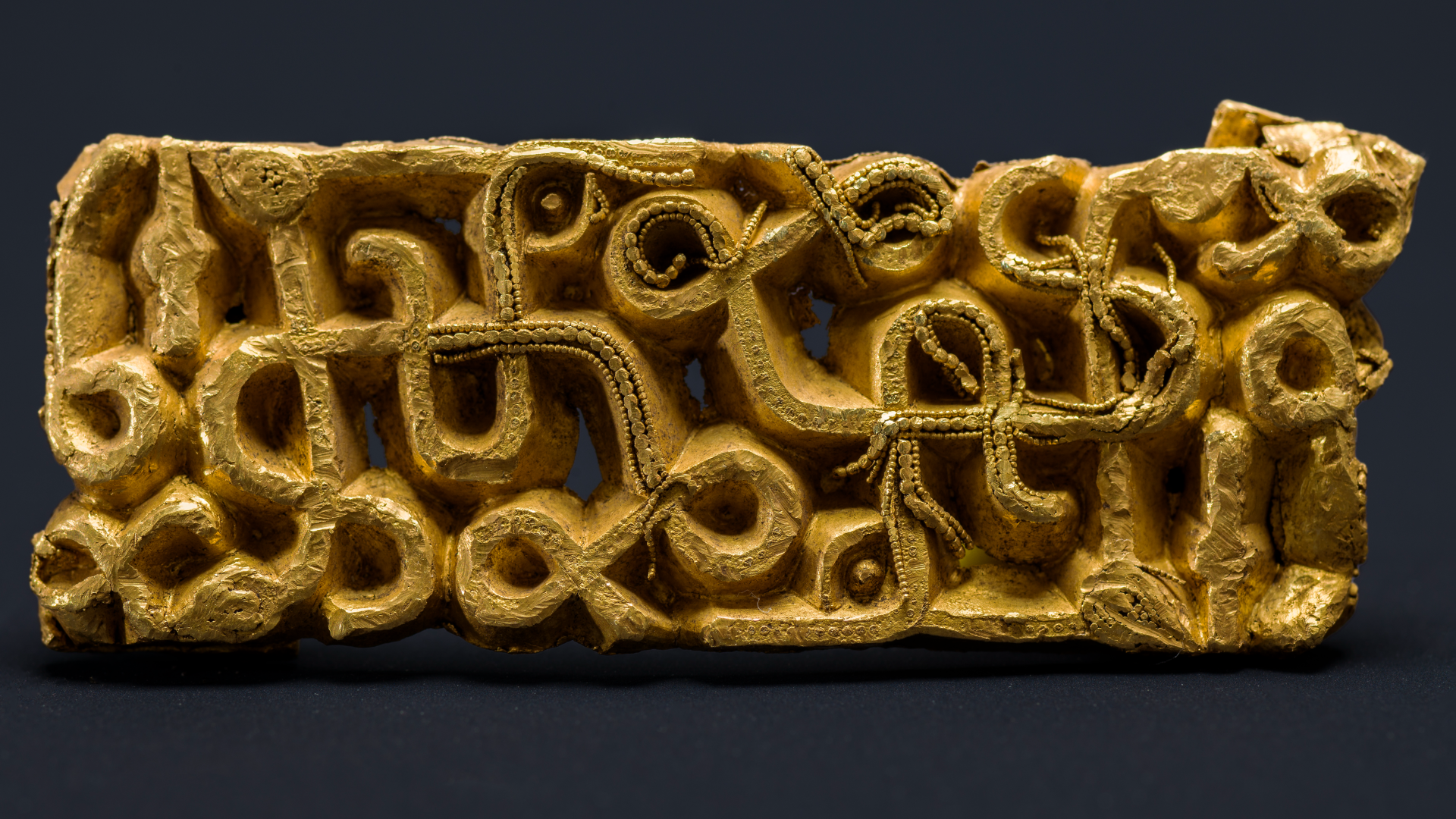
The find is small in size but large in significance. The sixth-century artifact measures roughly 6 centimeters long and weighs 33 grams. It once adorned the scabbard of a sword and is decorated with serpentine animal motifs. According to the supplied source, only 17 similar objects have previously been discovered in Northern Europe, and most of those were found in hoards alongside other items.
Discovered by Chance
The circumstances of the discovery underscore how fragile archaeological luck can be. The hiker said he noticed a mound in the ground under a tree, poked at it with a stick, and saw something glittering. That casual moment led to the recovery of an object archaeologists describe as extraordinarily rare.
Håkon Reiersen of the University of Stavanger Archaeological Museum said the odds of finding something like it are minimal. The fitting is worn, suggesting it had seen real use before it was buried. That detail helps frame it not as an unused prestige object but as a personal possession with a prior life in the hands of someone important.

Linked to an Elite Warrior
Researchers believe the object once belonged to a local leader in the first half of the sixth century, someone who likely commanded a retinue of loyal warriors. That interpretation comes not only from the quality of the gold artifact but also from the broader social context of the region, where elite settlements and other gold finds have been documented.
One of the period’s power centers was at Hove, where archaeologists have found a large farm complex and numerous gold artifacts. Together, those finds suggest a landscape shaped by hierarchy, concentrated wealth, and martial leadership. A sword scabbard fitting of this quality would have marked status as much as function.
Why Bury Gold During Hard Times?
The most compelling part of the story is not that the object was lost, but that it may have been intentionally sacrificed. Researchers cited in the source link the burial to a period when southern Norway was under intense strain from volcanic eruptions, a prolonged cold snap, and bubonic plague pandemics. The sixth century was not a stable era. It was one of population decline and social stress.
In that context, the deliberate offering of valuable metal makes cultural sense. If a community or leader believed divine favor was needed to survive famine, disease, or wider turmoil, sacrificing a prestigious object could be understood as both political and spiritual action. It would signal power, piety, and desperation at once.

A Small Object With Broad Implications
Archaeology often advances through fragments, and this is one of them. The scabbard fitting does not by itself reconstruct a full social order, but it strengthens a picture of sixth-century Scandinavia as a place where elite authority, weapon culture, and ritual response to catastrophe were closely linked.
Its rarity also matters. Because so few comparable fittings are known from Northern Europe, each example carries unusual interpretive weight. This one was not found in a hoard, making its context especially interesting. An isolated, intentionally deposited prestige object can reveal a different kind of behavior than mass burial of valuables.
The Human Scale of Deep History
There is also something strikingly human about the chain of events. An elite warrior may once have worn the sword. A community facing crisis may have chosen to surrender part of that status object to the gods. Centuries of burial followed. Then a modern hiker, on an ordinary walk, noticed a glint in disturbed soil and exposed a link to that vanished world.
Finds like this do more than fill museum cases. They condense history into a form people can grasp: a made object, handled by someone powerful, buried for a reason, and rediscovered by chance. In that sense, the Norwegian scabbard fitting is not just a precious artifact. It is evidence of how people responded when their world seemed to be coming apart.
This article is based on reporting by Live Science. Read the original article.

Originally published on livescience.com