A Single Page in Science
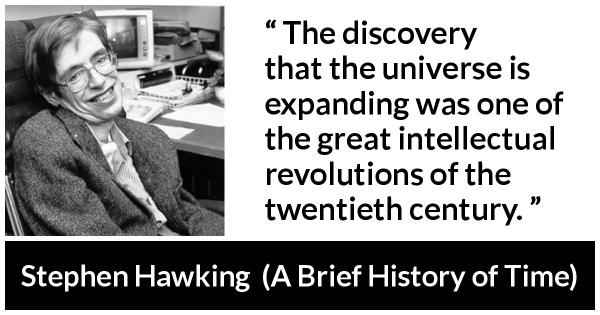
The September 2026 issue of Science — Volume 393, Issue 6817 — sets aside page 1191 for a piece simply titled "The indomitable Stephen Hawking." The page range reads 1191 to 1191: one page, first line to last. In the economy of a research journal that publishes across every discipline, that brevity carries its own weight. It is the space of an appreciation, a closing note, a marker placed at the edge of an issue densely packed with experimental results and data tables.
The citation gives us the coordinates rather than the argument: the journal, the volume, the issue, the page, the month and year. What it confirms is that Hawking remains a subject the scientific establishment still thinks worth addressing in its flagship pages — not in an obituary's long form, but in the compressed, deliberate register reserved for figures whose significance is assumed rather than argued. When a journal returns to a name, it is usually because the name has not stopped doing work in the public imagination.
Why Journals Set Aside Page Space
Publication in a journal like Science, the flagship title of the American Association for the Advancement of Science, is normally a transaction between authors and reviewers: hypothesis, method, evidence, discussion. Memorial and reflection pieces sit outside that machinery. They are not peer-reviewed findings; they are institutional acts of memory, and they function differently. They tell readers what a community considers foundational.
That a single page is enough for Hawking says something about how thoroughly his story is already known to the audience holding the journal. There is no need to establish who he was or why he mattered. The title alone — "The indomitable Stephen Hawking" — does the framing work, and the reader supplies the rest from memory: the wheelchair, the synthesized voice, the blackboard mathematics, the improbable ascent from a bleak prognosis to the most recognized scientific face of his era.

Unpacking 'Indomitable'
The adjective is the whole thesis. Hawking was diagnosed with amyotrophic lateral sclerosis, a form of motor neurone disease, as a young man in the early 1960s; physicians at the time gave him a horizon measured in a small number of years. He lived roughly five more decades, dying in 2018 at seventy-six. That arithmetic — a diagnosis that predicted an early death set against a career that lasted into a second half-century — is what the word is doing.
But "indomitable" also describes the intellectual posture. Hawking worked close to the limits of what theory can claim about the universe, in territory where experiments are scarce and speculation has to be disciplined by mathematics. He made his reputation in that terrain and defended positions in it publicly, revising his views when the physics demanded it — a habit of mind that is easier to admire in the abstract than to practice in front of an audience.
From Black Holes to Bestseller Lists
The scientific core of Hawking's fame is his 1974 result that black holes are not strictly black. Quantum effects near an event horizon imply a slow thermal emission, now known universally as Hawking radiation, which in turn implies that black holes can shrink and eventually evaporate. The finding pulled together general relativity and quantum field theory in a setting where the two are notoriously difficult to reconcile, and it generated the information-paradox debates that occupied theoretical physics for decades afterward.
He held the Lucasian Professorship of Mathematics at Cambridge, a chair once occupied by Isaac Newton, from 1979 until 2009. Then came A Brief History of Time in 1988, a book that sold in numbers no popular physics title before or since has matched, and that turned a Cambridge cosmologist into a global figure. Later work, public lectures, and a willingness to engage the press kept him in that position until the end of his life.
The result is a genuinely unusual dual legacy. Within physics, Hawking's name attaches to a specific, testable-in-principle prediction and to a family of deep conceptual problems. Outside physics, it attaches to disability, persistence, and the idea that the universe is comprehensible to human beings who are willing to look carefully. Few researchers achieve either form of standing. Hawking held both simultaneously for nearly forty years.
A Legacy Measured in Questions
One way to read the Science page is as a reminder that Hawking's most durable contributions may be interrogative rather than declarative. He spent much of his career pressing on the boundary between classical gravity and quantum mechanics, asking what happens to information when a black hole disappears — a question that remains unsettled and that has driven substantial work in theoretical physics.
He was also, for better and worse, a participant in the public science conversation. He made bets with colleagues over the outcomes of thought experiments, wrote children's books with his daughter, appeared in popular culture, and used his visibility to argue that humanity should take seriously the risks and possibilities of space, artificial intelligence, and its own long-term survival. Those interventions were not the peer-reviewed core of his work, but they shaped how a generation encountered cosmology in the first place.
What a One-Page Tribute Leaves Out
A single page cannot rehearse the mathematics, survey the paradox literature, or settle the arguments Hawking had with colleagues over decades. It also cannot capture the texture of a life lived with a progressive, paralysing illness under continuous public observation. What it can do is fix a date and a volume number and say: this community still keeps this name in view.
That function matters more than it might appear. Scientific memory is short by design; journals privilege the new. A page devoted to a figure from the past is an interruption in that forward motion, a small acknowledgement that the questions currently being asked were, in many cases, first posed by someone now absent from the citation lists.
The Bottom Line
Volume 393, Issue 6817 of Science ends up carrying two kinds of content at once: the ordinary output of a working scientific journal, and one page titled "The indomitable Stephen Hawking." The second will not change any researcher's conclusions. It is not meant to. It is a marker of standing — evidence that the adjective in the headline still reads as accurate to the people who decide what appears in the record.
This article is based on reporting by Science (AAAS). Read the original article.
Originally published on science.org