A placental route into early developmental risk
Research from Cold Spring Harbor Laboratory has identified a link in mice between inflammation during pregnancy, damage to the placenta and the later appearance of autism-like traits in male offspring. The work adds evidence to a growing view that understanding neurodevelopmental conditions may require looking beyond the developing brain alone.
Genetics are known to play a major role in autism spectrum disorder, while research has also suggested that conditions during pregnancy can affect likelihood. The new work examines a possible biological route connecting maternal immune activation to early fetal development: changes at the placenta, the organ that connects maternal and fetal systems during pregnancy.
The researchers describe the finding as an early developmental clue, not a complete explanation of autism. It comes from a mouse model, and autism-like traits in mice are not equivalent to an autism diagnosis in people. But the study identifies a specific period and a specific tissue response that could guide further investigation.
Testing when inflammation has the greatest effect
To investigate the timing of vulnerability, the team triggered an immune response in pregnant mice at different points in pregnancy. They used a substance designed to mimic the immune system’s response to a viral infection without introducing an actual virus.
The clearest vulnerability emerged when immune activation occurred 12.5 days into pregnancy. Within 24 hours, approximately one-third of the fetuses showed developmental abnormalities, according to the study’s account.
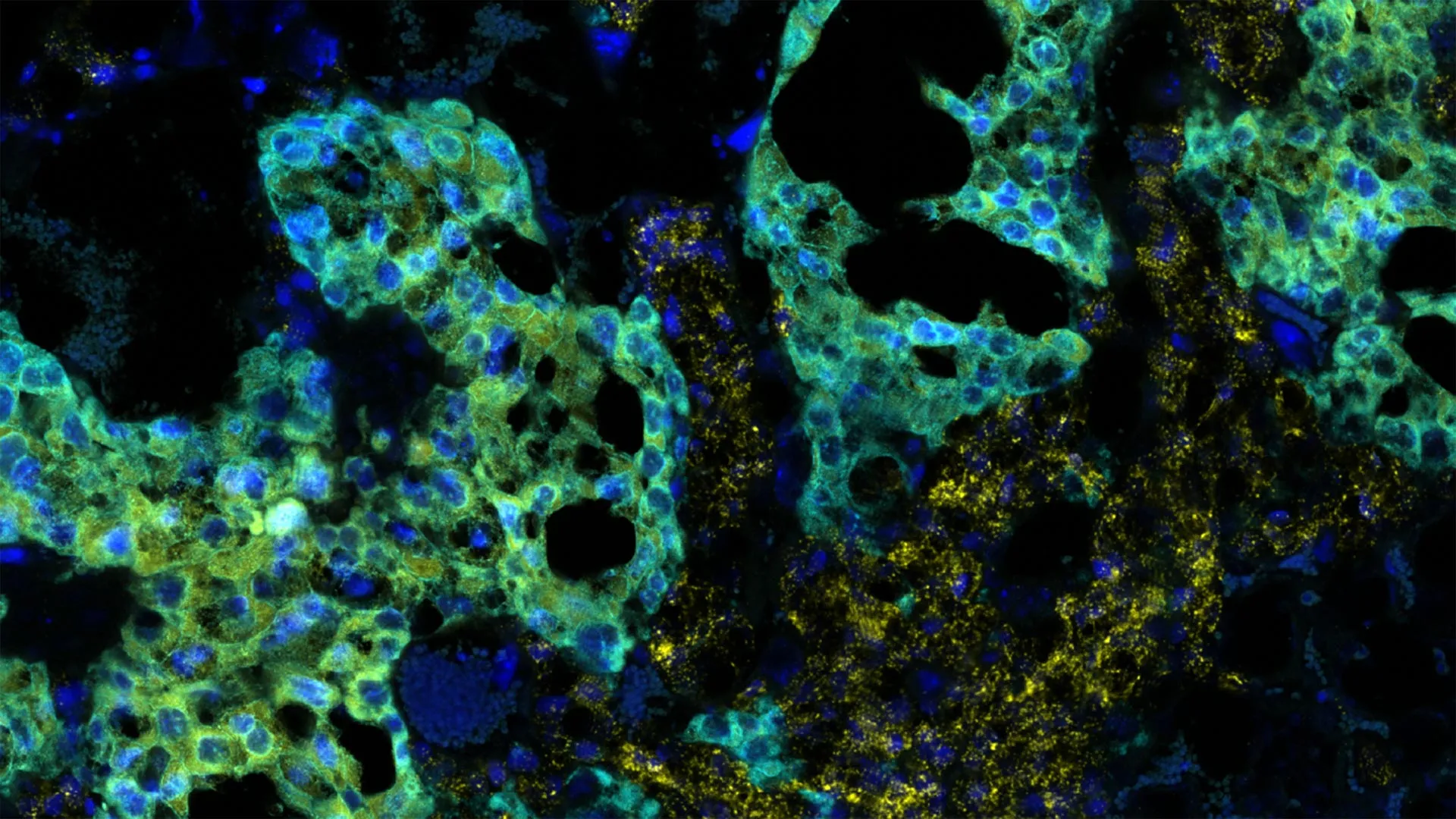
Researchers have studied maternal immune activation for decades. What distinguishes the new findings is the evidence of developmental disruption at this early stage and the attention paid to the placenta. The work reported a breakdown in the structure of the placental junctional zone, where maternal and fetal components meet.
That location is central to the study’s proposed connection. A disruption at the interface between maternal and fetal systems could affect fetal development before later changes in behaviour or brain function would be visible.

Male and female fetuses responded differently
Across the experiments described by the laboratory, autism-like traits appeared only in male mice, while female mice continued to develop normally. The sex-specific result was consistent across the reported experiments and is among the most notable aspects of the work.
Autism is diagnosed more frequently in boys than in girls, although that difference can reflect multiple biological, diagnostic and social factors. The mouse findings do not establish why the diagnostic difference exists in humans. They do, however, offer a model in which fetal sex is associated with a markedly different response to pregnancy-related immune activation.
For the research team, the observation raises the possibility that female fetuses may possess protective mechanisms in this setting, while a subset of male fetuses may be more susceptible to placental disruption. Identifying the nature of that protection, if it translates in any form beyond the model, would require additional work.
Why the placenta is central to the finding
The placenta is often understood chiefly as a support system for pregnancy, transferring materials and coordinating interactions between mother and fetus. This study treats it as a potential early site of developmental vulnerability.
The reported breakdown occurred in the junctional zone, an area where maternal and fetal components meet. By putting the placental structure at the centre of the analysis, the researchers suggest that some consequences of inflammation in pregnancy could begin through altered conditions at this interface rather than through a direct focus on the fetal brain alone.
That is a meaningful reframing, but it should be handled carefully. The study does not say that inflammation during pregnancy causes autism in people, nor does it offer a test or intervention for clinical use. It examines a controlled immune-activation model in mice and identifies an association between an early placental disruption and later autism-like traits in affected males.

What the research may change
The immediate value of the work is in narrowing questions for future research. If a brief developmental window and a placental structural change are important in this model, scientists can investigate the molecular and cellular mechanisms that connect them. They can also test whether related mechanisms appear in other animal studies or in carefully designed human research.
The finding may also encourage broader research designs. Studies of neurodevelopmental conditions have often concentrated on genes, neurons and brain circuits. Those remain essential areas. The new work argues that the prenatal environment and the placenta may be important parts of the same biological story for some individuals.
Associate Professor Lucas Cheadle, whose laboratory conducted the research, said the results support looking beyond the brain to understand autism spectrum disorder. The point is not to replace genetic explanations with environmental ones. Rather, it is to examine how prenatal immune conditions, placental health and individual susceptibility might interact.
Limits and next steps
Animal models are indispensable for observing developmental events that cannot be experimentally manipulated in people, but they have clear limits. Timing in mouse pregnancy cannot simply be converted into a human pregnancy date. Likewise, behaviours used to define autism-like traits in mice are research measures, not clinical diagnoses.
Those cautions make replication and extension especially important. Researchers will need to determine which features of the placental response are causal, why the response differs by sex in this model and whether comparable early signals can be detected in other systems.
Even with those unanswered questions, the study offers a concrete lead: a maternal immune response at a narrowly defined stage was followed by early placental damage and developmental effects in a subset of male mouse fetuses. It moves the search for relevant mechanisms earlier in development and places the placenta at the centre of the investigation.
This article is based on reporting by Science Daily. Read the original article.
Originally published on sciencedaily.com