A comprehensive count changes the picture
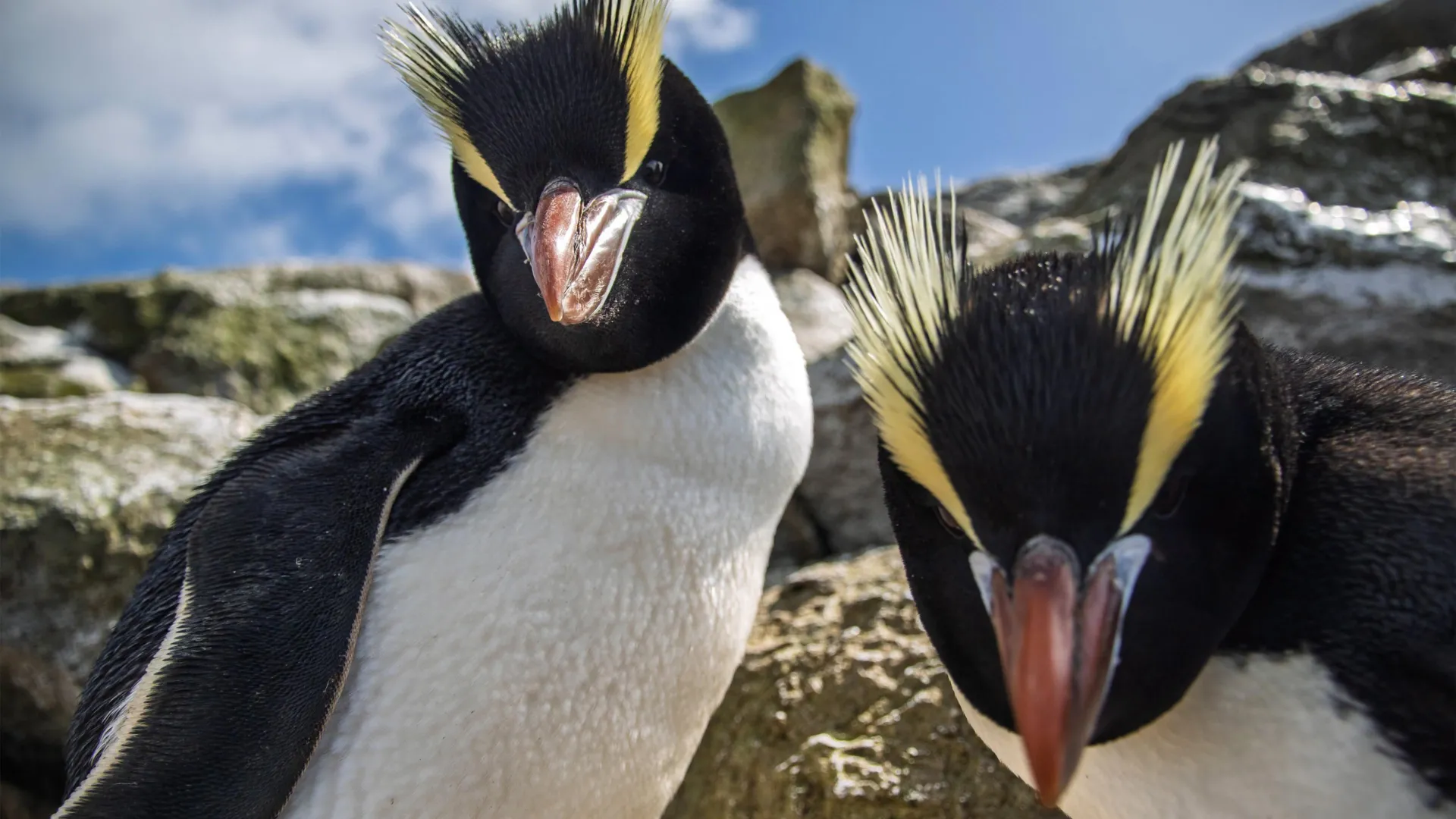
New drone surveys of erect-crested penguins have found that the endangered New Zealand species is faring very differently across its only two breeding areas. Researchers counted colonies on the remote Bounty and Antipodes island groups between 2022 and 2024, producing what the University of Otago describes as the first comprehensive population survey for the species.
The counts challenge a long-held assumption about where the species’ stronghold lies. The Bounty Islands, a small group with about 50 hectares of land, held roughly 27,800 breeding pairs. The Antipodes Islands held about 29,800 breeding pairs, despite being about 40 times larger.
Stable on one island group, declining on the other
Comparisons with records reaching back to the mid-1990s indicate that the Bounty Islands population has remained broadly stable for at least 25 years. By contrast, the Antipodes Islands population has declined by more than 40% over roughly three decades.
The divergence is notable because erect-crested penguins breed exclusively on these two island groups, about 800 kilometers southeast of New Zealand’s South Island. A change at either location therefore has an outsized effect on the species as a whole.

What may be driving the difference
The researchers point to a combination of pressures that may help explain the Antipodes decline, including predators, worsening storms and changing ocean conditions. The supplied account does not establish a single cause, but it frames the population split as a conservation problem that requires attention at the island-group level rather than treating the species as one uniform population.
The findings were published in PLOS ONE by researchers from the University of Otago’s Tawaki Project, working with the Antarctic Research Trust and the Global Penguin Society.
Why the survey matters
Counting colonies across both breeding ranges provides a more reliable baseline for future monitoring. It also shows that land area alone is a poor guide to the importance of a breeding site: the far smaller Bounty Islands support nearly as many breeding pairs as the much larger Antipodes Islands.
For conservation planning, that means protecting the stable Bounty population while investigating the conditions behind the Antipodes decline. Continued surveys can determine whether the contrasting trends persist and help distinguish the roles of local threats, severe weather and changes in the marine environment.
This article is based on reporting by Science Daily. Read the original article.

Originally published on sciencedaily.com