Fossil teeth suggest the sea helped feed dinosaurs on land
Dinosaurs that lived near Cretaceous shorelines may have had a more marine-linked diet than the familiar image of strictly land-based food chains suggests. A study reported in Frontiers in Ecology and Evolution finds chemical evidence that resources from the ocean contributed to the diets of coastal terrestrial animals more than 100 million years ago.
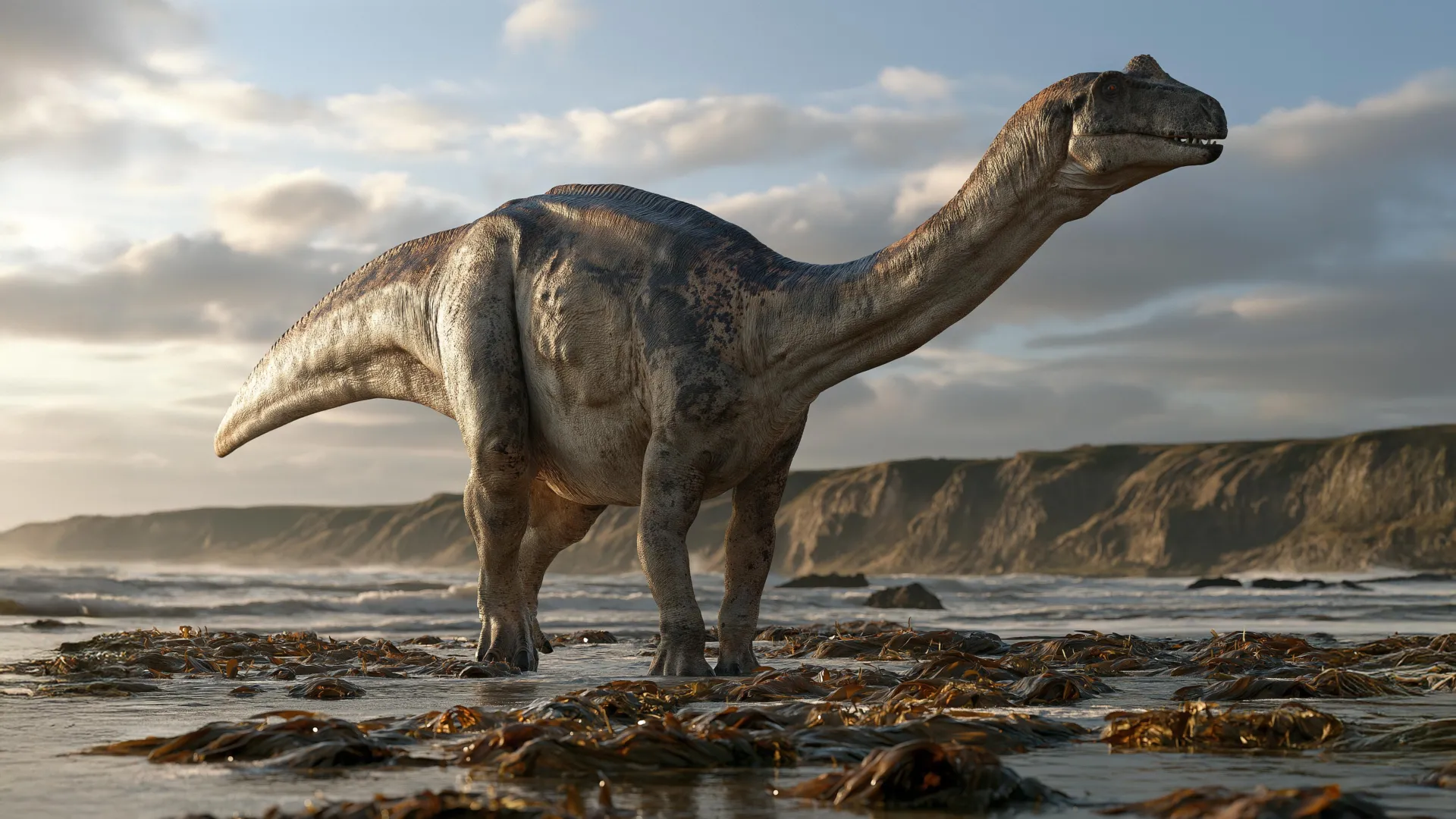
The proposed pathway is not that dinosaurs became marine animals. Instead, the research points to what scientists call marine subsidization: nutrients and organic material originating in the sea entering ecosystems on land. On modern coasts, storms can deposit seaweed and other ocean material on beaches, creating a food source for animals living nearby. The new work argues that a related connection existed in greenhouse-climate coastal environments during the age of dinosaurs.
That possibility matters because it expands the picture of an ancient food web. Marine material arriving at the shoreline could be consumed directly, or could first feed smaller animals and then move upward through the terrestrial food chain. The study’s evidence suggests that this transfer was reflected in the mineral record of the animals themselves.
A chemical record preserved in enamel
The researchers examined carbon-isotope signatures in fossil material, including dinosaur teeth. Plants contain carbon in two stable forms commonly described as light carbon-12 and heavy carbon-13. The balance between them, expressed as δ13C, can act as a chemical fingerprint. When an animal eats, that signature is passed into its tissues; in the case of teeth, it can be retained in enamel long after the animal’s death.
The study uses those signatures to investigate a longstanding question around unusually high carbon-isotope values in some dinosaur teeth. Tooth enamel generally records a higher δ13C value than the food an animal consumes, but the patterns found in coastal fossils called for an explanation that went beyond a simple terrestrial diet.
According to first author Clayton Forster of the University of Arkansas, the findings indicate that coastal terrestrial organisms in Cretaceous greenhouse climates used marine resources to supplement their diets in a way comparable to organisms in coastal environments today. The researchers say the signals show marine resources passing along the food chain and becoming incorporated into the bones and teeth of dinosaurs, crocodiles, turtles and fish.

From washed-up material to a wider ecosystem signal
The significance of the result lies in the network it implies. A shoreline can be a zone where material moves in both directions: land runoff reaches the sea, while storms and tides return sea-derived material to land. In periods when terrestrial food is limited, such as drought, those inputs can become especially important for animals on the coast.
For prehistoric animals, that may have meant access to seaweed and other marine food sources directly, as well as indirect access through prey. The research describes a food chain in which marine nutrients did not stop at the beach. They could move through a coastal community that included herbivorous dinosaurs, predators and other vertebrates.
This is a more nuanced claim than saying dinosaurs routinely lived off the ocean. The evidence instead supports supplementation: marine resources were one component of local diets. The distinction is important because fossil isotope data can reveal connections among ecosystems without supplying a scene-by-scene account of what an individual animal ate on a particular day.
Why the finding reshapes the coastal dinosaur picture
Dinosaurs are often discussed through habitats such as forests, floodplains and inland river systems. Coastal environments deserve equal attention because they were dynamic interfaces between terrestrial and marine life. The new analysis suggests that ancient coastlines did more than provide a boundary between two separate ecological worlds. They may have supplied a recurrent nutritional bridge between them.
The results also demonstrate the value of fossil teeth as environmental archives. Their chemistry can preserve traces of feeding relationships that are not obvious from skeletons alone. A tooth can show that an animal belonged to a community shaped by resources from beyond the habitat in which it is usually placed.
For Cretaceous ecosystems, the study proposes that those marine influences extended across multiple kinds of animals. Dinosaurs are the most attention-grabbing example, but the same reported signatures in crocodiles, turtles and fish point toward a broader coastal pattern rather than an isolated dietary quirk.

Evidence for connection, not a final menu
As with many fossil studies, the result is an interpretation built from chemical evidence rather than a direct observation of feeding. It does not establish that every coastal dinosaur ate seaweed, nor does it reduce ancient diets to a single marine ingredient. What it does provide is evidence that ocean-derived resources were available to, and incorporated by, terrestrial food webs.
That conclusion brings the ancient coastline into sharper focus. More than 100 million years ago, storms and shorelines may have created opportunities for marine nutrients to enter life on land. Fossil teeth now suggest that the effect reached far enough inland in the food web to be recorded in dinosaurs themselves.
This article is based on reporting by Science Daily. Read the original article.
Originally published on sciencedaily.com