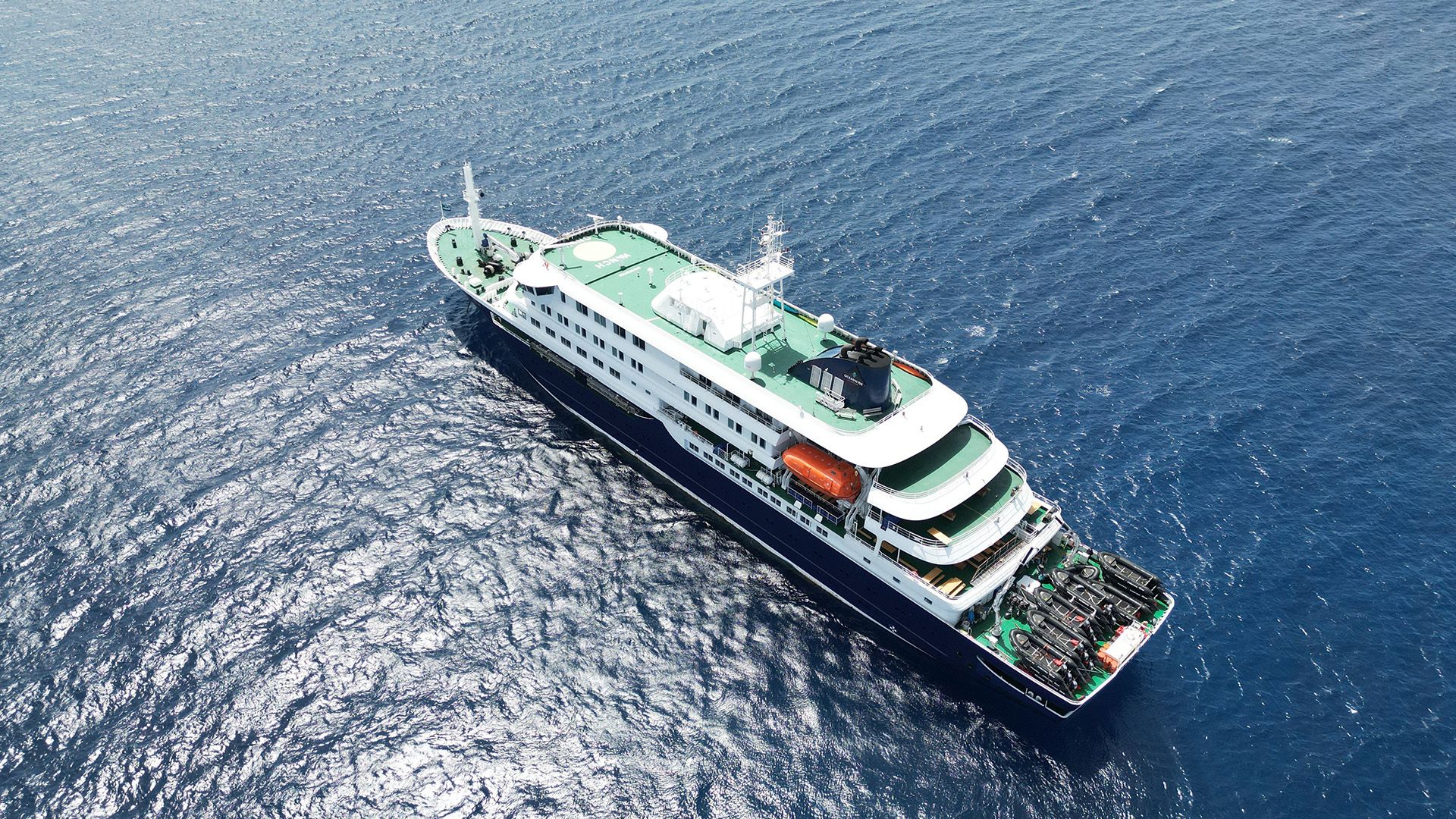
Lab results narrow the focus of a deadly cruise ship outbreak
Health authorities investigating a cluster of hantavirus illnesses linked to the cruise ship MV Hondius now have a more specific culprit in view. Laboratory tests have implicated the Andes virus, a strain of hantavirus with an unusually serious distinction: it is the only one known to spread from one person to another.
That finding raises the stakes around an outbreak that had already drawn international attention. According to the supplied source text, confirmed and suspected hantavirus infections have affected eight people connected to the ship in the Atlantic Ocean. Three people who became sick on the cruise have died, including one person with a confirmed hantavirus infection. Several others are receiving care for suspected infections, and two people in medical care have confirmed infections.
Why Andes virus changes the risk calculation
Hantaviruses are a large family of viruses carried by rodents, including rats. Human infections are relatively uncommon, but they can be severe. The source text says fatality rates depend on the strain involved and can range from 1% to 50%.
Most hantaviruses stop with the initial animal-to-human spillover. Once a person is infected, those strains generally do not move onward to others. Andes virus is the exception cited in the reporting. Dr. Manuel Schibler, head of the virology laboratory at Geneva University Hospitals, said one hantavirus is known to transmit from one human being to another, and that virus is Andes.
That distinction matters operationally. A rodent-borne infection is already serious aboard a ship, where people share enclosed spaces and medical access can be limited. A strain with possible person-to-person transmission introduces a very different containment problem, one that requires officials to think beyond environmental exposure and toward contact tracing, isolation, and onboard transmission chains.

Authorities were already preparing for this possibility
The identification of Andes virus did not come entirely out of nowhere. The source text says that once health authorities, including the World Health Organization, learned about the illness cluster and considered hantaviruses as a possible cause, they already suspected Andes virus might be responsible.
At a May 4 news conference, WHO interim director for epidemic and pandemic preparedness and prevention Maria Van Kerkhove said the agency was operating under that assumption and taking precautions to prevent further spread. The lab results now appear to support that earlier working theory.
That sequence is important because it suggests public-health officials were not waiting for perfect certainty before acting. In an outbreak involving a pathogen with known lethality and unusual transmission potential, delay can be costly. Acting on a high-probability scenario while testing continues is often the more defensible course.
No specific cure, so response depends on speed
The source material also underscores a difficult reality for clinicians: there is no specific treatment that cures hantavirus infection. Supportive medical care remains the main tool for improving a patient’s chances of survival. That places even more emphasis on early recognition, rapid movement to proper care, and clear communication to people who may have been exposed.
When there is no direct antiviral fix, outbreak management has to do more of the work. That means identifying who is ill, who had close contact, and whether the cases are consistent with a shared exposure event, onward transmission, or some combination of both. The fact pattern supplied so far does not answer all of those questions, but it does justify caution.

A cruise ship is a uniquely difficult setting
Outbreaks at sea often compress the usual public-health timeline. Passengers and crew live in close quarters, surface areas are heavily shared, and individuals may disembark across different jurisdictions after exposure. Even when the causative agent is not easily transmitted between humans, those features complicate containment. With Andes virus in the picture, the response burden climbs further.
The source text does not explain how the initial infections began, and that remains a central unknown. Because hantaviruses are rodent-borne, the original exposure could relate to contaminated environments rather than direct spread between people. But health authorities do not need a full reconstruction before deciding that additional precautions are warranted.
The practical question is whether investigators can limit the cluster to the currently known cases. If the infections are tied mainly to a shared exposure event, the outbreak may prove more containable than the worst-case headlines suggest. If person-to-person spread occurred, the monitoring window broadens.
What comes next
For now, the most solidly supported conclusion is that the lab evidence points to Andes virus and that public-health agencies were already responding as though that would be confirmed. The toll described in the source text makes this more than a narrow technical update. It is a reminder that relatively rare pathogens can become acute international incidents when they appear in high-mobility, high-density environments.
The coming days will likely hinge on case confirmation, epidemiological tracing, and whether additional infections emerge among passengers, crew, or downstream contacts. The outbreak is still defined by uncertainty, but not by ambiguity about the level of concern. A hantavirus cluster is serious on its own. A cluster tied to the only known human-transmissible hantavirus is more serious still.
This article is based on reporting by Live Science. Read the original article.

Originally published on livescience.com