Plague Was Already Lethal 5,500 Years Ago
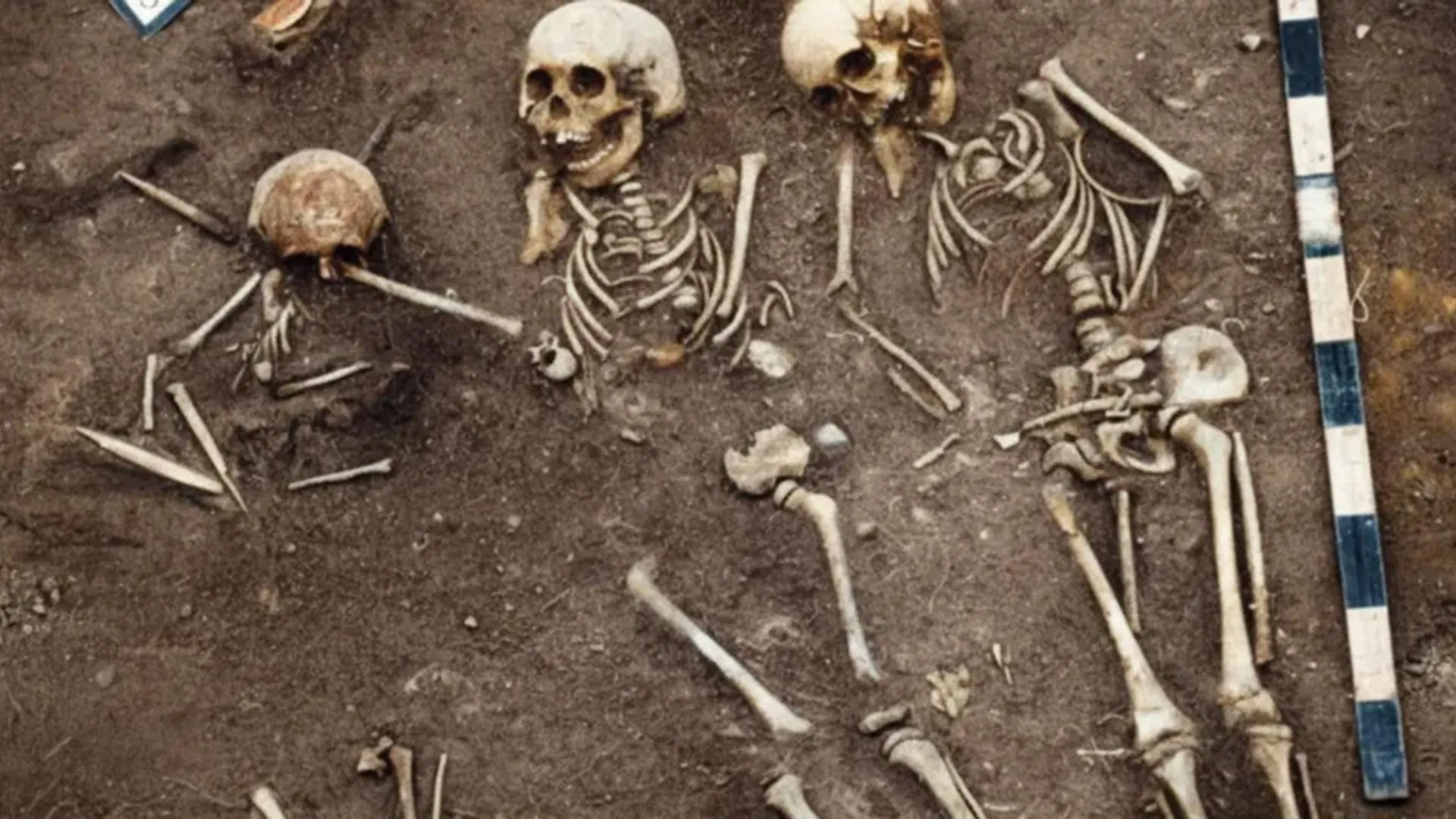
Plague is remembered as a disease of medieval Europe: rats, cramped towns, and burial pits filled faster than gravediggers could work. A new genetic study suggests that reputation, however deserved, arrives very late in the story. Researchers have recovered and reconstructed DNA from Yersinia pestis — the bacterium that causes plague — in human remains from eastern Siberia dated to roughly 5,500 years ago, a period when the dead belonged to small, mobile hunter-gatherer bands rather than farming villages or walled cities.
The work, published in the journal Nature and announced by the University of Copenhagen, indicates that the bacterium was already capable of devastating human communities long before urban life supplied the crowded conditions usually blamed for major outbreaks.
Teeth, Genomes, and Four Burial Sites
An international research team focused on four hunter-gatherer burial grounds in the Lake Baikal region of East Siberia. Teeth proved to be the critical sample material: the dense tissue preserves bacterial DNA well enough for scientists to rebuild ancient genomes and compare them against known lineages of the pathogen.
That reconstruction revealed early forms of plague that had not previously been described. In all, the scientists identified Yersinia pestis DNA in 18 of the 46 individuals tested — close to 40 percent of those examined. The authors point out that this detection rate exceeds what has been reported at some burial grounds from the medieval era, a striking result for communities that never built dense settlements or kept grain stores that attracted rodents.
Because the burial sites are small and the graves closely spaced in time, the data offer something rare: a snapshot of outbreaks unfolding inside specific prehistoric groups, not just a single diagnostic positive from a distant corner of the ancient world.

A Clear Picture of What Happened
To move from genetic data to human events, the researchers layered several lines of evidence on top of one another. They combined the plague DNA with archaeological analysis of the graves and radiocarbon dating of the remains, then cross-referenced the genetic relationships connecting the victims to one another.
Lead author Ruairidh Macleod, who conducted the research as a PhD student at the University of Cambridge and is now a Research Fellow at the University of Oxford, said the combined approach allowed the team to assemble a detailed and complete account of what took place during these outbreaks. In other words, the genetics did not simply confirm that plague was present — it helped show how the disease moved through families and communities that lived and traveled together.
Why the Early Strains May Have Been So Dangerous
Whether the earliest versions of plague were relatively mild or genuinely virulent has been a long-running debate among researchers. Senior author Eske Willerslev, a professor at both the University of Copenhagen and the University of Cambridge, said the new findings settle that question for these Siberian strains: they were already highly lethal.
One possible explanation lies in the pathogen's own genetic toolkit. According to the research summary, the prehistoric strains may have been especially dangerous because they carried a genetic factor capable of provoking severe immune reactions in their human hosts — a trait that could turn an infection into a runaway inflammatory response rather than a contained illness.
Earlier work had shown that ancient Yersinia pestis lineages were missing some of the genetic features that later allowed bubonic plague to spread efficiently through fleas, the transmission route behind the pandemics of recorded history. That gap makes the Siberian outbreaks harder to explain by the familiar rat-and-flea model and points instead to other ways the bacterium may have passed between people in close-contact groups.

Rewriting the Timeline of a Notorious Disease
The conventional narrative places plague's rise alongside the growth of trade networks, storage economies, and sprawling medieval cities — environments where rodents and their fleas could thrive near dense human populations. The Lake Baikal genomes complicate that story by placing a lethal form of the disease in a setting with none of those features.
Instead of cities creating the conditions for catastrophe, the new evidence suggests the bacterium arrived at its deadly potential far earlier, and that small, mobile communities were vulnerable from the start. Hunter-gatherers living in dispersed groups still buried their dead together, shared shelters, and cared for the sick — all opportunities for a pathogen to spread.
What the Study Does and Does Not Show
The findings rest on a limited but unusually informative sample: 46 individuals from four sites in one region of Siberia. That is enough to demonstrate that plague was circulating and killing people 5,500 years ago, and that the strains involved were not benign. It does not establish how far beyond Lake Baikal those lineages traveled, nor exactly how they were transmitted.
Key takeaways from the research include:
- Yersinia pestis DNA was detected in 18 of 46 individuals buried at hunter-gatherer sites in the Lake Baikal region of East Siberia.
- The roughly 40 percent detection rate is higher than some reported from medieval plague burials.
- The reconstructed strains were previously unknown early forms of the bacterium.
- The ancient lineages may have carried a genetic factor that triggers severe immune reactions.
- Radiocarbon dating, archaeology, and kinship analysis together describe outbreaks that struck entire families.

The Bigger Picture
Plague's history is often told as a story about human density — the idea that only farms, cities, and long-distance trade could turn a bacterium into a civilization-shaking killer. The Siberian genomes push the disease's documented lethality back thousands of years before any of those developments, into a world of seasonal camps and small kin groups.
That reframing matters beyond prehistory. Understanding which genetic components made early strains so dangerous, and which later changes allowed the bacterium to exploit fleas as a transmission vehicle, helps explain how pathogens evolve from local threats into global ones. For now, the teeth of a few dozen people buried beside Lake Baikal have added an unexpectedly dark chapter to the biography of one of humanity's most infamous infections.
This article is based on reporting by Science Daily. Read the original article.
Originally published on sciencedaily.com