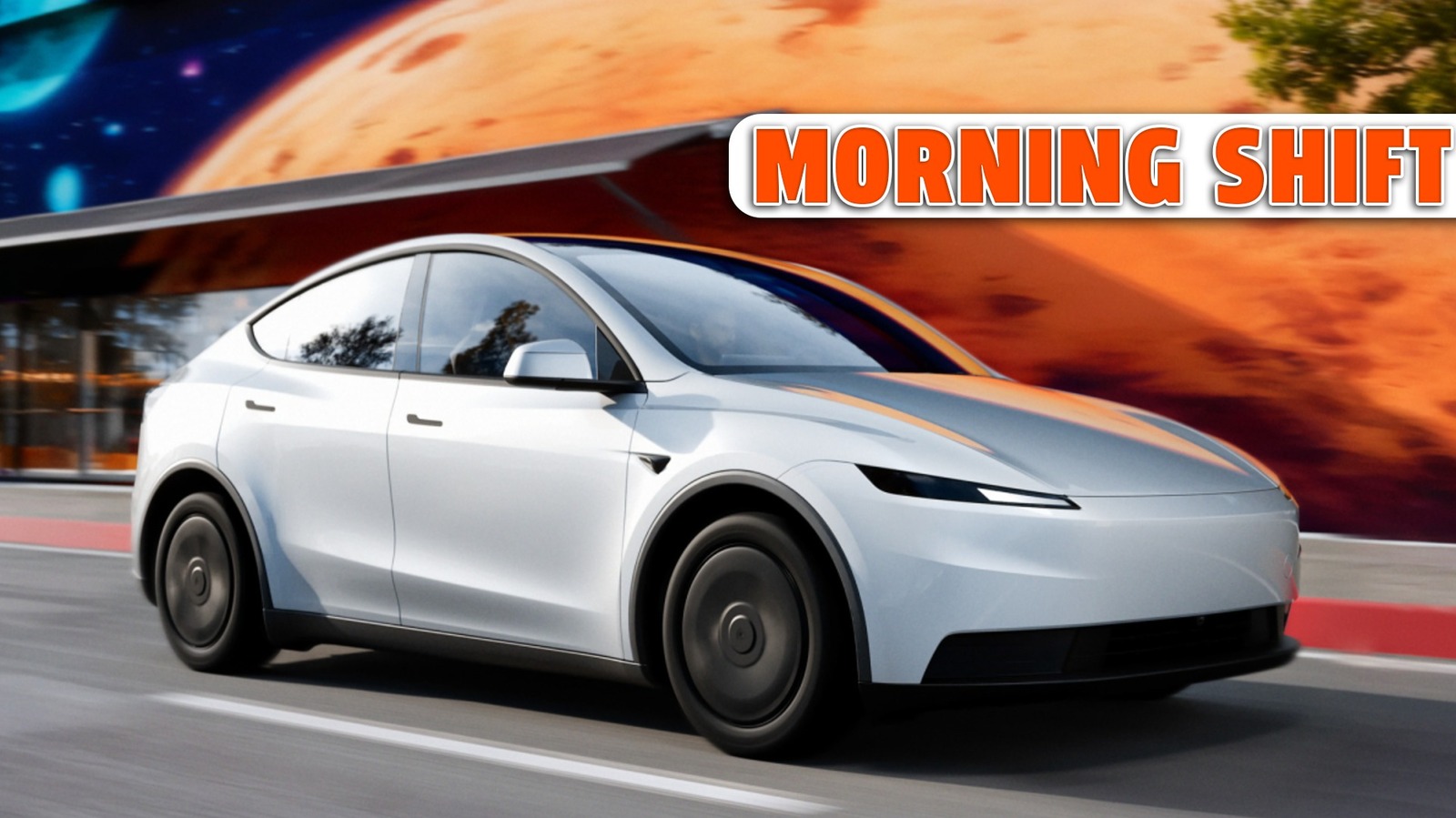
A familiar Tesla question returns
Tesla is reportedly talking with suppliers about a smaller, cheaper electric crossover, reviving one of the most persistent unresolved questions around the company: will it ever deliver a genuinely lower-cost EV designed for far broader volume than the Model 3 and Model Y?
The report, built on anonymous sourcing and treated with skepticism even by the article relaying it, says the new vehicle would be an all-new compact crossover rather than a stripped-down variant of an existing model. Two of the sources cited said Tesla aims to price it substantially below the entry-level Model 3. The same report says the vehicle could be built in China, Europe and the United States.
None of that amounts to a confirmed product plan. But the very return of the story says something about the market Tesla now faces. The company has spent years caught between its premium-brand history and the unresolved demand for a truly cheaper model that could defend share in an increasingly crowded EV field.
Why the rumor keeps resurfacing
The appeal of a lower-cost Tesla is obvious. A smaller vehicle with a smaller battery, lighter weight and a single-motor setup could attack the market segment where affordability matters most and where Chinese competition has been especially aggressive. According to the report, Tesla wants to save costs partly by using a smaller battery and could target a vehicle roughly the size of a Chevrolet Bolt.
That would be a significant strategic shift, or perhaps a return to an abandoned one. Reuters previously reported in 2024 that Tesla had dropped plans for the so-called Model 2 in favor of humanoid robots and robotaxis. The latest chatter therefore lands in a credibility gap of Tesla’s own making. Investors, suppliers and buyers have heard versions of this story before.
The report’s other claimed details fit that lower-cost logic. A shorter-range package, one electric motor and a much lighter vehicle would all support a price point materially below Tesla’s current mainstream lineup. But those features would also reveal how the company might be trying to protect margins while moving downmarket.
The larger pressure on Tesla
Even if the product remains unconfirmed, the rumor reflects real strategic pressure. Tesla’s existing lineup no longer carries the same aura of inevitable market expansion it once did, and a cheaper model has become one of the most obvious missing pieces in its portfolio. Lower-cost competitors are no longer hypothetical. They already exist, especially in China, and they have helped redefine what entry-level EV buyers expect.
That is why a new compact crossover would matter more than another trim variation. It would answer a market problem Tesla has not fully solved: how to remain a scale manufacturer while much of its brand story and pricing have moved upward.
The article relaying the report also notes the contradiction at the heart of the latest claim. Elon Musk killed the previous low-cost EV effort in 2024 to focus on robots and autonomous robotaxis. If Tesla is now again discussing a cheaper mass-market crossover, the company is either changing course, revisiting an old platform logic or trying to keep multiple futures open at once.
What to believe, and what not to
For now, the safest reading is narrow. There is a report of supplier discussions. There is no confirmed launch. There is no official specification sheet. There is no firm production timeline. That matters because Tesla rumors routinely race ahead of the company’s actual product cadence.
Still, the persistence of this story is revealing in itself. Markets keep returning to the idea of a smaller Tesla because it solves an obvious strategic problem. The company needs a clearer answer to affordability, and the EV market is increasingly unforgiving toward brands that leave that ground uncontested.
Until Tesla puts its name on a real vehicle plan, this remains an industry rumor. But it is a rumor that survives because the underlying business case has not gone away. A cheaper Tesla would not just be another model. It would be a statement about whether the company still intends to dominate the mass market it once claimed as its destiny.
This article is based on reporting by Jalopnik. Read the original article.
Originally published on jalopnik.com