रेटिनल आजारांच्या निदानासाठी एआय सहाय्यकाने चाचणीत मजबूत निकाल दिले
Nature Medicine मध्ये प्रकाशित एका multicenter randomized trial नुसार, artificial intelligence-based clinician decision support system ने suspected inherited retinal diseases साठी diagnostic performance लक्षणीयरीत्या सुधारली; ही अशी स्थिती आहे जी नियमित उपचारात जलद आणि अचूकपणे वर्गीकृत करणे कठीण असते.
Retina4IRD नावाची ही प्रणाली specialists ना retinal imaging मधून संभाव्य genotype categoriesचा अंदाज लावण्यास मदत करण्यासाठी तयार करण्यात आली. चाचणीत, या tool चा वापर करणाऱ्या specialists नी, तो न वापरता काम करणाऱ्या specialists च्या तुलनेत top-5 genetic prediction accuracy मध्ये लक्षणीयरीत्या चांगली कामगिरी केली. हा निकाल ophthalmology मधील दीर्घकालीन bottleneck ला संबोधित करतो, कारण inherited retinal diseases मध्ये ठोस निदानापूर्वी अनेकदा intensive phenotyping, multidisciplinary interpretation, आणि genetic testing आवश्यक असते.
Inherited retinal diseases, किंवा IRDs, हा एकच विकार नाही, तर retina ला प्रभावित करणाऱ्या genetic conditions चा संच आहे. त्यांची clinical presentation एकमेकांमध्ये overlap होऊ शकते, म्हणजेच संभाव्य कारण संकुचित करण्यापूर्वी डॉक्टरांना अनेक प्रकारचे evidence एकत्र करावे लागतात. ही प्रक्रिया मंद, resource-heavy, आणि care settings नुसार असमान असू शकते, विशेषतः जिथे deep subspecialty expertise मर्यादित आहे.
Retina4IRD कसे तयार केले गेले
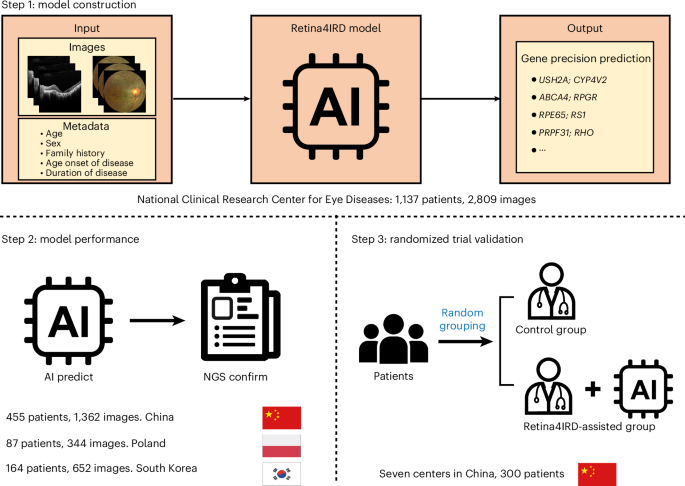
अभ्यासानुसार, Retina4IRD retinal images मधून 17 genotype categoriesचा अंदाज लावते. संशोधन पथकाने RETFound ने pretrained केलेल्या Vision Transformer architecture चा वापर करून model विकसित केला, आणि नंतर चीन, दक्षिण कोरिया, व पोलंड मधील genetically confirmed patients कडून मिळालेल्या multimodal imaging data वर त्याचे प्रशिक्षण व validation केले.
या dataset मध्ये 1,843 genetically confirmed patients चे color fundus photographs आणि optical coherence tomography scans होते, ज्यात 3,376 eyes चा समावेश होता. हे international training and validation set महत्त्वाचे आहे, कारण IRD diagnosis वर रोगांची विविधता आणि sites मधील imaging practice मधील फरक दोन्हींचा परिणाम होऊ शकतो. म्हणून external validation performance हे system ज्या संस्थेत बनवले गेले त्यापलीकडे ते काम करू शकते का याचे महत्त्वाचे परीक्षण आहे.
Internal validation मध्ये model ने 0.904 top-5 prediction accuracy मिळवली, ज्याचा 95% confidence interval 0.896 ते 0.912 होता. External validation मध्ये top-5 accuracy 0.856 होती, ज्याचा 95% confidence interval 0.850 ते 0.863 होता. ही आकडेवारी दर्शवते की development environment बाहेरही model ने मजबूत performance टिकवून ठेवली, जरी internal testing च्या तुलनेत अपेक्षित घट दिसून आली.
अभ्यास हा tool clinical judgment किंवा genetic sequencing चा पर्याय म्हणून नव्हे, तर असा decision support system म्हणून मांडतो जो clinicians ना diagnostic pathway मध्ये आधीच सर्वात संभाव्य genetic explanations प्राधान्याने निवडण्यास मदत करू शकतो.

Randomized trial मध्ये specialist कामगिरीत वाढ दिसली
या पेपरमधील सर्वात मजबूत evidence 300 participants च्या randomized controlled trial मधून येते, ज्यांना suspected IRD होते. Participants ना 1:1 प्रमाणात Retina4IRD-assisted specialist arm किंवा specialist-only arm मध्ये वाटण्यात आले. नोंदणी केलेल्यांपैकी 295 participants कडे उपलब्ध next-generation sequencing reports होत्या आणि त्यांना अंतिम विश्लेषणात समाविष्ट करण्यात आले.
विश्लेषित गटाचे median age 33 वर्षे होते, आणि 114 participants, म्हणजे 38.6%, महिला होत्या. अभ्यासाचा primary endpoint पूर्ण झाला. AI support tool वापरणाऱ्या specialists नी 88.5% top-5 genetic accuracy मिळवली, तर specialist-only group मध्ये ती 67.3% होती; पेपरनुसार हा फरक सांख्यिकीयदृष्ट्या महत्त्वाचा होता, P 0.001 पेक्षा कमी.
पेपरमध्ये असेही नमूद केले आहे की top-1 ते top-4 accuracy पर्यंतचे secondary endpoints सर्व Retina4IRD-assisted arm च्या बाजूने होते. एकत्रितपणे, या निकालांवरून असे सूचित होते की system ने फक्त लांबलचक यादीत अतिरिक्त शक्यता जोडल्या नाहीत. त्याने prediction stack मधील ranking quality सुधारली, ज्यामुळे सर्वात संभाव्य genetic categories वरच्या स्थानांवर येण्याची शक्यता वाढली.
प्रत्यक्षात हा फरक महत्त्वाचा आहे. जर specialist imaging मधून संभाव्य genotype categories चा छोटा, उच्च-गुणवत्तेचा संच ओळखू शकला, तर downstream testing आणि interpretation अधिक केंद्रित होऊ शकते. जिथे genetic testing क्षमता मर्यादित आहे, तिथे चांगला front-end triage signal specialist attention अधिक कार्यक्षमतेने वाटप करण्यास मदत करू शकतो.
हे निष्कर्ष काय बदलू शकतात
या पेपरचे महत्त्व त्याने दिलेल्या evidence च्या प्रकारात आहे. अनेक medical AI studies retrospective validation पर्यंतच मर्यादित राहतात, जिथे algorithms ना ऐतिहासिक डेटावर तपासले जाते पण live किंवा quasi-live clinical workflows मध्ये त्यांचे मूल्यांकन केले जात नाही. इथे संशोधकांनी AI-assisted आणि unassisted specialists यांच्यात randomized comparison करून त्यापुढे पाऊल टाकले.
तरीही यामुळे deployment संदर्भातील सर्व प्रश्न सुटत नाहीत. दिलेल्या study text मध्ये Retina4IRD स्वतंत्रपणे अंतिम diagnosis स्थापन करते असा दावा नाही, तसेच genetic testing टाळता येईल असेही सुचवलेले नाही. त्याऐवजी, परिणाम rare-disease medicine मध्ये AI ची अधिक व्यावहारिक अल्पकालीन भूमिका सूचित करतात: जिथे diagnosis सध्या मर्यादित expertise आणि वेळखाऊ review वर अवलंबून असते, तिथे decision support सुधारणे.
सीमापार विकास केलेल्या dataset मधून व्यापक महत्त्वाकांक्षाही दिसते. IRDs इतके दुर्मिळ आहेत की मजबूत training data गोळा करणे कठीण असते, आणि clinically meaningful variation पकडण्यासाठी अनेकदा international collaboration आवश्यक असते. पुढील अभ्यासांनी व्यापक population आणि care systems मध्ये निकालांची पुष्टी केल्यास, retina imaging models image acquisition आणि molecular confirmation यांच्यामध्ये increasingly important layer बनू शकतात.
सध्या मुख्य निष्कर्ष सरळ आहे. एका randomized, multicenter setting मध्ये AI-based support system ने suspected inherited retinal disease मागील genetic category चा अंदाज लावण्याची specialists ची क्षमता लक्षणीयरीत्या सुधारली. अशा क्षेत्रात जिथे diagnostic delay उपचार निर्णय, counseling, आणि भविष्यातील gene-targeted interventions साठी पात्रता यावर परिणाम करू शकतो, हे एक महत्त्वाचे पाऊल आहे.
हा लेख Nature Medicine च्या रिपोर्टिंगवर आधारित आहे. मूळ लेख वाचा.

Originally published on nature.com


