The headquarters fight is giving way to the mechanics of relocation
U.S. Space Command’s long-disputed headquarters move to Alabama is entering a more concrete phase. According to the supplied Defense News reporting, the command is already operating a small Program Management Office of about 20 personnel at Redstone Arsenal in Huntsville, Alabama, as part of a phased relocation effort.
That detail matters because it signals a transition from political controversy to physical implementation. Headquarters relocations of this scale are not decided by one ceremonial announcement. They become real when personnel, facilities, interim workspaces, and construction timelines begin to take shape. By that standard, the move is now clearly underway.
The numbers are significant
The supplied report says the relocation involves about 1,400 positions out of the command’s roughly 1,700 military and civilian personnel. That is not a token footprint. It is a major shift in where the command will eventually conduct its daily work.
The same source states that personnel at Redstone Arsenal are expected to grow to nearly 200 by the end of 2026. A new Sensitive Compartmented Information Facility with capacity for more than 80 people is scheduled for an April ribbon-cutting, and interim facilities are being renovated and upgraded. Those are practical preparations for continuity, not symbolic gestures.
A new headquarters is years away, so the transition has to be staged
The command plans to break ground on a dedicated headquarters building at Redstone Arsenal in 2027 on an approximately 60-acre site, according to the City of Huntsville. Construction is expected to be completed around 2031, with another year for personnel move-in.
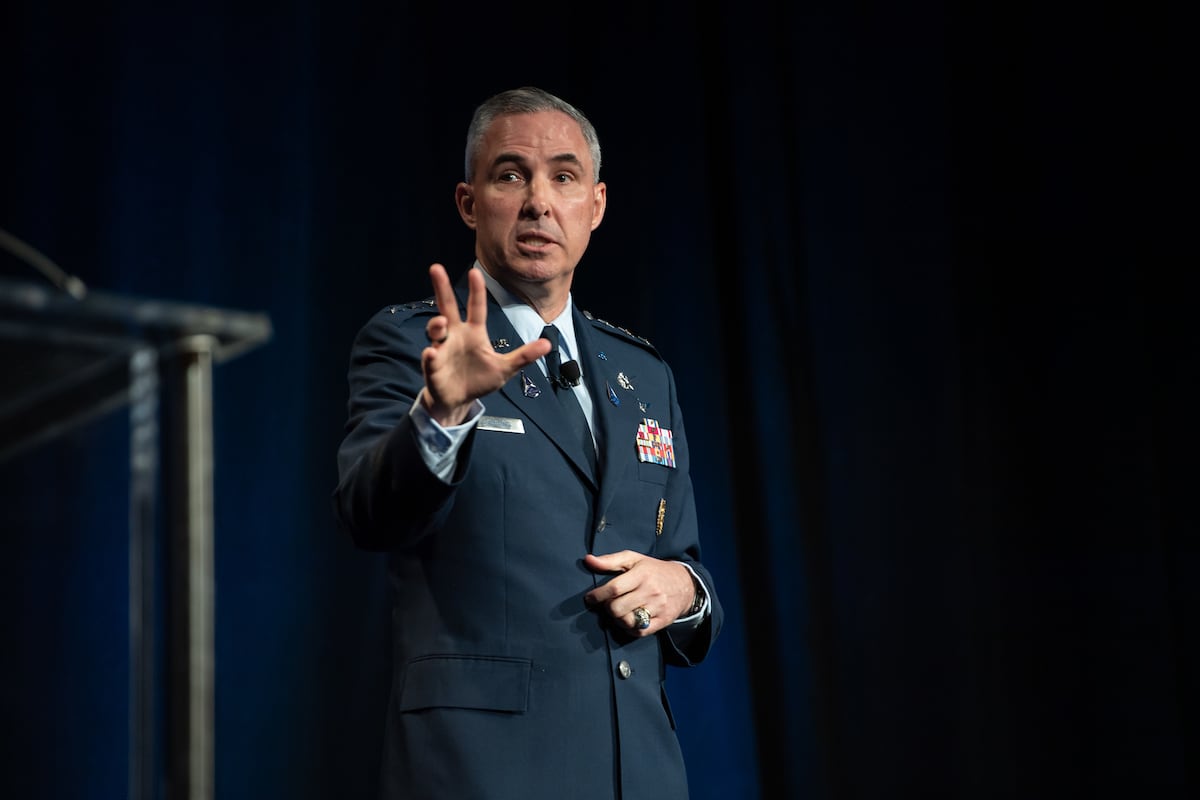
That long timeline explains why Space Command is emphasizing a phased transition. In his prepared posture statement cited in the supplied source, Gen. Stephen N. Whiting said the command would relocate personnel and missions gradually and operate from interim facilities while the purpose-built headquarters is constructed. The stated goal is uninterrupted command and control during the move.
Continuity is the strategic test
That point is easy to overlook. Space Command is not an administrative office that can tolerate long periods of disruption. It is responsible for command-and-control functions tied to national security and space operations. Relocating a workforce under those conditions is as much an operational challenge as a facilities project.
The supplied reporting says the command is offering relocation bonuses paid over several years and moving-expense coverage for civilians who go to Huntsville. It has also implemented a retention bonus for civilian headquarters staff who stay in Colorado Springs until their functions are ready to move. That dual incentive structure reflects the command’s biggest near-term challenge: keeping the existing workforce stable while building the new one.

The labor problem is as important as the construction problem
Whiting’s quoted remark in the supplied article is revealing: he needs his workforce to stay with him in Colorado until each function is ready to relocate. That captures the core management risk. A headquarters move can fail functionally even if the buildings are finished on time, if too much expertise leaves before mission handoff is complete.
This is one reason the command has emphasized continuity, care for personnel and families, and preservation of warfighting culture during the transition. Those phrases are common in official relocation language, but here they point to real operational constraints. Families must decide whether to move. Civilians may reconsider career paths. Institutional knowledge can thin out if the process is mishandled.
Congressional action is shaping the process
The supplied report also notes Whiting’s support for military construction reform language inserted into the most recent National Defense Authorization Act. He said that language is allowing the new headquarters to be built differently than would have been possible a year earlier. That suggests Congress is not just overseeing the relocation from a distance. It is affecting how the buildout is executed.
Whiting also said he and Air Force Secretary Troy Meink would soon formalize a decision on the military construction agent after discussions with the Air Force and the Army Corps of Engineers. In large defense projects, those procedural decisions shape schedule, oversight, and execution almost as much as the headline location choice.

The relocation is becoming institutional fact
For years, the question around Space Command headquarters centered on where it should be. The supplied details now point to a different question: how effectively can the organization move without weakening its mission? The answer will depend on staffing retention, interim facilities, construction execution, and leadership discipline over several years.
But the strategic trajectory is much clearer than before. There is already a Redstone office. Additional secure space is opening. Renovations are underway. Groundbreaking is planned for 2027. Completion is targeted for around 2031, followed by move-in.
That does not end the politics around the decision, but it does mark a turning point. The relocation is no longer only a contested policy outcome. It is becoming a built reality.
This article is based on reporting by Defense News. Read the original article.
Originally published on defensenews.com