AUKUS has moved from concept to a concrete Pillar 2 project
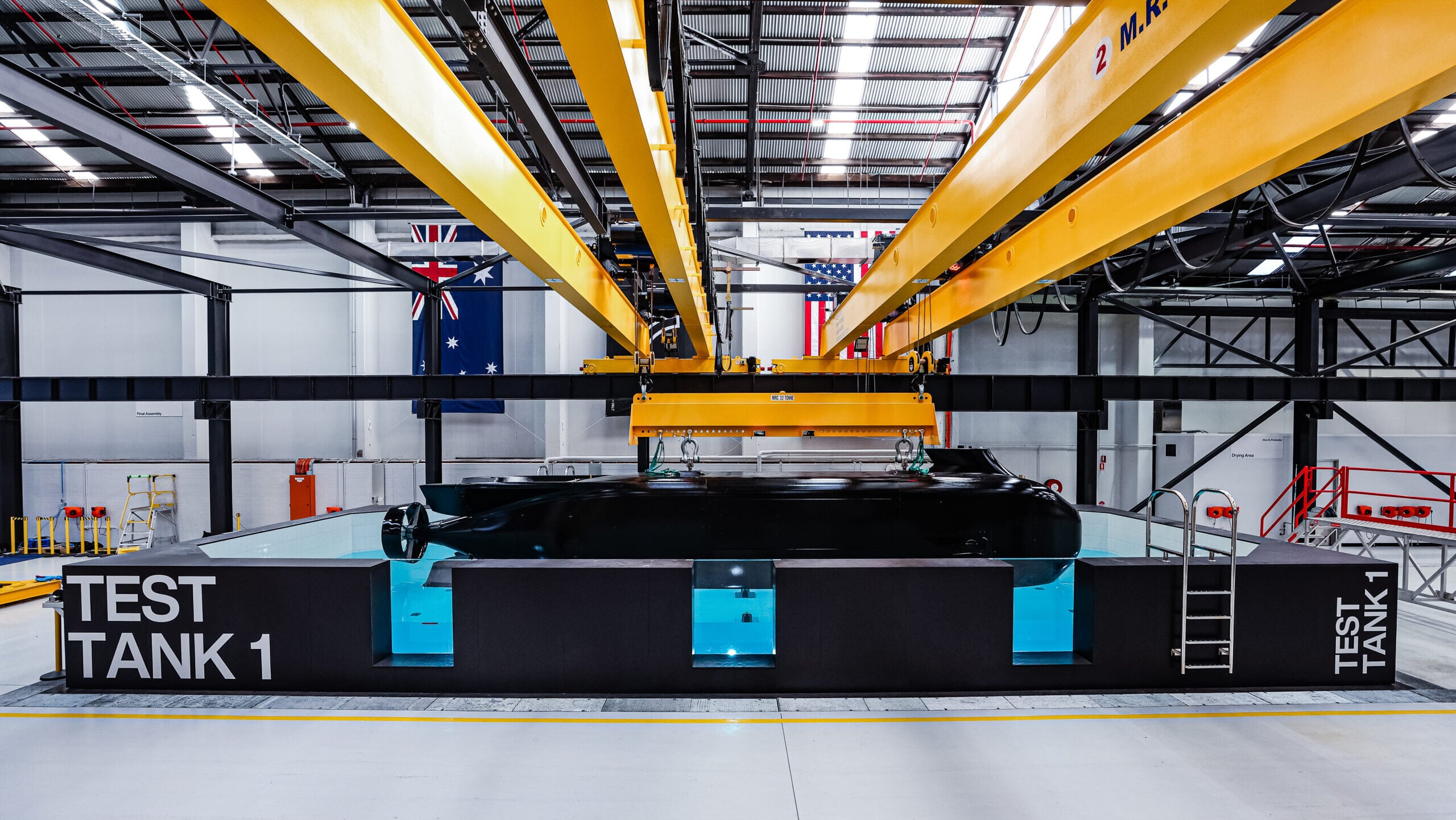
The United States, the United Kingdom and Australia have signed an agreement to jointly develop technologies for uncrewed underwater vehicles, marking the first project to be officially announced under AUKUS Pillar 2. According to the supplied report, the effort will focus on payloads including sensors and weapons systems that can be deployed across all three countries’ underwater drone fleets.
That matters because Pillar 2 has often been described in broad terms as the advanced capability arm of AUKUS, but it has had fewer publicly visible milestones than the submarine-centered Pillar 1. This agreement gives the partnership something more tangible: a trilateral development program tied to interoperable hardware, shared standards, common control systems, and a delivery timeline that begins in 2027.
The joint statement cited in the report says the project is meant to improve the partners’ ability to protect critical seabed infrastructure, conduct surveillance and reconnaissance, support strike and logistics operations, and strengthen anti-submarine warfare, anti-surface warfare, mine countermeasures, electronic warfare, and contested littoral maneuver. That is a wide mission set, but the through-line is straightforward. The three governments want underwater autonomy to become a shared operational layer rather than a collection of nationally isolated programs.
Why underwater payloads are a strategic starting point
The decision to focus first on payloads is practical. Hull designs and vehicle classes differ, but sensors, weapons, control standards, and mission modules can be more readily shared across fleets. That makes payloads an efficient way to build interoperability without waiting for countries to align around a single vehicle platform.
The UK Ministry of Defence has committed 150 million pounds, or about $201.8 million, to the effort, according to the report. UK Defence Secretary John Healey described the project as a breakthrough for the partnership and linked it directly to maritime threats including those facing underwater cables and pipelines. That emphasis reflects a broader shift in allied planning, where seabed infrastructure is increasingly treated as strategically vulnerable and politically consequential.
The fact sheet described in the report also points to an incremental development model. Each AUKUS country will first focus on a different type of effect that the payloads can deliver, with those components designed to be interchangeable and integrated across national fleets. After that, the partners would move toward jointly developed and jointly produced trilateral payloads and enabling technologies.
A Pillar 1 change with real procurement consequences
The same joint statement also announced changes to Australia’s plan for acquiring Virginia-class submarines under AUKUS Pillar 1. According to the candidate text, Australia will streamline the acquisition pathway by simplifying supply chain management, operational requirements, and maintenance, while maximizing cost efficiencies.
The notable procurement shift is that Australia will forgo the purchase of a new-build Virginia-class submarine and instead acquire another ex-US Navy boat. That is more than an accounting adjustment. It suggests the partners are trying to reduce complexity and protect schedule realism in a program already burdened by industrial, training, and sustainment demands.
In practical terms, using another former US Navy submarine could help Australia move faster toward operating a nuclear-powered submarine force, even if it changes the balance between capability freshness and acquisition simplicity. It also reflects the larger truth of AUKUS: ambition depends not only on shared strategy, but on whether allied industrial bases can actually deliver platforms and support them over decades.
The significance of the announcement
The dual nature of the announcement is what makes it especially important. Pillar 2 is no longer just a framework for future collaboration; it now has a named project, a capability domain, and a first delivery window. At the same time, Pillar 1 is being adapted in response to the real constraints of cost, supply chain pressure, and maintenance planning.
Together, those developments show a partnership becoming more operational and more pragmatic. The underwater drone initiative aligns with a fast-moving military priority area where autonomy, persistence, and seabed awareness are rising in value. The submarine plan change, by contrast, shows the three countries adjusting high-end procurement plans to match industrial reality.
That combination may ultimately define AUKUS more than any single platform. If the pact is to matter strategically, it must produce both advanced capability integration and workable procurement choices. This week’s announcement suggests the partners are trying to do both at once.
This article is based on reporting by Breaking Defense. Read the original article.
Originally published on breakingdefense.com