Army opens search for high-volume short-range missile production
The U.S. Army is seeking a new short-range missile and wants industry to show it can eventually deliver up to 8,000 rounds per year, according to the supplied source text summarizing a sources sought notice. The requirement points to more than a routine procurement exercise. It reflects a broader push to expand munitions capacity, preserve compatibility with existing launch systems, and field weapons able to operate in more contested environments.
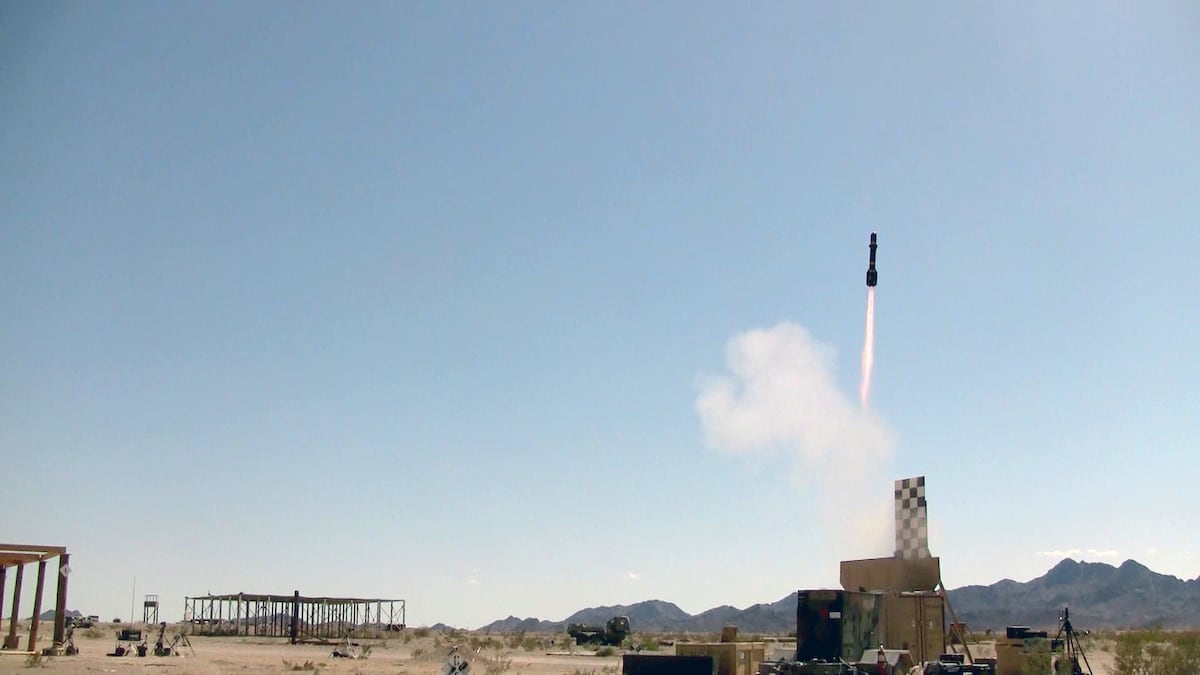
The missile the Army describes is similar in role and performance to the AGM-114 Hellfire and the Joint Air-to-Ground Missile, or JAGM. The notice calls for a weapon that can integrate with joint manned and unmanned air, ground, and waterborne platforms using an M299 launcher or equivalent. That compatibility requirement matters because it lowers the barrier to adoption: the Army is not just asking for a new missile concept, but for one that can slot into operational ecosystems already built around existing launch hardware.
Industry responses are due by September 15, according to the source text. The timeline suggests the Army is moving quickly to identify realistic suppliers rather than waiting on a long exploratory phase.
What the Army wants
The performance profile laid out in the notice closely tracks current battlefield needs for a flexible tactical weapon. The missile should have a minimum range of 500 meters and a maximum range of 8,000 meters or greater. It is expected to engage a wide spread of targets, including heavy and light armored tracked vehicles, command-and-control nodes, air defense artillery radars, counter-drone systems, and small fast attack maritime targets.
That target set says a great deal about how the Army is framing future conflict. This is not a single-mission anti-armor requirement. It is a demand for a multi-role precision munition that can support operations across land, air, and littoral scenarios while remaining useful against both legacy platforms and newer threats such as unmanned systems.
The notice also requires the missile to function amid jamming and GPS denial. That detail is increasingly central to modern weapons design. Precision-guided munitions that depend too heavily on clean electromagnetic conditions face real limitations in theaters where adversaries are expected to jam, spoof, or degrade navigation and targeting inputs. By specifying performance under interference, the Army is making clear that resilience is part of the baseline requirement, not an optional upgrade.

Production capacity is part of the competition
Just as important as the missile’s tactical profile is the Army’s emphasis on industrial readiness. Contractors are expected to have manufacturing and supplier capacity established by late 2028. Initial delivery of as many as 8,000 missiles is slated for completion within two years of contract award, followed by annual orders of up to 8,000 missiles per year.
The source text underscores the seriousness of that demand. Interested companies must provide verifiable evidence that they can produce, test, and deliver the specified quantities within the mandated lead times, and they must confirm the use of an active, qualified, and operational production line.
That language places this effort squarely in the context of munitions strain and supply urgency. The Army is not only evaluating technical proposals; it is testing whether manufacturers can sustain output at scale. In recent years, the defense industrial base has been under pressure to increase production of key weapons and ammunition while avoiding bottlenecks in suppliers, components, and final assembly. This notice suggests the Army wants fewer paper promises and more proof that factories can actually deliver.
Why launcher compatibility matters
The M299 launcher requirement offers a clue to the Army’s intended balance between speed and flexibility. The M299 is designed to fire Hellfire and JAGM-family weapons and can be fitted to helicopters such as the Apache, Cobra, and Seahawk, as well as drones and even containerized installations. By keeping the interface familiar, the Army can broaden the number of platforms able to use the missile without forcing a wholesale redesign of launch architecture.
That approach can shorten integration timelines and reduce transition risk. It also supports the Army’s stated interest in joint and multi-domain operations, because compatible missiles can move more easily across services and platform types. A weapon that can arm crewed aircraft, unmanned systems, ground vehicles, and waterborne platforms has obvious appeal in an environment where commanders want more interchangeable effects and faster adaptation to mission changes.
The background: Hellfire, JAGM, and a changing demand signal
The requirement echoes capabilities associated with two widely fielded missile families. The Hellfire, first designed in the 1970s as a helicopter-launched anti-tank weapon, is now used by more than 30 countries. The Hellfire II uses semi-active laser guidance. JAGM, intended to replace the Hellfire, TOW, and Maverick in some roles, uses laser and millimeter-wave homing and reached initial operating capability in 2022, according to the source text.
The Army’s move does not necessarily signal dissatisfaction with those systems. Instead, it may indicate that demand, operational needs, and production planning have outgrown a narrower acquisition posture. Lockheed Martin has produced more than 145,000 Hellfires and JAGMs, and in August 2025 received a $720 million contract covering both missiles for U.S. and allied buyers. That history shows an established market and a mature weapon class. The new notice suggests the Army wants additional options, additional capacity, or both.
A signal to industry and allies
Even in its early form, the requirement sends a clear message to missile manufacturers: the Army is prioritizing scalable, resilient, platform-flexible precision weapons. It is also signaling that future competition will hinge on manufacturing credibility as much as on seeker design, propulsion, or warhead configuration.
That message extends beyond the U.S. market. Because Hellfire- and JAGM-class missiles are already used by allied militaries, any expansion in compatible production could have wider significance for partners seeking interoperable weapons and more dependable supply. The notice does not promise a specific winner or procurement path yet, but it frames the kind of industrial and battlefield performance the Army now expects.
In that sense, the most important number in the announcement may not be range or payload but 8,000. It captures the scale of the Army’s ambition: not simply to field another tactical missile, but to ensure that a critical class of precision weapon can be produced in the volumes modern conflict planning increasingly demands.
This article is based on reporting by Defense News. Read the original article.

Originally published on defensenews.com