A sharp escalation at a global choke point
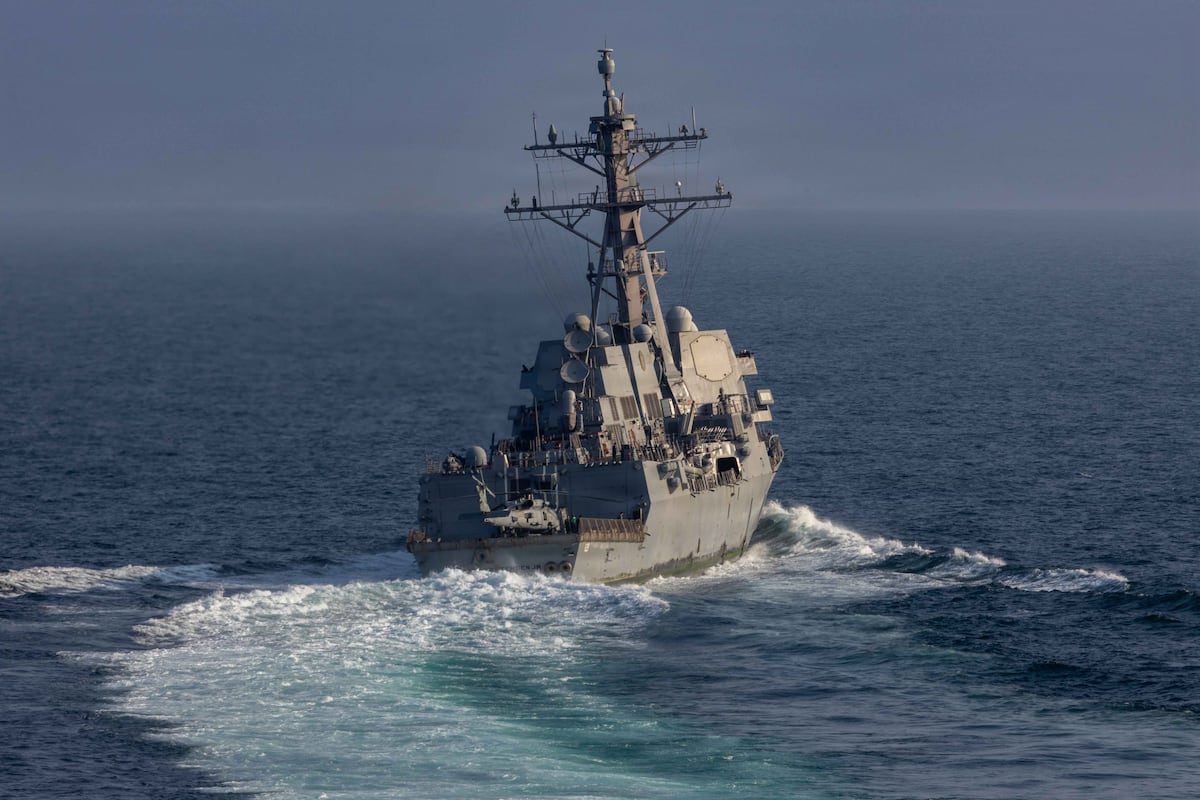
President Donald Trump said Sunday that the U.S. Navy would begin blockading the Strait of Hormuz, one of the world’s most important maritime corridors for energy shipments. The announcement came after marathon talks with Iran failed to produce an agreement to end the war, according to Defense News.
If carried out as described, the move would mark a major escalation in a waterway through which about 20% of global energy supplies pass. The statement also raises immediate questions about commercial shipping, naval rules of engagement, and the durability of a ceasefire that was already described as fragile.
What Trump said
Defense News reported that Trump declared the blockade would begin “effective immediately.” He also said the United States would seek to interdict any vessel in international waters that had paid a toll to Iran, and that the Navy would begin destroying mines he said Iran had placed in the strait.
The language was unusually blunt even by the standards of crisis signaling. Trump warned that any Iranian who fired on U.S. forces or on what he called peaceful vessels would be met with overwhelming retaliation. The message was designed not only to announce a policy direction but to broadcast deterrence.
Why the Strait matters
The Strait of Hormuz is one of the most strategically important passages in the global economy. Because a large share of the world’s oil and other energy exports transit the route, disruption there can affect shipping costs, insurance markets, fuel prices, and broader investor confidence far beyond the region.
That is why even the threat of military interference in the strait tends to reverberate globally. Defense News described six weeks of fighting that have already killed thousands, roiled the global economy, and pushed oil prices higher. A naval blockade, or even efforts to enforce one selectively, would intensify that pressure.
Diplomacy appears to have broken down
The announcement followed direct U.S.-Iran talks that were described as the first such meeting in more than a decade and the highest-level discussions since the 1979 Islamic Revolution. Vice President JD Vance, who led the U.S. delegation, said no agreement had been reached and argued that the outcome was worse for Iran than for the United States.
Iranian officials, meanwhile, blamed Washington for failing to earn Tehran’s trust. Iran’s Parliamentary Speaker Mohammad Baqer Qalibaf said the United States had understood Iran’s logic and principles and now had to decide whether it could build trust. Iranian media cited excessive U.S. demands and identified the Strait of Hormuz and Iran’s nuclear program as central points of dispute.
Trump later said the core issue was Iran’s unwillingness to give up what he described as its nuclear ambitions. That framing suggests Washington continues to see the nuclear question and maritime pressure as closely connected rather than separate negotiating tracks.
The military and economic risks
The danger in this kind of announcement lies not only in the policy itself but in how many moving parts it activates at once. A blockade is not a single switch. It implies surveillance, ship identification, boarding or interdiction decisions, mine-clearing operations, and the constant possibility of miscalculation between military forces operating at close range.
Commercial vessels would also face hard decisions. If the U.S. position is that paying tolls to Iran invalidates safe passage, shipowners, insurers, and cargo interests would need to assess both legal and physical exposure. Even before any confrontation, uncertainty alone can constrain traffic.
What comes next
At this stage, the most important fact is that Trump publicly announced a blockade and a broader interdiction policy after talks failed. That does not by itself resolve how the order will be implemented, how allies will respond, or whether Iran will retaliate directly or indirectly.
But the strategic significance is already clear. The United States has signaled willingness to use naval power at the world’s most sensitive energy chokepoint just as diplomacy has stalled. Whether this produces leverage, escalation, or both will depend on what happens next in the waterway and at the negotiating table.
This article is based on reporting by Defense News. Read the original article.
Originally published on defensenews.com