A communications backbone becomes a single point of failure
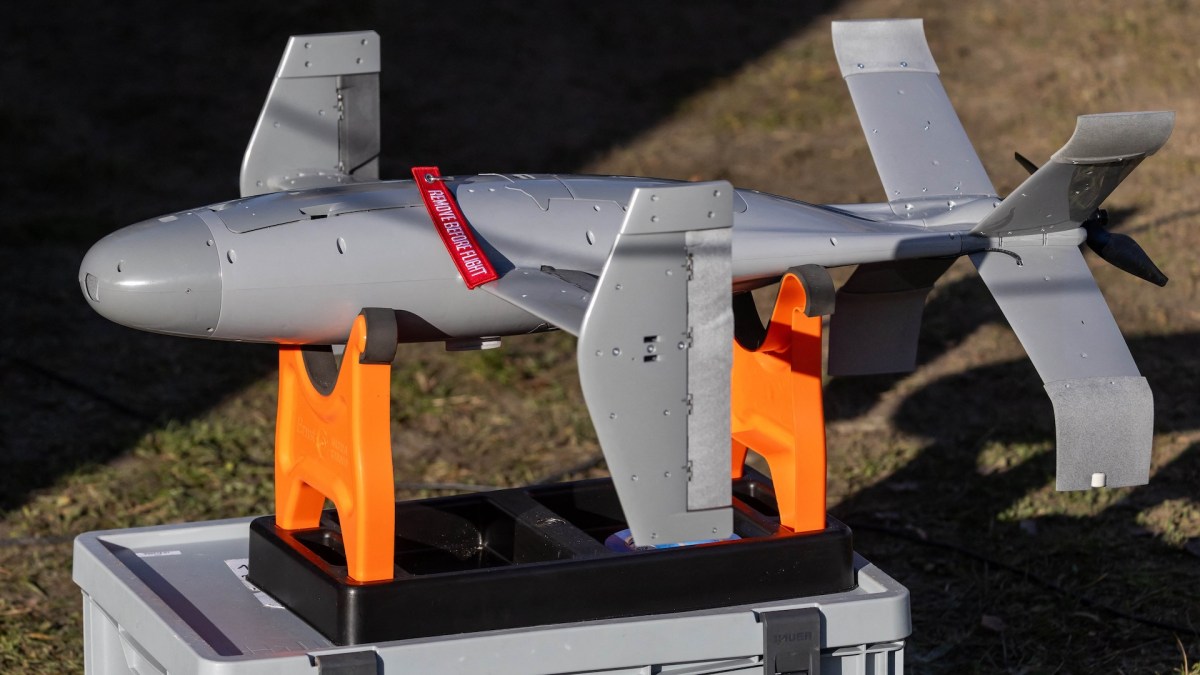
A global Starlink outage last August disrupted a U.S. Navy test of unmanned surface vessels off the California coast, leaving roughly two dozen craft unable to communicate and halting operations for nearly an hour. The episode, described in internal Navy documents reviewed by Reuters and cited by Defense News, is a sharp illustration of a broader Pentagon problem: a system valued for resilience at scale can still become a critical point of operational concentration.
The affected vessels were part of work tied to future military options in a potential conflict with China. That detail gives the incident more than routine technical significance. It links a commercial network outage to a defense scenario at the heart of U.S. force planning.
Starlink has become deeply embedded in U.S. government activity, and especially in programs that require low-earth-orbit communications. The Navy disruption does not erase the value of that network. It does, however, show the risk of becoming too dependent on a single provider, even one with unmatched scale.
Why Starlink became so central
SpaceX’s low-earth-orbit constellation has grown to nearly 10,000 satellites, according to the report. That scale gives the military access to communications capacity that is difficult for rivals to match quickly. It also offers practical advantages for distributed operations, autonomous systems, and mobile platforms that need persistent connectivity.
Analysts quoted in the report argued that, without Starlink, the U.S. government would not have access to a comparable global constellation of low-earth-orbit communications. That helps explain why the company has become indispensable across launch, satellite communications, and military-adjacent AI work.
For the Pentagon, this dependency has been rational. Building a separate equivalent capability from scratch would be expensive, slow, and operationally limiting. Buying access from a provider already far ahead in deployment is the obvious near-term answer.
But dependency created through convenience and capability is still dependency.
The contradiction at the center of resilience planning
Starlink is often discussed as resilient because a large constellation can be harder for adversaries to disable than a smaller number of high-value assets. That logic remains intact. Yet the Navy test disruptions reveal a different kind of fragility: not resilience against enemy attack, but resilience against provider outage, service interruption, and concentration risk.
In other words, a network can be operationally robust in one sense and strategically brittle in another.
The reported incident involved an outage affecting millions of users, not a localized military-only failure. That means defense users were exposed to the same platform-level disruption affecting the broader customer base. For programs built around autonomy and remote operations, even a short communication break can turn advanced systems into inert equipment.
That is exactly what happened in the test, where unmanned vessels were left bobbing off the coast.
SpaceX’s widening position inside national security infrastructure
The Navy episode lands at a time when SpaceX is consolidating its role across multiple mission areas. The report notes that the company’s importance to the U.S. government now spans satellite communications, space launch, and national-security services through Starshield. It also notes that the Space Force recently reassigned another upcoming GPS launch to a SpaceX rocket because of a glitch affecting Vulcan.
This creates a pattern rather than an isolated dependency. SpaceX is not just a major contractor among many. In several critical areas, it is increasingly the contractor the government cannot easily replace.
That matters even more as competition remains limited. The report notes that Amazon is pushing into low-earth-orbit communications and recently announced an $11.6 billion agreement to acquire satellite maker Globalstar. Even so, SpaceX is described as remaining far ahead.
What the Pentagon likely has to balance next
The incident does not suggest the military should step away from Starlink. The network’s scale and utility are too significant for that. The harder question is how much redundancy the Pentagon is willing to pay for and how quickly it can build alternatives into programs already designed around SpaceX connectivity.
Several implications follow from the reported disruption:
- Programs that depend on continuous satellite communications may need fallback architectures rather than assuming network availability.
- Operational testing should account for commercial platform outages, not only adversary action.
- Procurement decisions may need to weigh concentration risk more explicitly, even when one provider is clearly superior on current capability.
The Pentagon’s chief information officer said the department uses multiple robust and resilient systems across its broader network. That may be true at enterprise scale. The Navy test suggests the more relevant question is whether individual mission systems have comparable redundancy when they are built around autonomous or remotely operated platforms.
A warning for future autonomous warfare concepts
The larger strategic issue is not just SpaceX. It is what modern military design looks like when critical capability rests on commercial digital infrastructure. Autonomous vessels, distributed sensors, and networked weapons all promise flexibility and scale. But they also deepen the importance of communications continuity.
If that continuity relies on a dominant commercial actor, a new class of vulnerability emerges. It may not be a missile gap or an industrial gap. It may be an architecture gap, where too many future concepts assume that a private network will remain constantly available.
The Navy disruption is therefore more than an embarrassing test failure. It is a case study in how military modernization can inherit commercial dependencies faster than it develops safeguards against them.

Reliance is not the same as resilience
SpaceX’s rise has solved major problems for the U.S. government. It has expanded launch access, accelerated satellite communications capacity, and given national-security users tools they likely could not have fielded as quickly on their own. None of that changes because one outage halted a test.
But the test disruption does sharpen a point defense planners cannot afford to ignore. A provider can be indispensable and still be a source of operational risk. In fact, indispensability is often what creates the risk.
For the Pentagon, the lesson is not to reject commercial innovation. It is to stop confusing market leadership with sufficient redundancy. The more essential a platform becomes, the more seriously its failure modes have to be planned around.
This article is based on reporting by Defense News. Read the original article.
Originally published on defensenews.com