Over 200 Days at Sea
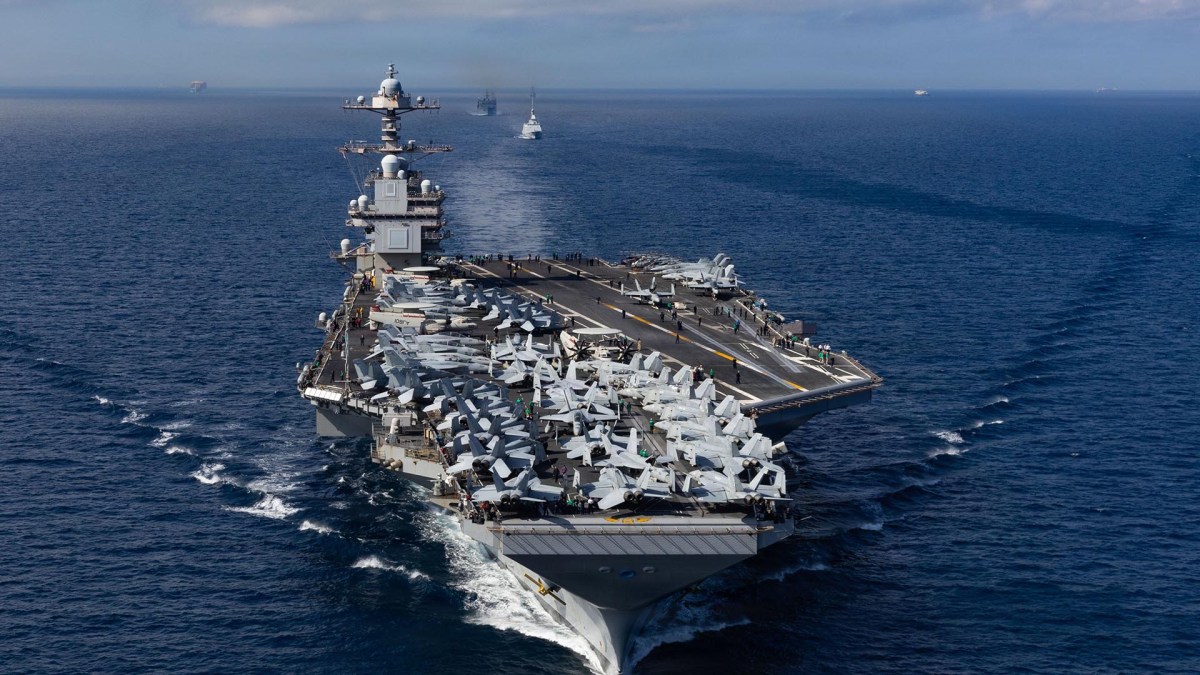
Chief of Naval Operations Admiral Daryl Caudle previously stated he would "push back" against any effort to extend the USS Gerald R. Ford's deployment, warning that keeping the carrier at sea beyond its scheduled return could trigger serious maintenance repercussions and damage crew morale. The Ford has now been deployed for more than 200 days under demanding operational conditions, far exceeding the standard seven-month deployment cycle the Navy aims to maintain.
The carrier departed Norfolk in June 2025 for operations in the Mediterranean before being redirected to the Caribbean in October 2025 on President Trump's orders. Now the Ford has been ordered to the Middle East, with arrival expected in late February, further extending a deployment that has already tested the limits of both ship and crew.
Maintenance Consequences
Admiral Caudle has been blunt about the downstream effects of extended deployments. "When the ship comes back... when it goes eight, nine-plus months, those critical components that we weren't expecting to repair are now on the table. The work package grows, so that's disruptive," he stated. The Navy has recent experience with these consequences: the USS Eisenhower's maintenance period slipped by six months after a similarly extended deployment.
A scheduled dry dock period in Virginia for the Ford is now at risk, and any delays in maintenance create cascading effects across the fleet's carrier rotation. The Ford has also experienced persistent sewage system issues that compound wear-and-tear concerns during prolonged operations at sea.
Fleet Readiness at Stake
The extension highlights broader strain on the Navy's carrier force. With the decommissioning of the USS Nimitz, the Navy maintains 10 active carriers. Three are currently in maintenance, the USS George Washington is forward deployed to Japan, and two more are in post-deployment recovery. That leaves a thin margin for meeting global commitments without overworking individual ships and crews.
"I'm a sailors-first CNO. People want to have some type of certainty that they're going to do a seven-month deployment," Caudle said, emphasizing the human cost of repeated extensions on retention and morale among the Ford's approximately 4,500 crew members.
Geopolitical Drivers
The Ford's redeployment to the Middle East comes amid heightened tensions with Iran, with the Trump administration weighing military options alongside ongoing nuclear negotiations. The USS Abraham Lincoln is already operating in the CENTCOM area, along with nine other warships, undisclosed submarine assets, and more than 30,000 troops stationed at regional bases. Whether the Ford's presence proves necessary or becomes another example of overextending a finite fleet remains an open question for Navy leadership.
This article is based on reporting by The War Zone. Read the original article.

Originally published on twz.com