Japan signals a broader strike and surveillance push
Japan’s defense ministry has submitted a record budget request of 8.89 trillion yen, or about $55.6 billion, for the fiscal year beginning in April 2027, extending a multi-year pattern of rising military spending and sharpening the country’s focus on longer-range weapons, drones and AI-enabled capabilities.
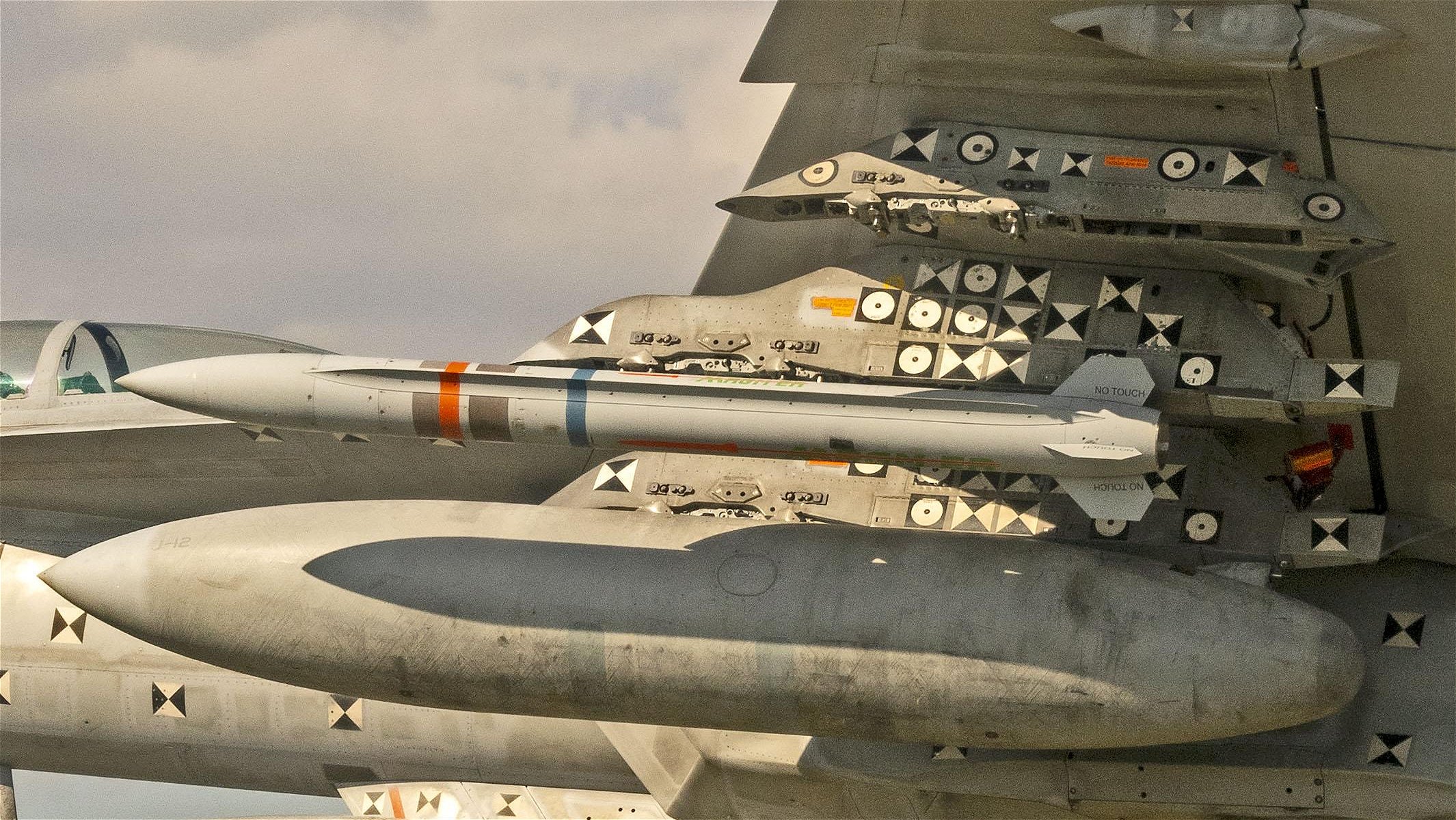
The proposal stands out not only for its size, but for the mix of systems it highlights. Among the most notable is Northrop Grumman’s AGM-88G Advanced Anti-Radiation Guided Missile-Extended Range, or AARGM-ER. Breaking Defense reported that this is the first time Japan has publicly indicated interest in acquiring a dedicated anti-radar missile, a weapon designed to suppress or destroy enemy air-defense emitters.
That request fits into a wider pattern visible across the budget document. Even though many procurement quantities and costs were omitted this year, the ministry used the filing to emphasize the kinds of capabilities it wants to prioritize: stand-off missiles that can be launched from greater distances, new unmanned systems, and defense applications for artificial intelligence.
Why the missing numbers matter
One unusual feature of this year’s request is what it does not include. According to the report, Japan left out many figures and platform counts that were commonly disclosed in prior years. The likely reason is timing. Three major national security documents, the National Security Strategy, the National Defense Strategy and the Defense Buildup Program, have not yet been released and are expected later this year.
Until those documents are finalized, the budget request functions less as a full buying list than as a directional statement. It identifies categories of capability the ministry wants to pursue, while leaving some of the final scale and funding detail to be clarified later. Even in that incomplete form, the filing offers a useful window into Tokyo’s current military priorities.
The request flags continued interest in major platforms including additional F-35 fighters, KC-46 tankers, Kawasaki C-2 transports, P-1 anti-submarine aircraft and improved Mogami-class frigates. But the strongest signal comes from the newer weapons and systems attached to Japan’s concept of longer-range deterrence and more resilient regional operations.
Stand-off weapons move closer to the center
Japan’s request includes not just the AARGM-ER, but also new unspecified low-cost cruise missiles that would be acquired from overseas suppliers before a domestic equivalent is developed. That sequence suggests the ministry is looking for a faster route to fielding usable capability while also preserving longer-term industrial and strategic autonomy.
The budget request also includes a submarine-launched guided missile program, with 16.3 billion yen earmarked for it, as well as development of a stand-off missile launch module for unmanned underwater vehicles. Together, those items point to a broader effort to diversify where Japanese strike capability can be based and how it can be delivered.
That matters strategically. A force that can launch from aircraft, ships, submarines and unmanned systems is harder to track and more flexible in a crisis. It also aligns with wider regional trends, as Asian militaries place more emphasis on survivable, distributed capabilities that can operate even if fixed bases or traditional command nodes are under pressure.
Another significant item is Japan’s plan to develop its existing ASM-3 supersonic air-launched anti-ship missile into a long-range air-to-air weapon. The report says the aim is to counter adversaries’ high-value support aircraft such as airborne early warning planes and tankers. That kind of mission reflects a growing focus on the wider kill chain around combat aircraft, not just direct fighter-on-fighter engagements.
Drones and AI remain central
Unmanned systems remain a major line of effort in the request. The ministry is seeking 292.2 billion yen to acquire 17 additional General Atomics MQ-9B SeaGuardian medium-altitude, long-endurance drones for the Japan Maritime Self-Defense Force. The platform is designed for long-duration surveillance and maritime domain awareness, making it particularly relevant for monitoring large expanses of sea and contested approaches.
While the article does not detail every AI-related line item, it makes clear that AI is grouped with drones and stand-off weapons as one of the ministry’s core pillars. In practice, that suggests Japan is thinking about AI less as a standalone technology category and more as an enabler across command, surveillance, autonomy and system integration.
This combination of surveillance drones, extended-range missiles and AI-enabled operations matches the kinds of investments many militaries are making as they adapt to a more contested and data-intensive operating environment. For Japan, the emphasis is especially notable because it comes through a budget process that historically reflected a more restrained defense posture.
A budget request that is also a strategic message
Even without full procurement details, the request serves an important signaling role. It indicates that Japan wants more tools for suppressing air defenses, holding targets at distance, tracking maritime activity and complicating adversary planning. It also shows a preference for layering imported systems with domestic development rather than relying exclusively on one approach.
The absence of the three pending security documents means some caution is still warranted. Final priorities, quantities and program structure may change once the broader strategy papers are published. But the ministry’s direction is already visible in the categories it chose to emphasize.
Those signals matter beyond budget accounting. They suggest Japan is continuing to shift from a narrower homeland defense model toward a force structure built for longer reach, more distributed operations and faster adaptation to regional threats. The mix of anti-radar weapons, cruise missiles, submarine-launched systems, underwater launch modules and surveillance drones points to a military planning process focused on resilience and operational depth.
For defense industry watchers, the request is also a reminder that some of the most consequential changes in military posture appear first in category choices rather than contract totals. Japan has not yet disclosed every number, but it has already identified the capabilities it believes will define the next phase of its buildup.
- Record request: 8.89 trillion yen for the fiscal year starting in April 2027.
- New weapon signal: Japan indicated interest in the AARGM-ER anti-radar missile.
- Priority areas: stand-off missiles, drones and AI.
- Other highlighted efforts include submarine-launched missiles, underwater launch modules and more MQ-9B SeaGuardians.
This article is based on reporting by Breaking Defense. Read the original article.
Originally published on breakingdefense.com