A procurement problem Europe keeps running into
European militaries want more drones, but buying them at speed remains difficult. Platforms are fragmented, manufacturers are scattered across countries, and ministries often have to compare systems one by one while also worrying about whether the aircraft, control software, and operator workflows will fit into existing structures. Dutch defense-technology startup Intelic is trying to turn that bottleneck into something closer to a marketplace transaction.
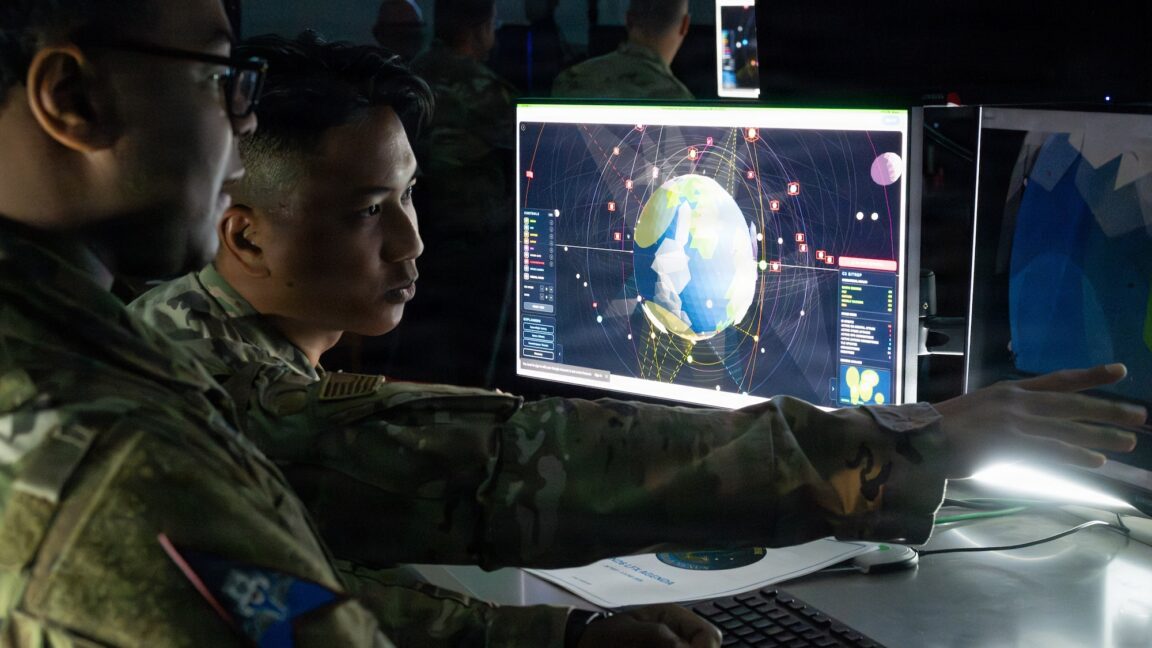
The company said it has set up a European military drone marketplace called BASE that brings together drone manufacturers from nine European countries. The pitch is straightforward: let defense ministries browse mission-ready unmanned systems from multiple suppliers in one place, while using Intelic’s Nexus command-and-control software as the layer that makes those systems work together.
If that model holds, it would not just simplify shopping. It would address one of the hardest parts of modern drone acquisition in Europe, where buying a system is only the start of a longer integration process involving training, doctrine, software compatibility, and coalition operations.
What Intelic says BASE is designed to do
Intelic Chief Executive Officer and co-founder Maurits Korthals Altes told Defense News that the main principle is to let governments buy plug-and-play systems that can work within their organizations without major changes to training. That framing matters. In practice, a marketplace only becomes useful for military buyers if the products listed there are not merely available but deployable inside a working command structure.
According to the company, BASE will allow ministries to explore systems that are ready to be used in a coalition framework. Intelic says Nexus provides the interoperability guarantee behind that promise. The company is not claiming it will manufacture or deliver the drones itself. Delivery remains the responsibility of the participating drone makers. Instead, Intelic is positioning itself as the software and procurement connective tissue between suppliers and government buyers.
That distinction is important because Europe’s drone challenge is not only one of production capacity. It is also a systems-integration challenge. A ministry may be able to identify an attractive aircraft, but coalition use demands more than individual performance metrics. It requires confidence that fleets from different vendors can be operated together, share command links, and fit into broader operational workflows.

A Ukraine-inspired approach, adapted for Europe
Intelic says BASE was inspired by procurement models developed in Ukraine, where the Brave1 platform has helped connect frontline units with drone manufacturers and speed the fielding of new unmanned capabilities. Ukraine’s wartime experience has become a reference point across Europe because it has compressed years of procurement learning into a much shorter cycle built around urgency, iteration, and battlefield feedback.
BASE is not a direct copy of that model. Europe’s procurement rules, alliance structures, and peacetime budgeting processes are different. But the influence is clear. The marketplace idea reflects a growing recognition that conventional acquisition timelines are poorly matched to a technology category that evolves in months rather than decades.
That is especially true for drones, where software updates, payload options, autonomous features, and electronic-warfare countermeasures can all shift the usefulness of a system quickly. A marketplace approach could help militaries compare what is actually available now instead of relying on slower bespoke procurement paths.
Who is already inside the marketplace
Among the manufacturers Intelic says have signed up are Portugal’s Tekever and Beyond Vision; the Netherlands’ DeltaQuad, Avy, Acecore Technologies, and Height Technologies; Germany’s Highcat; Latvia’s Origin Robotics; and Slovakia’s Airvolute. Intelic also said the partner set includes drone makers from France, the United Kingdom, and Ukraine.
The company says the firms participating in the first stage are expected to generate combined sales of more than 1.5 billion euros this year. That figure does not mean BASE itself will immediately move that volume, but it suggests Intelic is trying to aggregate suppliers with real commercial momentum rather than building a catalog around speculative entrants.
For defense ministries, that matters. Procurement officials are unlikely to shift behavior for a marketplace stocked with experimental offerings that still need years of maturation. The model becomes more compelling when it presents vendors that can already supply aircraft and support programs at scale.
The Dutch military link and the bigger European test
Intelic said it is finalizing an agreement to provide the Royal Netherlands Army’s drone units with Nexus software, a move that would also give Dutch forces access to the procurement platform. Korthals Altes also said the company is in talks with several other European ministries of defense, though he declined to identify them.
That makes the Netherlands a useful early signal. A marketplace model needs institutional legitimacy, and a domestic military user would give Intelic a stronger case when approaching other governments. At the same time, broader adoption will depend on whether ministries are comfortable relying on a private platform to mediate both discovery and interoperability in a sensitive category.
There is also the question of how open the system becomes over time. Intelic says Nexus currently underpins the interoperability guarantee, but additional software developers could join in a later phase. If that happens, BASE could evolve from a single-company integration layer into a broader ecosystem. If it does not, ministries may ask how much flexibility they are trading away for speed.
Why this matters beyond drones
For now, the marketplace targets unmanned aerial vehicles only, with plans to add other unmanned systems later. That expansion path points to the bigger strategic idea. Europe is not just trying to buy more drones. It is trying to build procurement habits suited to a future in which autonomous systems are bought, updated, mixed, and deployed across allied forces at far higher tempo.
BASE will not solve Europe’s drone requirements on its own. Manufacturing, budgets, doctrine, and export rules still matter. But if Intelic can make cross-vendor interoperability easier to trust and shorten the path from requirement to purchase, it could push procurement culture in a more operationally relevant direction.
In that sense, the launch is less about creating another storefront than about testing whether military acquisition in Europe can borrow platform logic from the commercial world without losing the reliability and control that defense buyers require. That is a significant experiment at a moment when speed has become a strategic variable in its own right.
This article is based on reporting by Defense News. Read the original article.

Originally published on defensenews.com