A Rapid Buildout of a New Weapons Category
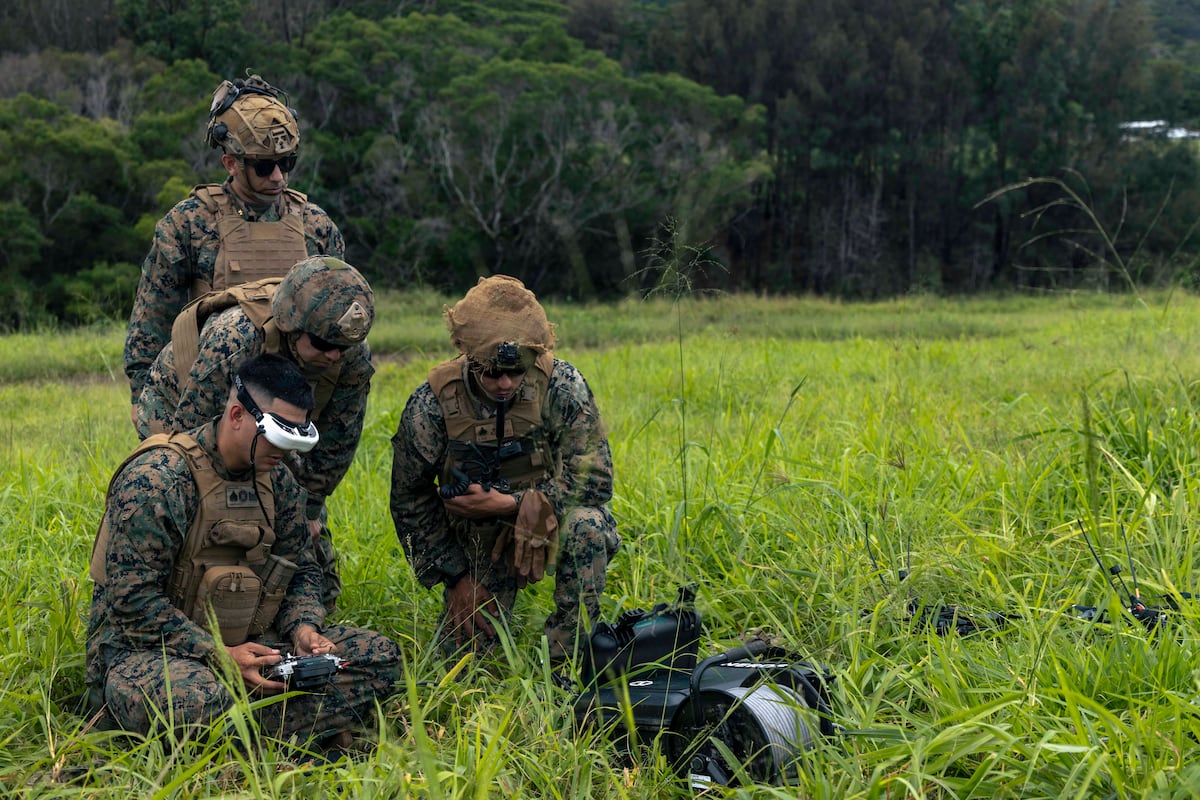
The U.S. Marine Corps says it has moved from having no first-person view attack drones in October 2025 to having more than 3,500 in service just months later. The figure, disclosed by Col. Scott Cuomo, commanding officer of the Weapons Training Battalion, points to one of the fastest recent expansions of a new weapons category inside the service.
First-person view drones, or FPVs, give operators a live feed through goggles or a screen from the aircraft’s perspective. The supplied source text says many weigh several pounds, can carry explosives, and can travel close to 100 miles per hour. In recent conflicts, especially the war in Ukraine, the class has drawn intense attention for its low cost, flexibility, and battlefield effect.
From Top-Down Direction to Fast Fielding
Cuomo attributed the speed of the buildup to a clear directive from senior leadership combined with adaptability across the force. His summary of the timeline was blunt: “Rewind your brain to October. We had zero FPV attack drones in the United States. We have over 3,500 right now.” That kind of growth is unusual not only because of the quantity involved, but because it reflects the military’s effort to absorb a technology category that only recently became central to mainstream force-planning conversations.
The source text says the shift gained formal momentum in January 2025, when the commanding generals of Training Command and the Marine Corps Warfighting Laboratory launched the Marine Corps Attack Drone Team. That move recognized the necessity of FPV drones after their proliferation during the war in Ukraine. The team is based at Marine Corps Base Quantico and works with the Warfighting Laboratory to integrate the systems into the Fleet Marine Force.

Why the Marine Corps Is Moving So Fast
The speed of adoption reflects a broader modernization lesson that many armed forces have been absorbing: small, agile, and comparatively inexpensive unmanned systems can produce outsized tactical effects. The Marine Corps’ decision to scale quickly suggests the service no longer sees FPVs as a niche capability or an experimental add-on. It sees them as part of the practical strike toolkit Marines need access to now.
The source text also makes clear that senior sponsorship mattered. Marine Corps Commandant Gen. Eric Smith is described as a vocal proponent of getting FPV drones into Marines’ hands quickly. In large organizations, especially military ones, that kind of top-level endorsement often determines whether a new capability remains stuck in trials or moves into real inventory. Here, the result appears to have been acceleration.
Operational and Institutional Meaning
The buildup is meaningful for two reasons. First, it changes inventory. A stockpile of more than 3,500 systems is not symbolic. It is large enough to shape training, doctrine, and procurement priorities. Second, it changes institutional expectations. Once a service fields thousands of systems in a short period, the conversation shifts from whether the capability matters to how it should be organized, sustained, and integrated.
The Marine Corps is still in that integration phase. The supplied source text does not provide deployment patterns, unit-by-unit distribution, or procurement details for the next tranche of drones. But it does say that thousands more are on the way, which indicates the current figure is not the endpoint. The service is building inventory while also building the organizational machinery around it.
The Ukraine Effect on U.S. Force Design
The war in Ukraine continues to influence how Western militaries think about cheap, attritable, high-volume unmanned systems. The Marine Corps’ FPV expansion is one of the clearest institutional examples in the supplied set of articles. Rather than treating battlefield footage and wartime innovation as distant observations, the service appears to be incorporating those lessons directly into training and force development.
That is important because FPVs sit at the intersection of autonomy, low-cost mass, and tactical immediacy. Even where the systems are relatively simple compared with larger drones, their effect on battlefield behavior can be profound. The source text does not claim the Marine Corps has solved every doctrinal or technical question, but it does show that the service has decided the capability is urgent enough to field at scale now.
What Comes Next
The next stage will be less about headline numbers and more about integration quality. Fielding thousands of systems is one problem. Building training pipelines, maintenance routines, supply chains, and operational concepts around them is another. The source text points to that work through the role of the Attack Drone Team and the Warfighting Laboratory, both of which are positioned to translate rapid acquisition into repeatable military practice.
For now, the headline is difficult to miss. In a matter of months, the Marine Corps says it went from zero FPV attack drones to more than 3,500, with more to come. That is a sharp indicator of how quickly battlefield lessons can reshape procurement priorities when leadership is aligned and the need is judged immediate.
This article is based on reporting by Defense News. Read the original article.
Originally published on defensenews.com