Marine Corps Moves to Tighten the Link Between Experiment and Purchase
The Marine Corps says a new internal acquisition structure could accelerate one of its most visible command-and-control efforts from demonstration to procurement. According to the supplied source text, officials believe the April 10 establishment of a Corps-wide portfolio acquisition executive, or PAE, will put “jet fuel” on Project Dynamis by turning lessons from experimentation into actual acquisition decisions.
That claim matters because Project Dynamis is not framed as a distant science effort. The source describes it as the Marine Corps contribution to the Pentagon-wide Combined Joint All-Domain Command and Control effort, often shortened to CJADC2, which aims to connect sensors and shooters across the battlespace and across services and partner nations. In other words, this is part of a broader push to make information flow more quickly between detection, decision and action.
For years, one of the central problems in U.S. defense innovation has been the so-called Valley of Death, the gap between promising demonstrations and formal adoption. The source says Marine officials see the new PAE construct as a way to bridge that gap by giving the service a clearer executive path to evaluate demonstrated capabilities and decide whether they are ready to advance.
Project Dynamis Is Built Around Iterative “Serials”
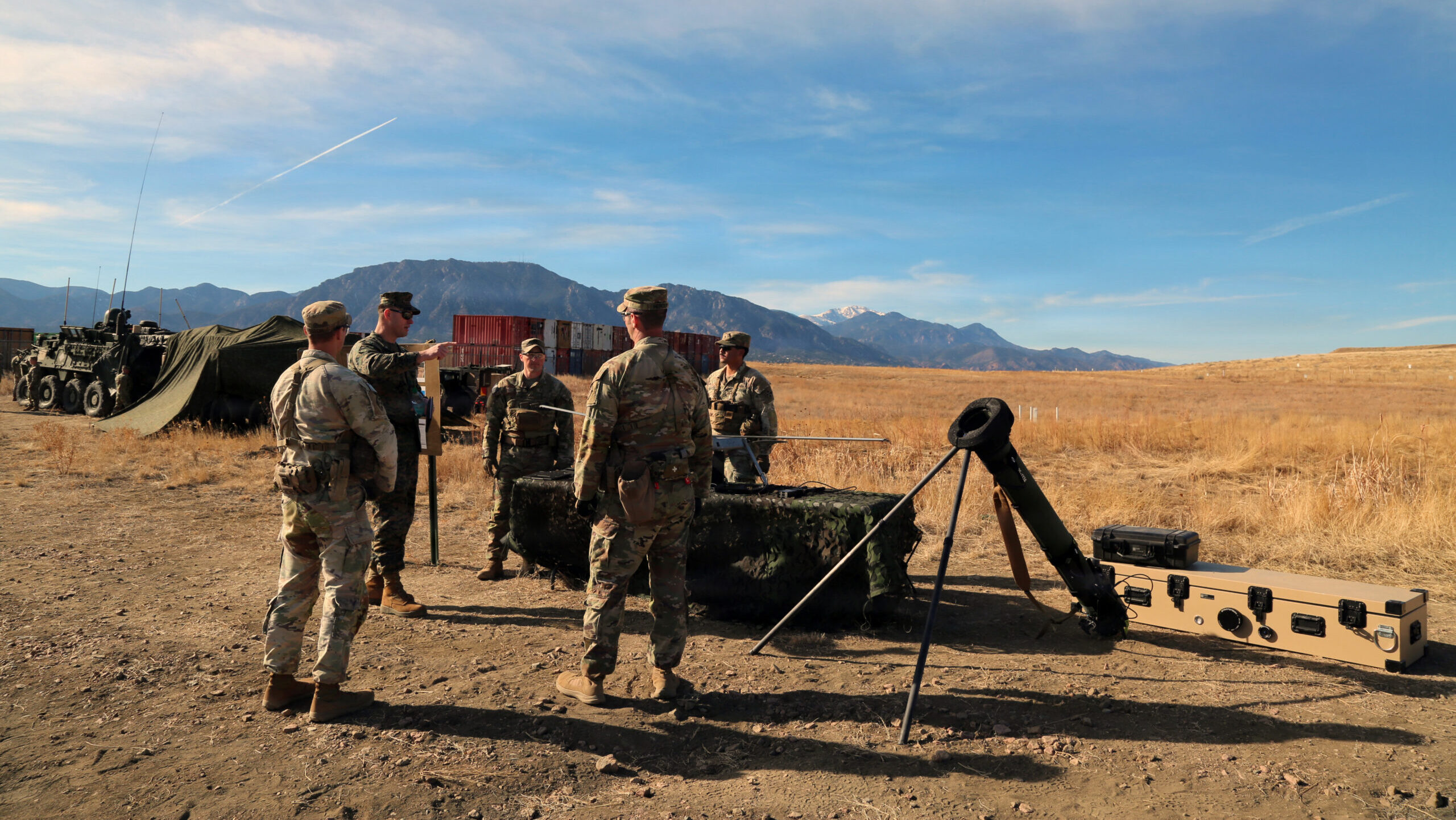
The source explains that Project Dynamis consists of incremental events called serials. These serials test how to improve command and control by using existing capabilities in new ways. That point is important. Dynamis is not presented as a laboratory for speculative technology that may take years to mature. Instead, officials describe the effort as an acceleration venue for mature technologies or existing programs that could be employed differently.
That difference has acquisition implications. When experiments are built around mature hardware and software, the remaining barrier is often less about basic feasibility and more about institutional decision-making. The source quotes Col. Arlon Smith, Project Dynamis’ director, saying the new PAE is especially valuable because the project’s earlier structure was designed to move quickly before the PAE existed. With the executive layer now in place, he argues, the service can move from speed in experimentation to speed in procurement.
Smith’s formulation is blunt. He calls the arrival of the PAE “a gift just dropped from the sky” for the project. The reason, in the source text, is that a portfolio executive can now look across capabilities, reduce the silos that previously existed and make decisions at the level needed to carry demonstrated tools forward.

Breaking Silos Is the Point
The source repeatedly returns to the issue of silos. Before the new structure, demonstrated capabilities could remain trapped between organizational boundaries, even if they showed promise in a serial. The PAE, according to Smith’s account, creates a path for those capabilities to be elevated to the executive level. Once there, a judgment can be made on whether they are ready for primetime and whether acquisition should proceed.
In defense programs, that is not a trivial administrative improvement. It is often the difference between an exercise that informs future discussions and one that directly affects spending decisions. The source says the expectation is that a series of decisions on both hardware and software will emerge from the Dynamis serials and that funding could come through current program-of-record lines.
That last detail is significant because it suggests the Marine Corps is not imagining Dynamis as a detached innovation lane requiring wholly separate budget structures. Instead, it is using existing funds tied to existing programs to influence how relevant offices employ capabilities. The aim is not just to prove that something works, but to show the relevant program office how it can be used differently and then push it into adoption more quickly.
Why This Matters for CJADC2
CJADC2 has often been discussed at a very high level, as a Pentagon-wide aspiration to connect data, sensors and weapons across domains. The source text gives a more concrete view of what that looks like inside one service. Project Dynamis appears to be the Marine Corps’ mechanism for testing how mature technologies can be integrated into command-and-control workflows in ways that support that larger joint concept.
The value of the new PAE structure, then, is not merely procedural. If the Marine Corps can turn serial outcomes into faster hardware and software decisions, it has a better chance of contributing practical capabilities to the larger all-domain architecture rather than producing isolated demonstrations. The source strongly implies that this translation step has been one of the biggest obstacles until now.
That makes the PAE a governance change with operational consequences. Command-and-control modernization depends on more than technology availability. It depends on whether a service can make decisions quickly enough to field what it has already tested. The source argues that the new structure is meant to improve exactly that.
From Demonstration Culture to Decision Culture
There is a clear cultural message in the source material. Project Dynamis has been moving fast in its serial-based experimentation, but the Marine Corps now wants that momentum to extend into acquisition. Smith’s repeated emphasis on decisions, executive review and current funding lines suggests the service is trying to shift from a demonstration culture to a decision culture.
That transition will be worth watching because it is where many defense innovation efforts stall. A service can run compelling events, showcase interoperability and validate new workflows, yet still fail to field the underlying systems in time to matter. The source makes the Marine Corps case that the new PAE is supposed to prevent that outcome by reducing handoff friction between experimentation and procurement.
If the expected hardware and software decisions do emerge from future serials, Project Dynamis could become more than a test venue. It could become a model for how the Marines operationalize mature technology inside a joint command-and-control framework. The new acquisition structure does not solve every problem by itself, but the source suggests it addresses one of the most persistent ones: getting proven ideas across the last bureaucratic distance between successful demonstration and real buying authority.
This article is based on reporting by Breaking Defense. Read the original article.
Originally published on breakingdefense.com