Washington signals a major change in its European posture
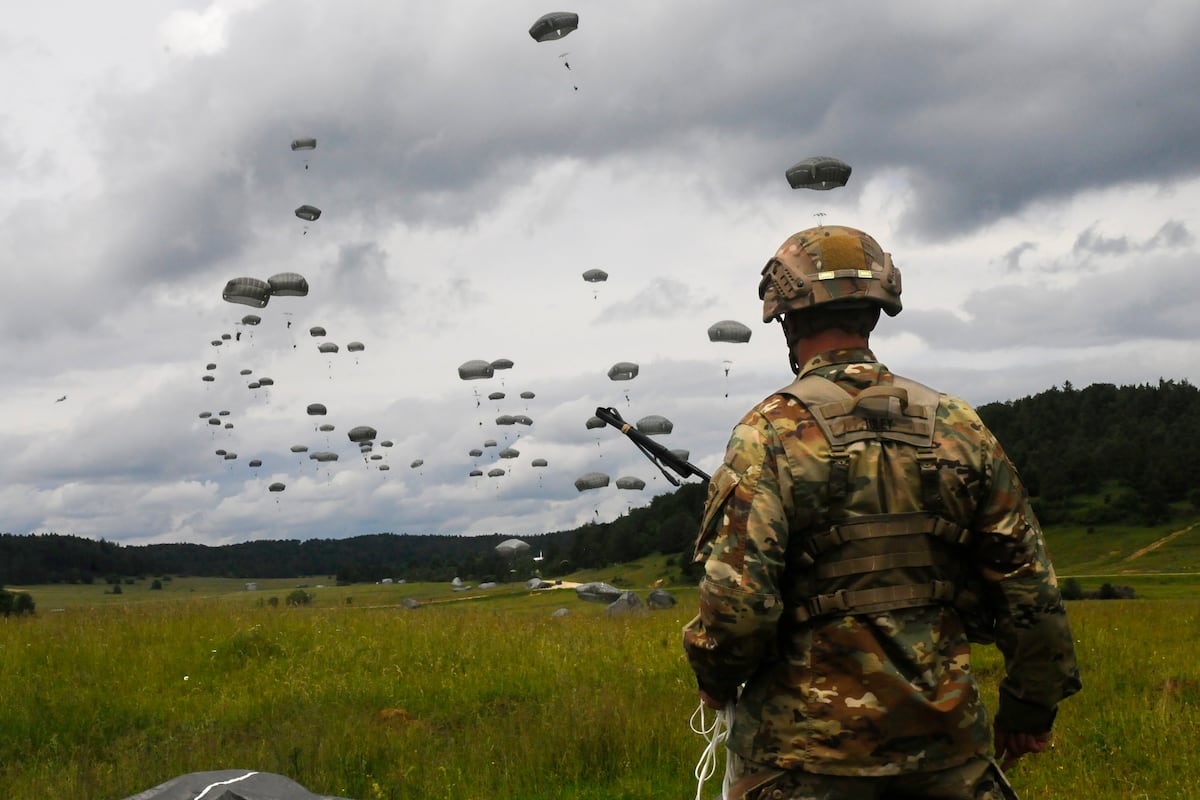
The Pentagon says the United States will withdraw 5,000 troops from Germany over the next six to 12 months, reducing a military presence that has long been one of the foundations of U.S. force posture in Europe. Germany currently hosts about 35,000 active-duty U.S. personnel, more than any other country on the continent, so the decision is notable both in scale and in symbolism.
Defense News reported that the drawdown comes as the rift between President Donald Trump and Europe has widened during the war with Iran. The withdrawal therefore lands as more than a basing adjustment. It is being presented in the context of an openly political dispute with a key ally and in the middle of a broader debate over burden-sharing, military support, and the future shape of NATO security.
Why Germany is the focus
According to the report, Trump had threatened a drawdown earlier in the week after sparring with German Chancellor Friedrich Merz. Merz had criticized the U.S. position in efforts to end the two-month-old war with Iran and questioned Washington’s exit strategy. A senior Pentagon official, speaking anonymously, described recent German rhetoric as inappropriate and unhelpful and said the president was reacting to those remarks.
That framing makes the decision unusually explicit. U.S. troop deployments are often discussed in terms of strategy, readiness, or logistics. Here, the reporting ties the move directly to frustration with an ally’s public stance. Even if strategic arguments exist alongside the politics, the message being sent is unmistakable: in the current administration’s view, allied rhetoric and support are part of the calculus for military posture.
A return toward pre-2022 force levels
The Pentagon official said the reduction would bring U.S. troop levels in Europe back to roughly where they stood before Russia’s 2022 invasion of Ukraine, when the Biden administration later increased deployments in response to the war. That point is important because it casts the drawdown as a reversal of the reinforced posture that followed the most serious security crisis in Europe in decades.
At the same time, the administration is presenting the move as consistent with its broader push for Europe to become the main security provider on the continent. In principle, that argument is not new. Successive U.S. leaders have pressed European allies to assume more responsibility for defense. What is different here is the style and timing: the reduction is being carried out amid active diplomatic friction and while another major conflict involving U.S. forces is reshaping relations with allies.
The Iran war hangs over the decision
The dispute cannot be separated from the war with Iran, which the report says began on February 28 with U.S. and Israeli attacks. Trump has criticized allies for failing to support U.S. operations, including their naval role in trying to open the Strait of Hormuz. That waterway, described as a chokepoint for global oil shipments, has remained virtually shut, causing market turmoil and severe energy disruption.
This wider context helps explain why a troop decision in Germany has broader geopolitical weight. The administration appears to be using force posture as a tool within a larger argument about allied loyalty, operational support, and the distribution of risk. The message to Europe is not simply that the United States wants burden-sharing; it is that visible support in active conflicts now matters to Washington in immediate and concrete ways.
Allied uncertainty will likely grow
One striking detail in the report is that German military officials were surprised by Trump’s Wednesday announcement and cited constructive meetings at the Pentagon earlier that same day. If that account is accurate, it suggests a gap between day-to-day institutional engagement and presidential decision-making. For allies, that creates an especially difficult planning environment, because reassuring staff-level contact may not prevent abrupt policy shifts from the top.
The Reuters reporting cited by Defense News intensifies that uncertainty. It described an internal Pentagon email outlining options to punish NATO allies that Washington believed failed to support U.S. operations against Iran, including suspending Spain from NATO and reviewing the U.S. position on Britain’s claim to the Falkland Islands. Whether or not those ideas advance, their existence signals how far current tensions may be moving from frustration into coercive policy design.
What the drawdown means
The withdrawal of 5,000 troops is not a full rupture in the U.S.-Germany defense relationship. Even after the planned reduction, Germany would still host a very large American presence. But the cut is substantial enough to be read as both a strategic adjustment and a political warning. It revives a goal Trump pursued at the end of his first term, when he pushed for a reduction that was never enacted and was later reversed by President Joe Biden.
The central question is not only how many troops leave, but what principle the move establishes. If U.S. deployments in Europe are increasingly used to reward or punish allies for their public positions and operational support, then the alliance enters a more transactional phase. That would have consequences far beyond Germany, affecting how other NATO members judge the reliability, conditions, and costs of American backing.
For now, the reported facts are clear: 5,000 U.S. troops are set to leave Germany, the process is expected to take six to 12 months, and the move is unfolding amid a visible rupture between Washington and European allies over the Iran war. That makes this both a military redeployment and a test of the political foundations under the transatlantic alliance.
This article is based on reporting by Defense News. Read the original article.
Originally published on defensenews.com