A new milestone for experimental military aircraft
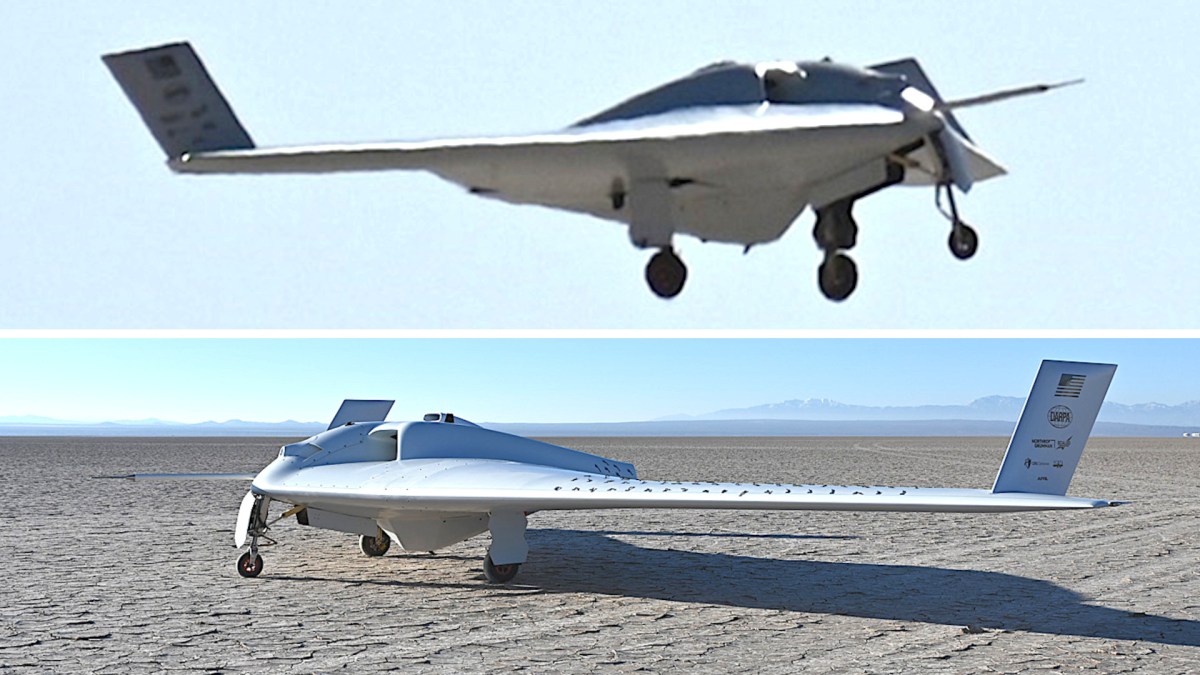
DARPA’s XRQ-73 hybrid-electric drone has flown, marking a significant step for one of the U.S. military’s more closely watched experimental aircraft efforts. According to reporting from The War Zone, DARPA announced that the test flight took place in April from Edwards Air Force Base in California, with the Air Force Research Laboratory also involved in the milestone. Newly released images show both the aircraft in flight and an evolution of its design since it first emerged publicly in 2024.
The aircraft is part of DARPA’s Series Hybrid Electric Propulsion AiRcraft Demonstration program, known as SHEPARD. Its purpose is not simply to prove that another uncrewed aircraft can fly. The central objective is to demonstrate a propulsion architecture that promises a mix of high efficiency and very quiet operation, two characteristics that could matter a great deal in future military missions.
Why the XRQ-73 matters
Military aviation has long balanced speed, payload, endurance and survivability. The XRQ-73 adds another combination that could become more important over time: lower acoustic signature and improved fuel efficiency in a lightweight autonomous platform. Those attributes could open new operating concepts for aircraft that need to stay aloft longer, operate with less detectable noise or support missions where logistics and persistence matter as much as raw performance.
DARPA made that ambition explicit in its description of the flight. Lt. Col. Clark McGehee, DARPA’s SHEPARD program manager, said the architecture demonstrated by the XRQ-73 “paves the way for new types of mission systems and delivered effects.” That is notable language because it frames the aircraft less as a standalone prototype and more as a technology pathfinder for later operational systems.
The agency also said hybrid-electric propulsion architectures can enable “revolutionary new aircraft designs” by combining fuel efficiency, reduced emissions and greater operational flexibility. In military terms, that could eventually translate into aircraft that can be tailored differently from conventional designs because propulsion and airframe constraints are not identical to those of a traditional engine layout.
A flying wing with a quieter mission set in mind
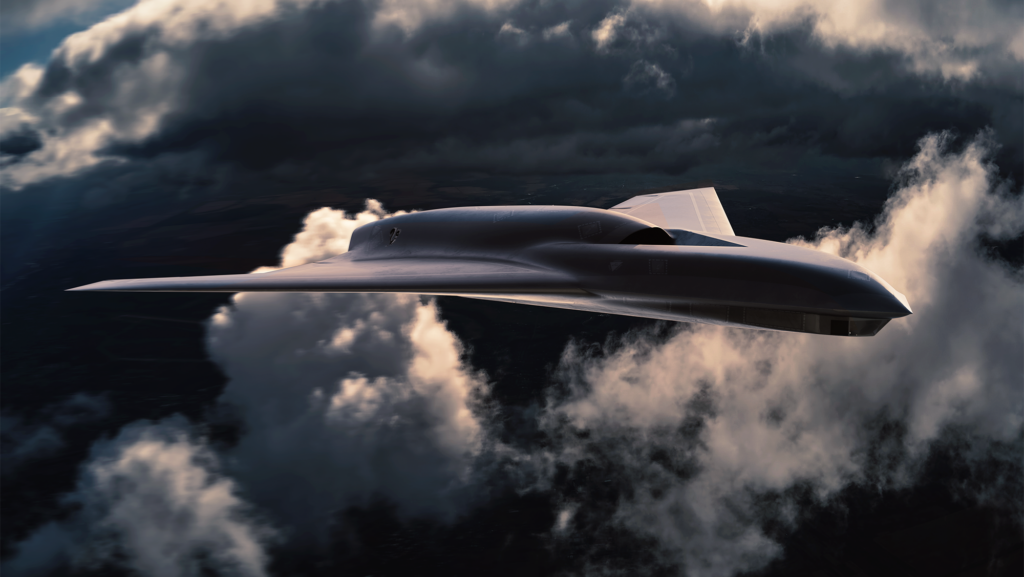
The XRQ-73 uses a flying-wing configuration, a shape often associated with aerodynamic efficiency and reduced signatures. The War Zone reports that the aircraft’s design has changed since it was last seen in 2024, suggesting the flight article is also an early look at the program’s evolving engineering choices.
Scaled Composites, the aircraft design house owned by Northrop Grumman, has played a major role in developing the drone. That matters because Scaled has a long history of rapid experimental aerospace work, and the program appears to draw on that design culture. The XRQ-73 reportedly evolved directly from the XRQ-72A, another Scaled Composites design developed for the Intelligence Advanced Research Projects Activity.
That lineage suggests continuity in U.S. government interest around unconventional uncrewed aircraft architectures. Rather than beginning from scratch, the XRQ-73 appears to build on prior design knowledge and shift it toward a propulsion problem with direct operational implications.
Hybrid-electric propulsion is still at an early stage
For all the promise around hybrid-electric aviation, the technology remains immature in defense use. A successful flight is an important validation step, but not a declaration that the architecture is ready for broad deployment. The next issue is whether the system can produce the endurance, reliability and mission flexibility that would justify moving from experimental status to procurement interest.
That is especially relevant in a military environment, where attractive lab concepts often struggle once exposed to maintenance, field conditions and integration demands. Quiet propulsion is valuable only if it comes with acceptable tradeoffs in payload, thermal management, logistics and cost.
Still, the fact that DARPA and AFRL have reached flight testing gives the concept more weight than paper studies or static demonstrations. A flown aircraft provides engineering evidence that propulsion, structure and control systems can work together in the real world, even if the final operational path remains uncertain.

What operational roles could benefit
The supplied reporting does not assign the XRQ-73 to a specific future mission, but the broad logic is visible. Aircraft that are meant to be difficult to hear, efficient to operate and capable of autonomous flight could be useful in surveillance, support or distributed sensing roles. They might also fit missions where access, persistence or discretion matter more than speed.
What makes the project especially relevant is that the military increasingly wants systems that can do more with fewer logistics penalties. If hybrid-electric architectures help lighten fuel burdens or extend useful flight profiles, they could matter in contested regions where resupply is difficult and aircraft survivability depends partly on operating differently from legacy platforms.
What comes next
The immediate next phase is flight testing. McGehee said DARPA is looking forward to advancing the technology through that process, and that is where the real value of the program will become clearer. One successful flight establishes credibility. A structured flight test campaign can begin to show whether the architecture scales, what compromises it imposes and whether the military utility justifies further development.
For now, the XRQ-73’s first flight is best understood as a proof point in a larger race to rethink aircraft propulsion. Defense agencies are not just seeking faster or more heavily armed drones. They are exploring ways to make autonomous aircraft more efficient, harder to detect and more adaptable. On those terms, the XRQ-73 is more than a novel airframe. It is an early signal of how future military aviation could change at the propulsion level.
This article is based on reporting by twz.com. Read the original article.
Originally published on twz.com