One carrier departs, two remain on station
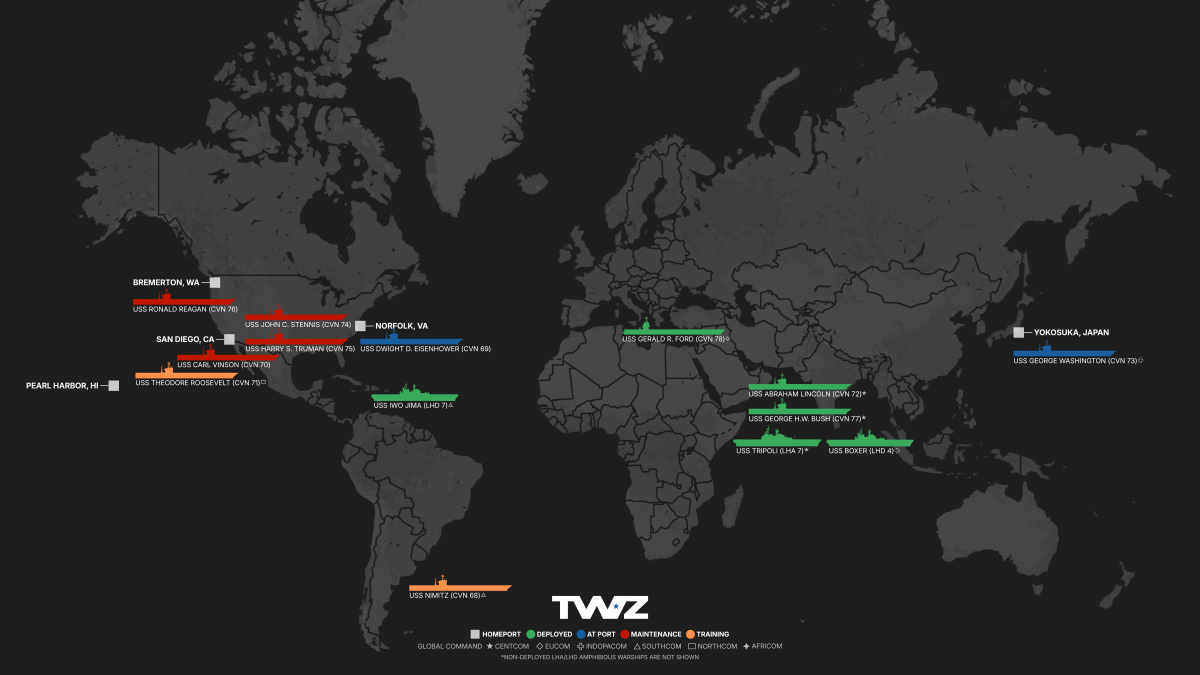
The USS Gerald R. Ford Carrier Strike Group appears to be winding down a historic deployment, but the broader U.S. naval posture in the Middle East remains heavily reinforced. According to the latest carrier tracking update, Ford transited the Suez Canal northbound on May 1 after a record-setting 314-day deployment and has reportedly begun its journey back to Norfolk.
That is a significant operational milestone on its own. Record-length deployments strain crews, equipment, and maintenance schedules even when strategically necessary. But Ford’s movement does not signal a dramatic drawdown. U.S. Central Command still has two carrier strike groups under its command: the USS Abraham Lincoln and USS George H.W. Bush, both positioned in the Arabian Sea.
Why the dual-carrier presence matters
The source text says this is the first time since the current conflict began that Lincoln and Bush have been in the Arabian Sea together. That creates a larger margin of operational flexibility. Two carrier strike groups can extend sortie generation, distribute risk, and sustain a broader range of missions than a single flattop formation can manage alone.
The immediate context is the newly announced Project Freedom, a U.S. effort aimed at helping commercial vessels trapped in the Persian Gulf. The presence of two carriers also supports ongoing blockade operations against Iran and preserves the option for much larger strike capacity if combat operations resume.
That dual-purpose posture is important. Naval deployments in crisis theaters rarely serve just one function. They deter, reassure, collect intelligence, support maritime enforcement, and preserve escalation options simultaneously. The current arrangement appears designed with that full menu in mind.
Project Freedom raises as many questions as it answers
CENTCOM says U.S. military support for Project Freedom will include guided-missile destroyers, more than 100 land- and sea-based aircraft, multi-domain unmanned platforms, and 15,000 service members. On paper, that is a substantial package. It suggests a mission with serious regional reach and a significant command-and-control burden.
At the same time, the mechanics remain uncertain. The supplied source text notes reporting from The Wall Street Journal indicating that the plan does not currently involve U.S. Navy warships escorting commercial vessels through the strait. If that reporting holds, it means the operation may rely more on deterrence, overwatch, surveillance, and contingency response than on the traditional convoy model many observers would expect.
That ambiguity matters strategically. Maritime security operations often succeed or fail not only on force levels, but on the clarity of the operational concept. If Project Freedom is meant to create confidence for merchant shipping without direct escorts, then the credibility of rapid response and the visibility of U.S. assets become central.
Regional posture is still shifting
Ford’s departure and the continued presence of Lincoln and Bush illustrate how quickly naval force distribution can be adjusted without changing the overall pressure level in theater. One record-setting deployment is ending, but two other carrier groups remain available to shape events. That is not a retreat. It is a rebalancing.
Other naval movements reinforce that point. The source text notes that the Boxer Amphibious Ready Group moved northbound through the Malacca Strait on April 30 and entered the Indian Ocean on May 1. Amphibious groups bring a different set of capabilities than carriers, including Marine Corps presence and flexible crisis-response options. Their movement widens the menu of U.S. choices in the region.
There are also visible signs of senior-command attention. CENTCOM commander Adm. Brad Cooper visited troops over the weekend, including aboard USS Milius, according to the supplied text. High-level visits during an active regional mission are operationally routine, but they also communicate that leadership is closely managing the posture and messaging around it.
The bigger strategic picture
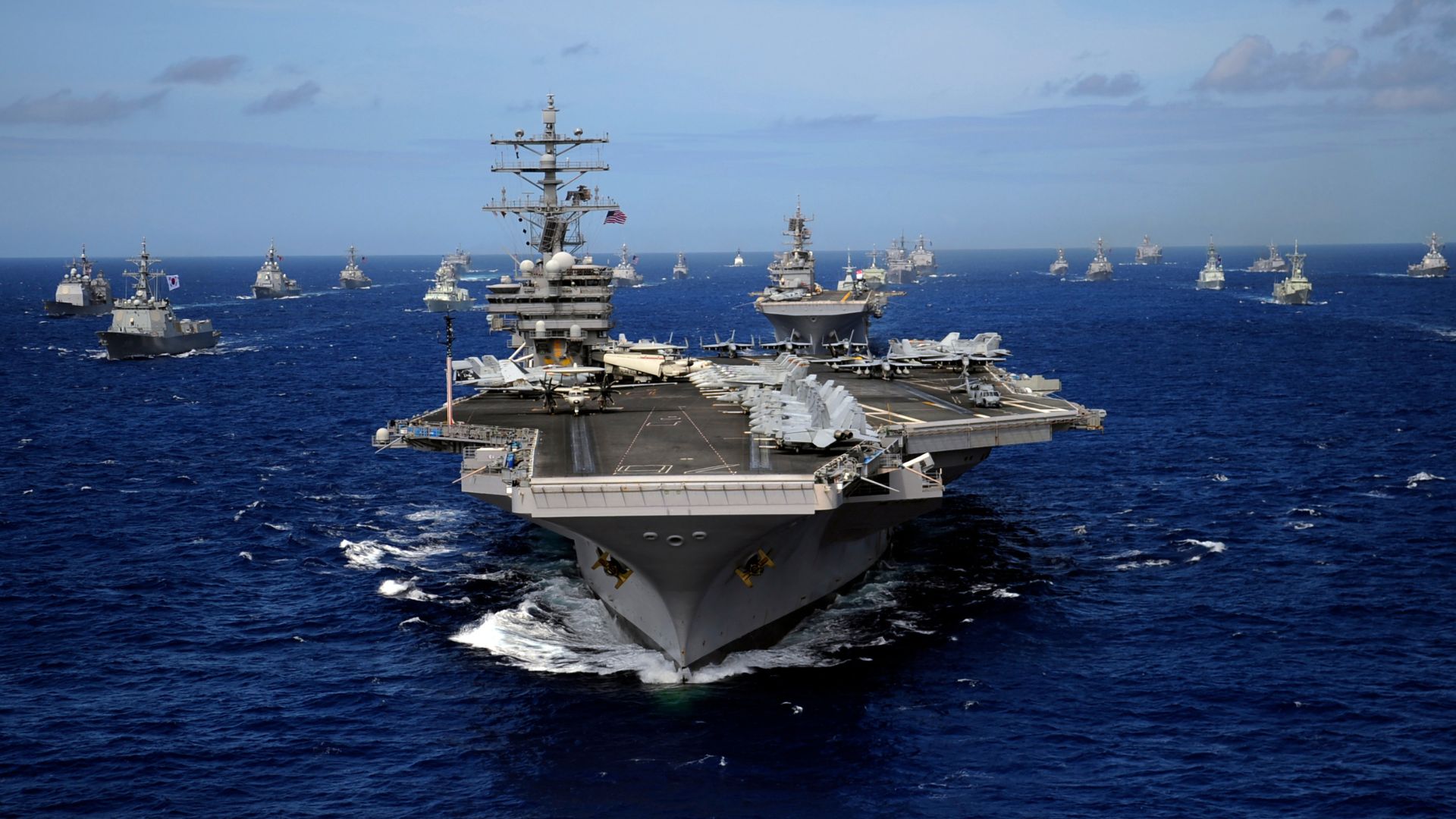
The most revealing aspect of this update is that naval presence is being used for more than symbolism. The force package supports blockade operations, underwrites a new maritime mission, and preserves surge combat power. That suggests Washington is trying to keep commercial movement, deterrence, and escalation management tied together rather than treating them as separate problems.
It also shows the continuing importance of carriers even in an era of drones, missiles, and distributed operations. A carrier strike group remains one of the few tools that can provide sustained air power, mobility, and command presence without depending on host-nation basing in the same way land-based forces do.
What changed this week
- USS Gerald R. Ford transited the Suez Canal northbound on May 1 after a 314-day deployment.
- USS Abraham Lincoln and USS George H.W. Bush remain in the Arabian Sea under CENTCOM command.
- Project Freedom is being supported by destroyers, 100-plus aircraft, unmanned platforms, and 15,000 service members.
Ford may be heading home, but the operational message is not one of reduction. The U.S. still has substantial carrier-backed leverage in the region, and the evolving shape of Project Freedom suggests maritime pressure in and around the Persian Gulf is entering a new phase rather than winding down.
This article is based on reporting by twz.com. Read the original article.
Originally published on twz.com