The Pentagon is putting far more money behind orbital watchkeeping
The U.S. Space Force has increased the ceiling on its Andromeda contracting vehicle from $1.8 billion to $6.2 billion, adding another $4.4 billion to the pool as it prepares next-generation systems for monitoring activity in space. The service said the expansion reflects a fiscal 2027 budget request that was significantly increased before the original award in April in order to address what it called an escalating threat environment projected for calendar year 2030 and beyond.
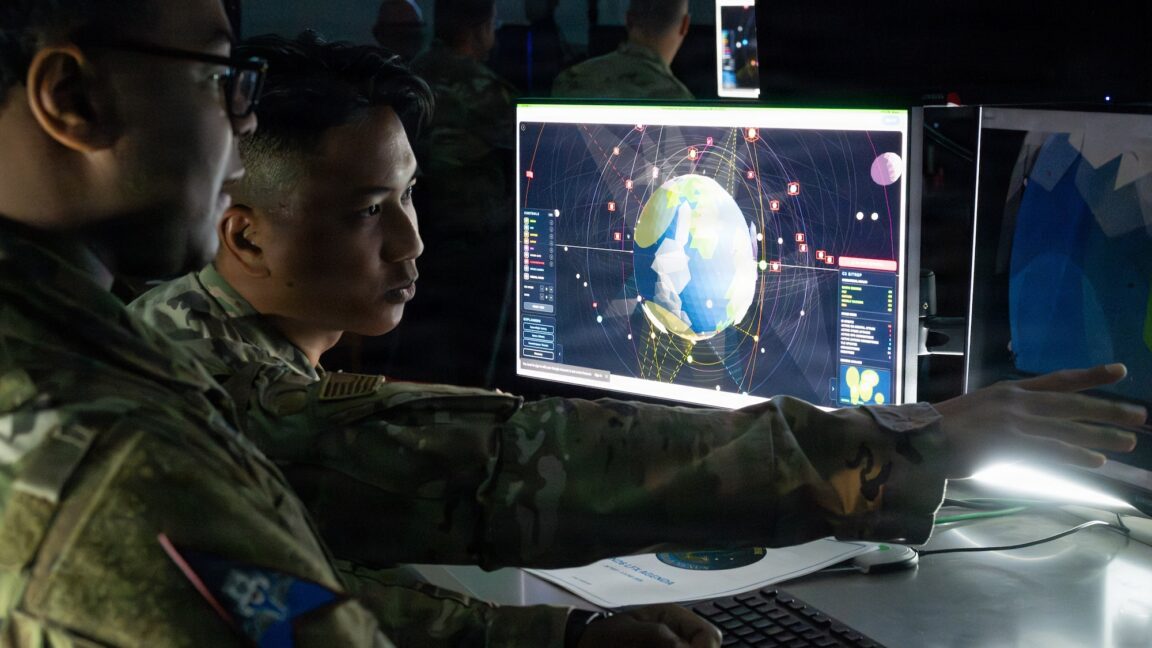
The change is a strong signal that space domain awareness is moving higher on the military priority list. It also shows the Space Force is preparing not just one follow-on system, but a broader architecture of surveillance satellites intended to replace current capabilities in geosynchronous orbit.
RG-XX will replace the current GSSAP fleet
The original Andromeda award selected 14 companies to compete for future task orders tied to a new constellation known as RG-XX. That system is intended to replace the Geosynchronous Space Situational Awareness Program, or GSSAP, whose satellites can maneuver close to other spacecraft in geosynchronous orbit to conduct reconnaissance.
According to the report, RG-XX is expected to consist of smaller, lower-cost commercial satellites with greater mobility, refueling capability and longer life spans than the current GSSAP spacecraft. The Space Force requested $355 million in fiscal 2027 for RG-XX, with $2.8 billion planned across the five-year budget cycle.
Budget documents cited in the report show the constellation will be launched in three increments, with the first spacecraft scheduled for early fiscal 2029 and the final set for late fiscal 2030.
Andromeda will also fund a SILENTBARKER successor
The enlarged contract vehicle is not limited to RG-XX. The Space Force said Andromeda will also support a future replacement for the classified SILENTBARKER space surveillance constellation operated jointly today by the Space Force and the National Reconnaissance Office.
The follow-on program, known as SG-XX, will use wide-field-of-view cameras for broader surveillance of the space environment. The service has not yet issued a request for proposals, but fiscal 2027 budget documents describe SG-XX as another proliferated constellation made up of small, low-cost commercial satellites.
The Space Force requested $370 million in fiscal 2027 to begin SG-XX development and $1.7 billion through fiscal 2031. The report says the first SG-XX launch is planned for fiscal 2030, while two prototype satellites, designated YSG-XX, are expected in fiscal 2028.
A shift toward smaller and more numerous systems
Both RG-XX and SG-XX fit a broader pattern in military space procurement: replacing smaller numbers of exquisite spacecraft with more numerous, lower-cost satellites that can be fielded faster and potentially made more resilient. The report repeatedly describes the planned replacements as commercial-style, small and lower cost.
That does not make the mission less strategic. If anything, the larger ceiling suggests the opposite. The Space Force is investing more heavily in systems meant to track, inspect and surveil increasingly contested orbital regions, especially as it looks beyond the current decade.

Why the increase matters now
The service’s explanation for the increase is unusually direct. It tied the bigger budget ask to an escalating threat environment expected after 2030. That places the Andromeda expansion in the context of long-term competition in space rather than a routine procurement adjustment.
By adding billions to the contract vehicle before many of the future task orders are even awarded, the Space Force is creating room to move more quickly on programs it now sees as central to future orbital awareness. The result is a much larger industrial and financial framework for the military’s next wave of space surveillance systems.
This article is based on reporting by Breaking Defense. Read the original article.
Originally published on breakingdefense.com