Pakistan brings the first Hangor-class submarine into service
Pakistan has commissioned the first of eight advanced Chinese submarines ordered under a long-running naval modernization program, marking a significant step in the country’s effort to strengthen its maritime deterrent and expand its undersea warfare capability.
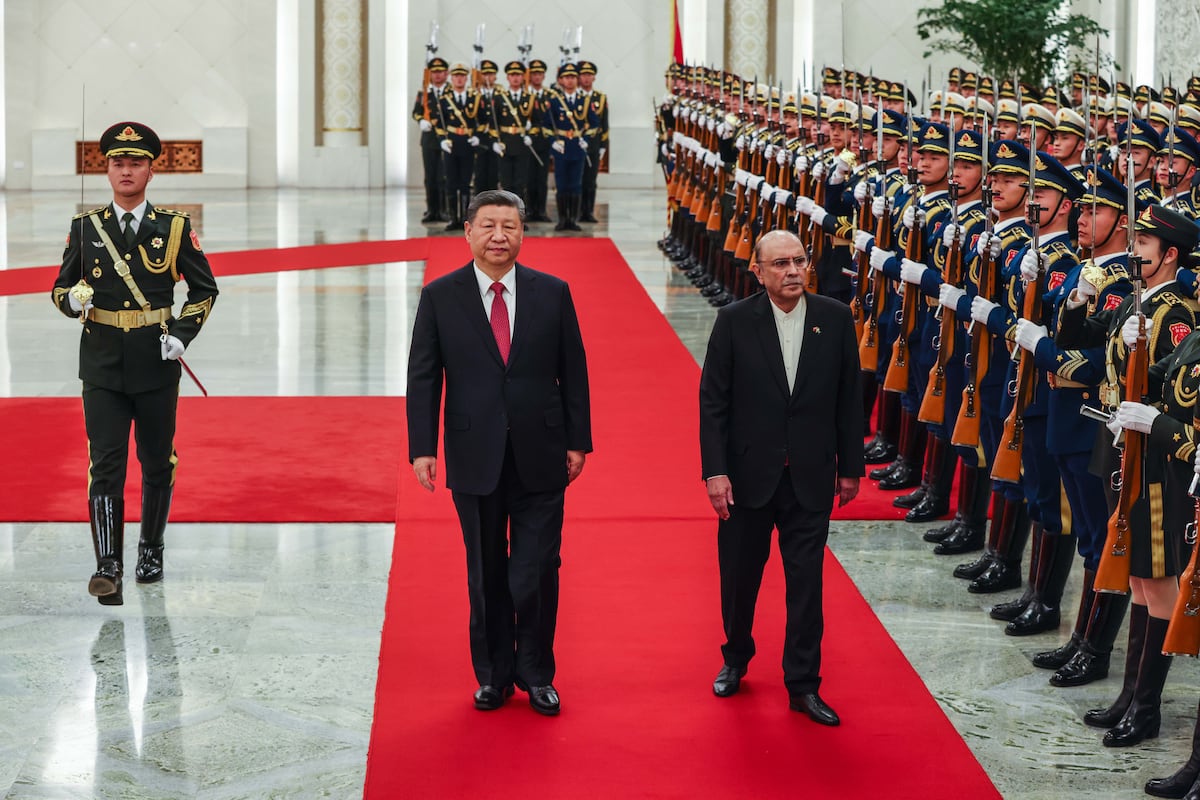
The newly commissioned boat, named Hangor, entered service following a ceremony held on April 30 in Sanya, China. Pakistani President Asif Ali Zardari, Pakistan Navy chief Adm. Naveed Ashraf, and senior Chinese military officials attended the event, according to the Pakistani statement cited by Defense News. The location is notable in its own right: Sanya hosts a major submarine base for China’s People’s Liberation Army.
The commissioning gives Islamabad the first platform in what is planned to become a larger eight-submarine Hangor-class fleet. Defense News described the class as an export variant of China’s Type 039A Yuan-class submarine, a diesel-electric design equipped with air-independent propulsion, or AIP.
Why the new submarine matters
Air-independent propulsion is one of the most consequential features of the program. Conventional submarines must periodically surface or snorkel to recharge batteries, increasing the risk of detection. AIP systems reduce that need and allow boats to stay submerged for longer periods. That endurance can improve survivability and expand options for patrol, denial, and strike missions in contested waters.
Defense News reported that the Hangor-class boats displace about 2,800 tons and are armed with advanced sensors, torpedoes, and anti-ship cruise missiles. The report said the submarines are intended to engage surface warships, other submarines, and land-based facilities. In practice, that combination gives Pakistan a more flexible undersea platform than a force built around shorter-endurance conventional boats alone.
For Pakistan, the submarine program is also about force structure. The country currently operates a fleet of eight submarines, including three mini-submarines, according to the report. Adding a new class with longer underwater endurance and broader strike options changes the quality of the fleet, not just the quantity.
A long-term China-Pakistan defense project
The broader submarine agreement was signed in 2015 and is estimated at $5 billion. Four of the submarines are being built in China, while the other four are scheduled to be built in Pakistan under a technology-transfer arrangement. That industrial component is central to the significance of the deal. It is not simply an off-the-shelf procurement; it is also intended to build domestic production capacity and deepen technical cooperation between Islamabad and Beijing.
All four Chinese-built submarines are scheduled to be inducted by 2028, according to Defense News. That timeline suggests the first commissioning is less an endpoint than the opening stage of a multi-year fleet transition.
President Zardari described the induction of the first Chinese attack submarine as a “historic milestone” in Pakistan’s naval modernization. Even allowing for the usual political rhetoric around military acquisitions, the description reflects the scale of the project. Large submarine programs are costly, technically demanding, and strategically visible. They tend to shape naval planning for decades.
Regional implications
Defense cooperation between China and Pakistan has long extended across air, land, and naval platforms, and the Hangor program adds another major element to that relationship. The Defense News report framed the development in the context of both countries’ close partnership and the regional focus on India.
That context matters because submarines are especially important in regional military balances. They are difficult to detect, can complicate an adversary’s planning, and can be used both for sea denial and for signaling resolve. A larger, more modern Pakistani submarine arm could therefore have an effect beyond the number of hulls involved, particularly if the boats prove reliable and are integrated effectively into broader naval operations.
The program also underscores China’s role as a major defense supplier willing to pair exports with technology transfer. For Pakistan, that makes Beijing not only a source of hardware but also a partner in industrial and military modernization. For outside observers, the project is another example of how defense trade can reinforce longer-term strategic alignment.
What to watch next
The next major questions will center on delivery pace, training, local construction progress, and how quickly Pakistan can absorb the new boats into operational service. Submarine programs often face delays tied to shipbuilding complexity, testing, and crew preparation. Much will depend on whether the Chinese-built vessels arrive on schedule and whether the Pakistan-based construction effort can translate the promised technology transfer into practical production capability.
Even so, the commissioning of Hangor is already a visible milestone. It confirms that the 2015 deal has moved from contract to force generation, and it gives Pakistan the first platform in a program designed to upgrade one of the most strategically important parts of its navy.
This article is based on reporting by Defense News. Read the original article.
Originally published on defensenews.com