After years of delays, U.S. on-orbit servicing may finally be close
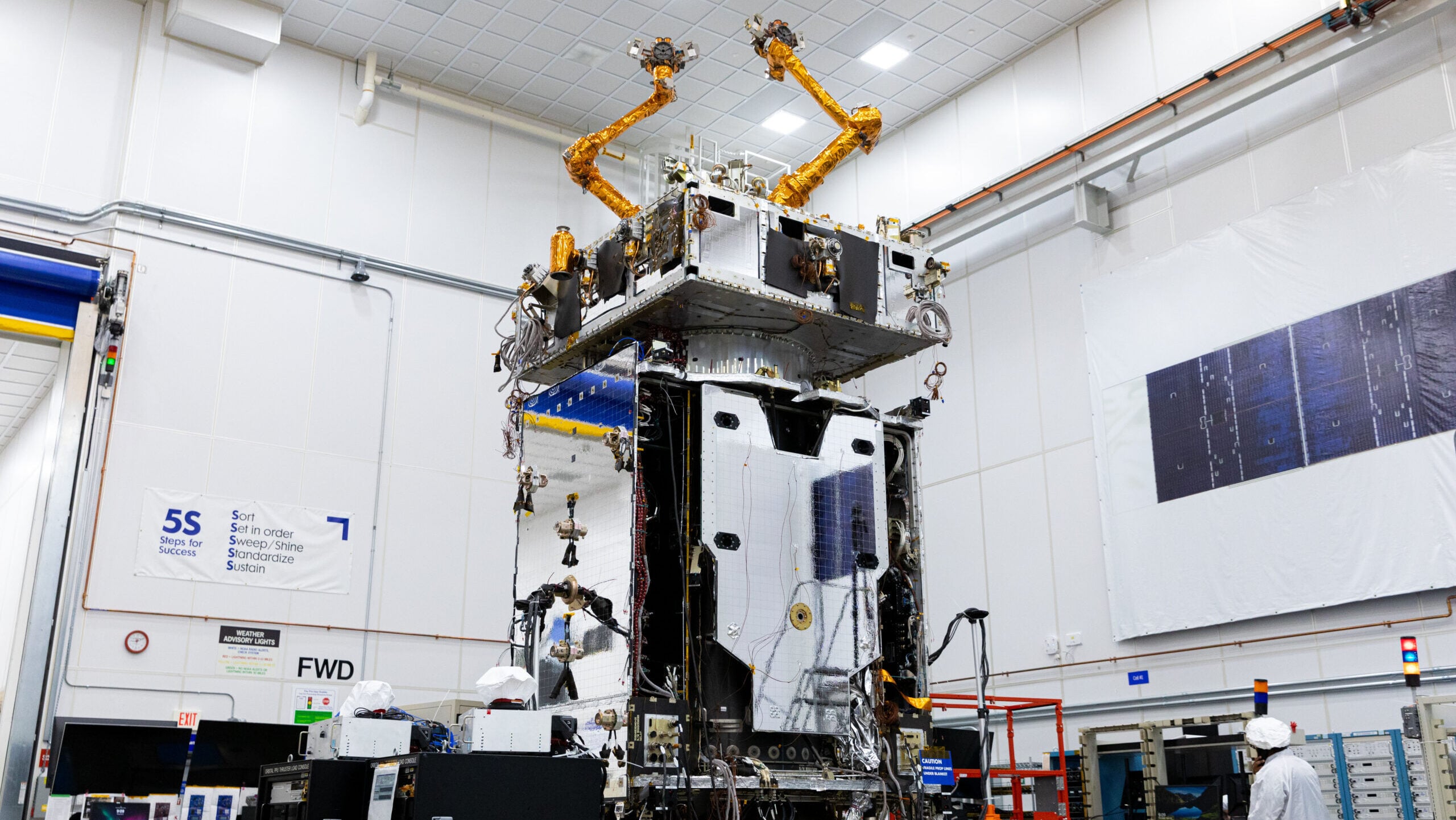
A long-promised capability in national-security and commercial space is moving toward a real launch. Northrop Grumman says it plans to fly its Mission Robotic Vehicle, or MRV, later this summer, marking what company officials describe as the first U.S. robotic servicer in orbit. Developed in partnership with the Defense Advanced Projects Research Agency under the Robotic Servicing of Geosynchronous Satellites program, the spacecraft is intended to perform robotic servicing tasks in geosynchronous orbit, a mission set that has been discussed for years but has proven difficult to bring to flight readiness.
The importance of the launch goes beyond one satellite. If successful, it would help establish a domestic on-orbit servicing capability at a time when satellites are becoming more strategically central to military communications, missile warning, and broader space infrastructure. Extending the life of valuable spacecraft or performing intervention without replacing entire systems has obvious economic and operational appeal.
What is launching
According to the supplied source text, Northrop Grumman has purchased an entire SpaceX Falcon 9 rocket for the mission. The launch will carry the MRV along with three Mission Extension Pods. The vehicle incorporates two robotic arms provided by DARPA and built by the U.S. Naval Research Laboratory, combining a Northrop satellite bus with a government-developed robotic payload.
The company’s SpaceLogistics subsidiary has positioned the mission as a first-of-its-kind U.S. capability. Robert Hague, the unit’s president, told reporters that when MRV launches it will be “the United States first robotic servicer.” That is a bold milestone claim, but it is backed by the mission’s design intent: to physically interact with spacecraft in geosynchronous orbit rather than simply observe or communicate with them.
Why the mission took so long
The road to launch has been difficult. The RSGS effort began at DARPA in 2017, but the program ran into an early lawsuit and lost its original contractor, Maxar Technologies, in 2019 when Maxar exited the effort. Northrop Grumman took over the contract in 2020, and the spacecraft had originally been slated to launch in 2024.
Northrop now says the delays stem largely from complexity. In the supplied text, Hague points to the challenge of integrating both the spacecraft bus and the robotic payload, as well as the need to ensure the mission software works safely across the full system. That explanation is consistent with the mission’s underlying difficulty. Robotic servicing at geosynchronous altitude is not just another satellite deployment. It requires precision approach, physical interaction, and a very high standard of operational safety around expensive space assets.
Those demands make software integration especially critical. A servicer has to understand its own state, the target spacecraft’s condition, and the consequences of any movement or contact. The mission therefore sits at the intersection of robotics, autonomy, flight software, rendezvous operations, and risk management.
Why geosynchronous servicing matters
Geosynchronous orbit contains some of the most valuable satellites in operation because spacecraft there can maintain a fixed position relative to Earth’s surface. That makes them central to communications and other persistent functions. But they are also expensive and difficult to replace quickly. A credible servicing capability could change asset management in that regime, opening a path to life extension, corrective operations, and potentially more modular architectures over time.
Northrop already has experience in satellite life extension through its Mission Extension Vehicle program. MRV is a more ambitious step because it adds robotic manipulation. If the company can show that a U.S. spacecraft can safely perform those tasks in orbit, it would move the industry and the Pentagon closer to a future in which key satellites are maintained rather than simply used until failure.
- The mission is scheduled for launch this summer on a SpaceX Falcon 9.
- Northrop says the launch includes MRV and three Mission Extension Pods.
- The spacecraft carries DARPA-provided robotic arms built by the U.S. Naval Research Laboratory.
- The program has been delayed by contractor changes, integration complexity, and software challenges.
The larger significance
The MRV launch will not instantly create a mature servicing market, and it comes after a far slower development path than originally planned. But if the spacecraft reaches orbit and performs as intended, it will mark a practical turning point for U.S. space operations. The key shift is from talking about robotic servicing as a strategic aspiration to demonstrating it as a working capability. In a domain where replacement cycles are long and orbital assets are increasingly contested and indispensable, that is a consequential change.
This article is based on reporting by Breaking Defense. Read the original article.
Originally published on breakingdefense.com