Congress moves to slow a flagship Navy program
House lawmakers are proposing a major brake on one of the U.S. Navy’s most ambitious shipbuilding efforts. In draft language for the fiscal 2027 National Defense Authorization Act, the House Armed Services Committee would bar the Navy from signing a contract for construction work on the lead Trump-class battleship until the service certifies that the ship’s planned weapons are at a sufficiently mature technology readiness level.
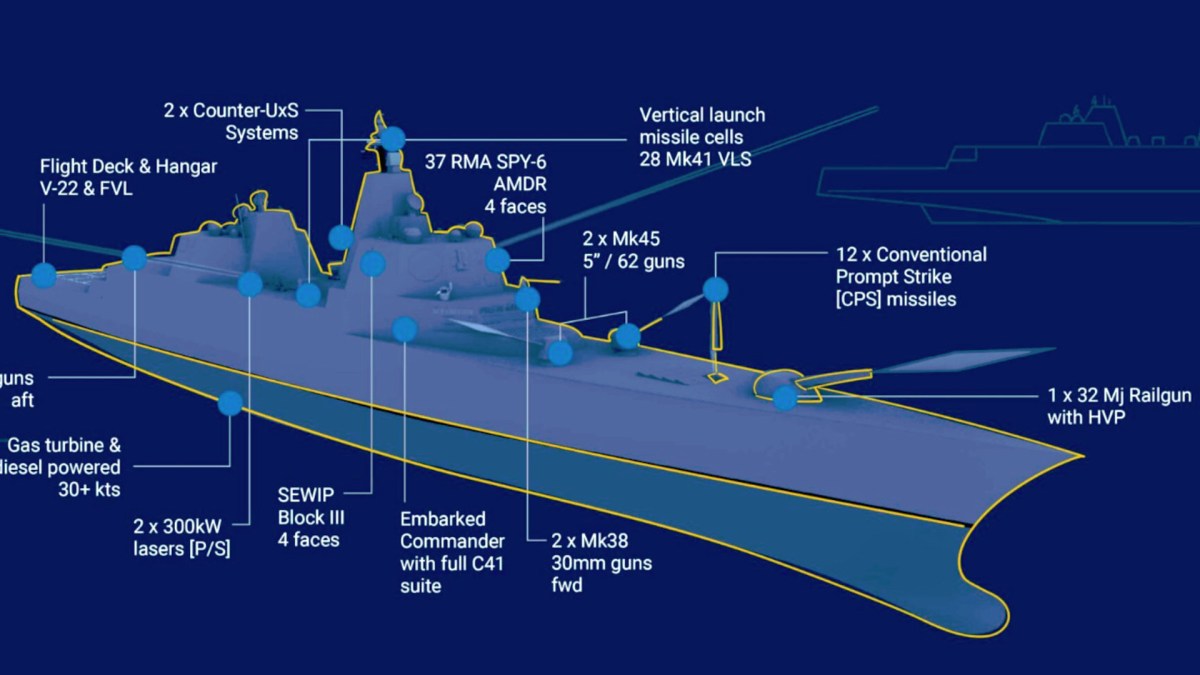
The provision is narrow in wording but potentially broad in effect. The Trump class is supposed to field a package of advanced armaments including railguns and high-power laser directed-energy weapons, systems that lawmakers clearly believe are not yet proven enough to anchor a lead warship. If the certification requirement holds, the Navy would have to show Congress that the core weapons concept is no longer aspirational before steel can start being cut.
That matters because the lead ship often sets the tempo, cost profile, and political durability of an entire class. A delay at this stage would not just shift a construction milestone; it could undermine confidence in the battleship program itself before it is fully established. The committee’s message is straightforward: a ship built around immature weapons is a procurement risk Congress is not willing to underwrite without firmer evidence.
A demand for proof, not promise
The draft language does not spell out which individual systems must pass muster, nor does it define what exact readiness threshold would count as sufficiently mature. Even so, the intent is hard to miss. Lawmakers are looking past glossy concepts and demanding a more concrete link between technological ambition and acquisition discipline.
That puts pressure on the Navy to do more than defend the strategic rationale for the Trump class. It must now show that the technologies meant to make the ship distinctive are viable enough to justify beginning construction. Advanced naval power systems, directed-energy weapons, and electromagnetic launch concepts can all look compelling on paper, but Congress appears unwilling to let the lead hull become a floating technology demonstration burdened by delays, redesigns, and spiraling cost.
The committee’s approach also reflects a broader tension in defense procurement. The Pentagon wants faster modernization and more disruptive capability, but Congress still controls when high-risk programs move from development into production. In practice, that means lawmakers are using the authorization bill to force a sequencing discipline: mature the critical subsystems first, then build the ship around them.

Frigate questions surface alongside the battleship debate
The same draft bill also presses the Navy on a separate surface combatant priority, the FF(X) frigate. Lawmakers want the service to develop a strategy for future subvariants, including the possibility of a version equipped with a built-in vertical launch system. That demand follows criticism of the initial FF(X) design, which reportedly would not include a VLS.
The juxtaposition is notable. On the battleship side, Congress is worried about the Navy moving too quickly into construction without mature systems. On the frigate side, lawmakers are questioning whether the service is building enough growth and combat flexibility into a program that is supposed to help shape the future fleet. In both cases, the committee is signaling dissatisfaction with key assumptions underpinning major shipbuilding efforts.
For the Navy, this creates a difficult balancing act. It must defend a bold vision for a new battleship while also explaining why a new frigate would initially omit a capability that many observers see as central to naval lethality. Neither question is merely technical. Each one goes to whether the service’s modernization choices align with operational needs and congressional expectations.
What happens next
The Trump-class provision is still part of an early NDAA draft, and the legislative process could reshape or remove it. But even at this stage, the proposal carries weight. It formalizes congressional skepticism and warns industry and the Navy that enthusiasm for futuristic ship concepts will not automatically translate into procurement authority.
If the final bill preserves the restriction, the Navy may need to spend the coming months demonstrating progress on the exact weapons that define the Trump class. That could mean more testing, clearer milestones, and a more explicit roadmap showing how the ship’s advanced combat systems will transition from development to fielding.
For now, the House committee has drawn a line: no lead ship construction contract until the Navy can show that the weapons meant to justify the class are ready enough to belong on its first hull. In an era of expensive fleet choices and intense scrutiny over defense spending, that standard could determine whether the Trump class becomes the Navy’s next marquee warship or an idea that never clears the gate.
This article is based on reporting by twz.com. Read the original article.

Originally published on twz.com