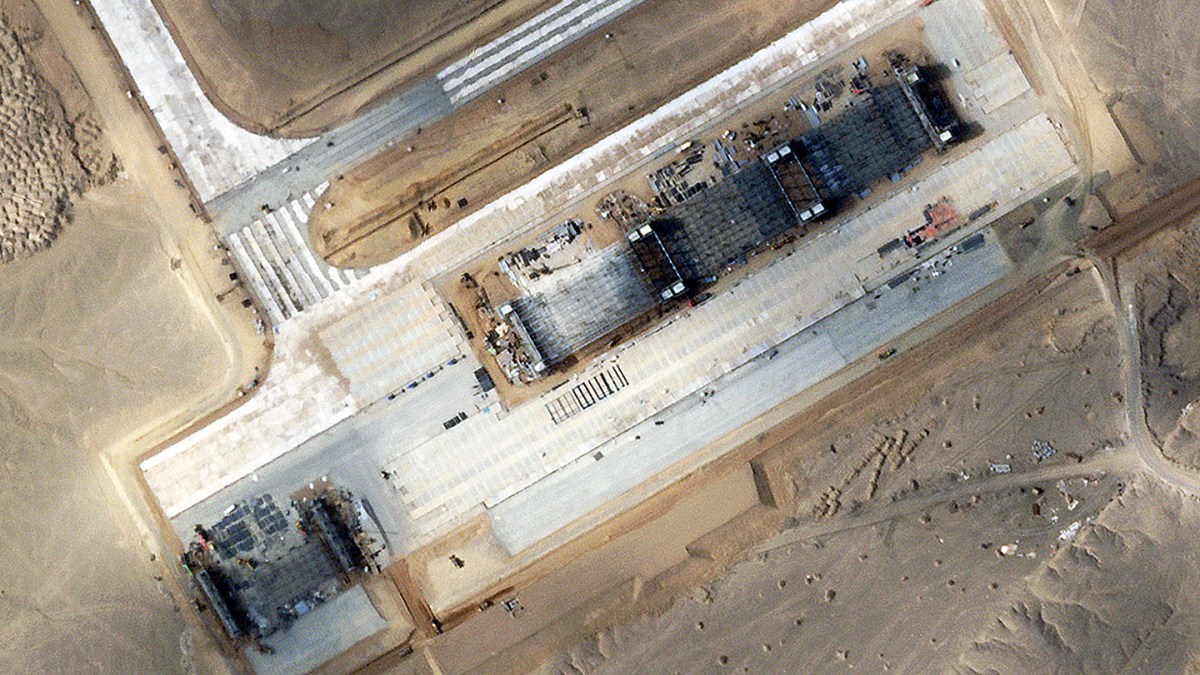
Satellite imagery points to a larger role for Lop Nur
Fresh commercial satellite imagery suggests China is accelerating the buildout of its remote Lop Nur airbase in Xinjiang, a facility that has increasingly drawn attention as a center for testing advanced and experimental aircraft. According to reporting based on imagery captured on August 27, 2026, the site now includes four large new hangars and a broader construction surge that indicates the base is moving into another major phase of growth.
The installation has often been compared, loosely, to the United States’ Area 51 because of its isolation, secrecy, and apparent role in flight testing. That comparison should not be taken too literally, but it does convey the strategic significance of a site that appears designed to support sensitive aerospace programs away from public view. What matters most in the latest imagery is not the nickname, but the pace and direction of the expansion.
The base already has one of the world’s longest runways at 16,400 feet, giving it unusual flexibility for testing high-performance aircraft and other specialized platforms. A runway of that length can support a broad range of demanding operations, and its presence has long suggested that Lop Nur was intended for more than ordinary military aviation activity. The latest construction appears to reinforce that conclusion.
From austere strip to sprawling test center
The reported transformation of Lop Nur over the past several years is striking. In 2020, the site was described as little more than a 3.1-mile runway, a small hangar, and scattered vehicles. That kind of footprint is notable for a remote outpost, but still limited. Since then, the installation has steadily grown into what is now characterized as a more expansive People’s Liberation Army flight-test center.
By 2023, the main apron had already been significantly enlarged and a large hangar had been added. The new imagery suggests that this earlier phase was not a one-off investment but part of a continuing effort to scale up the base’s capacity. The addition of four large hangars is especially notable because hangar construction can reveal the intended maturity of operations at a site. More enclosed space can support maintenance, protection of sensitive aircraft from satellite observation, and preparation for a larger or more varied test fleet.
The article describing the expansion says construction is not only continuing, but accelerating. That wording matters. A steady buildup can reflect long-term modernization. Acceleration, by contrast, usually implies urgency, a near-term requirement, or the arrival of new systems that need dedicated infrastructure.
Why the hangars matter
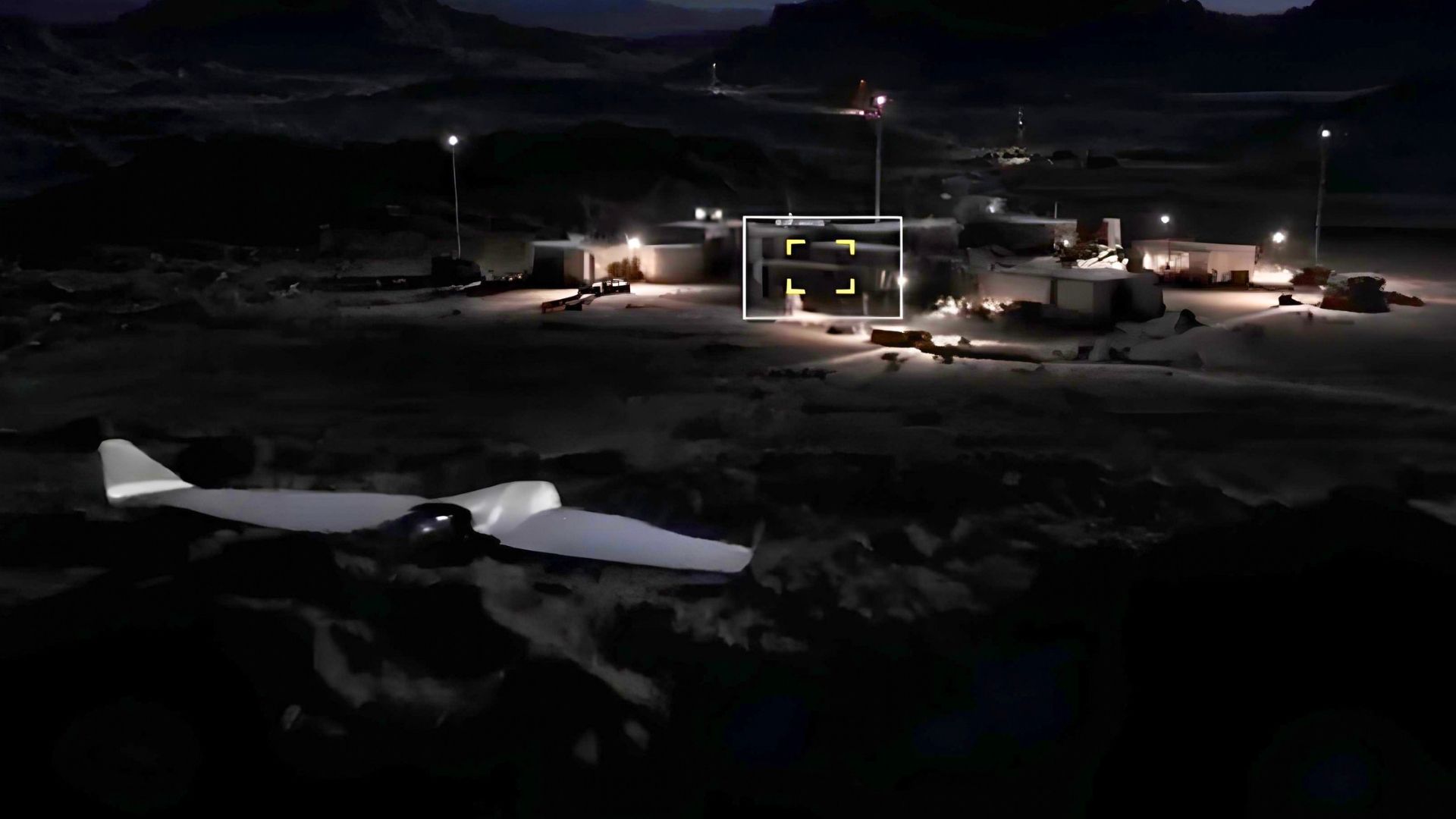
The most intriguing element in the latest imagery is the cluster of large new hangars. Their scale has prompted speculation that a specific class of aircraft may soon be based there, or is already being prepared for operations from the site. The source text stops short of identifying a confirmed occupant for these structures, and any stronger claim would go beyond the evidence provided. Still, the hangars clearly point to expanding ambitions.
Large hangars at a remote test installation can serve several purposes at once. They can house prototypes that require secrecy, shelter aircraft undergoing modifications between test flights, and support parallel programs without exposing the full scope of activity to overhead surveillance. In practical terms, they also signal that the base is being equipped for sustained work rather than occasional detachments.
The new facilities also fit a broader pattern in which infrastructure becomes a proxy for program momentum. Even when the aircraft themselves are only intermittently visible, the supporting architecture can reveal that a military expects to increase testing tempo, diversify missions, or prepare for more advanced vehicles that need more specialized ground support.
Advanced aircraft and space-linked testing
Lop Nur’s profile rose further last year when two of China’s sixth-generation stealth fighter designs, identified in the source text as the J-36 and J-XDS, were reportedly seen at the base for the first time. Their appearance there was significant because the airbase is far from the home airfields of their respective manufacturers, Chengdu and Shenyang. That distance suggests Lop Nur serves as a neutral or centralized proving ground for sensitive programs rather than a conventional operational base.
The site’s relevance may also extend beyond advanced combat aircraft. Before it became closely associated with next-generation air combat technologies, Lop Nur was linked to military space development efforts and testing of reusable space planes as early as 2020. That history broadens the meaning of the current expansion. It suggests the base could be supporting a portfolio of work that spans both atmospheric and near-space missions, or at minimum the kind of aerospace experimentation that sits between them.
That possibility would help explain why infrastructure growth at the site has been sustained over multiple years. A base that supports aircraft prototypes, space-related systems, or reusable vehicles would require space, security, and flexibility. Those are all consistent with what the imagery appears to show.
A signal of strategic priorities
The importance of Lop Nur is not limited to the hardware visible in satellite photos. The buildout is also a signal about Chinese defense priorities. Expanding a remote test base takes money, planning, logistics, and a clear institutional purpose. Doing so at an accelerated pace suggests Beijing sees continued value in creating protected environments for developing advanced aerospace capabilities.
The location adds another layer of context. Lop Nur sits near China’s primary nuclear weapons testing facility, where the country detonated its first nuclear device in 1964. That does not mean the airbase expansion is directly tied to nuclear operations, but it does underline the strategic sensitivity of the wider area and the long-standing role of the region in high-security state programs.
For outside analysts, the lesson is straightforward: infrastructure can be intelligence. Even when China does not publicly detail the scope of programs underway at places like Lop Nur, construction patterns, runway characteristics, and aircraft sightings can still reveal meaningful shifts. The newest imagery does exactly that. It points to a base that is no longer simply a remote runway in the desert, but an increasingly important node in China’s effort to test and field next-generation aerospace systems.
Whether the immediate driver is a new stealth aircraft, broader flight-test demand, space-linked experimentation, or some combination of all three, the direction is clear. Lop Nur is growing in capability, in capacity, and likely in importance. The latest expansion does not answer every question about what China plans to fly there next, but it does narrow the range of plausible interpretations. This is a site being prepared for more.
This article is based on reporting by twz.com. Read the original article.
Originally published on twz.com