The Army is treating balloons as a serious part of its Pacific toolkit
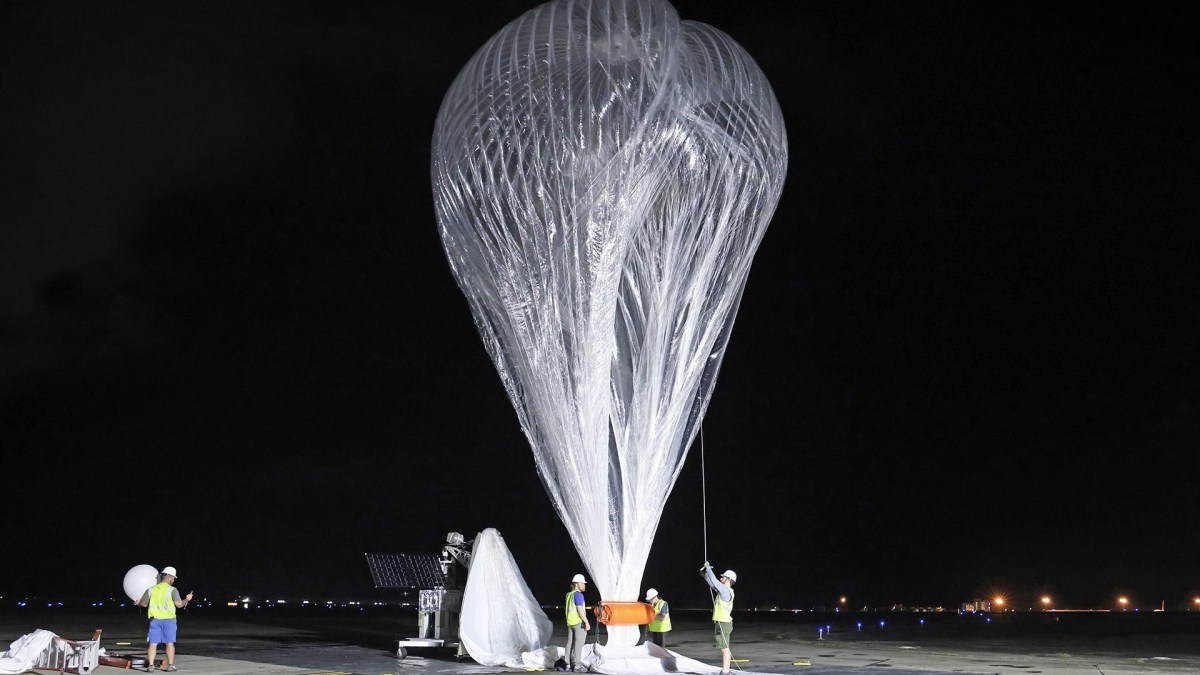
The U.S. Army is pushing to expand its use of high-altitude balloons in the Indo-Pacific, signaling that lighter-than-air systems are becoming a more important layer in the service’s future surveillance architecture. A recent contracting notice described a potential requirement for commercial or modified-commercial balloon systems, sensors, and associated datalinks to be delivered to locations in the U.S. Indo-Pacific Command area, specifically Hawaii.
The notice, highlighted by The War Zone, frames the effort as market research rather than a guaranteed buy. Even so, it offers a clear indicator of direction. The Army is not experimenting casually with balloons. It is exploring a more persistent regional ecosystem for sensing, networking, and potentially other functions that sit between satellites, aircraft, and ground systems.
What the Army is looking for
According to the notice, the requirement covers 15 high-altitude balloons in three sizes: five 12-gore systems, five 16-gore systems, and five 24-gore systems. The term gore refers to the individual segments that make up a balloon’s outer envelope. A higher gore count typically means a larger volume and therefore greater altitude capability or payload capacity.
The document specifically mentions a desired burst altitude in the 90,000- to 120,000-foot class for the 24-gore variant. That places the upper-end systems in a region that offers broad surveillance reach while staying far cheaper and easier to refresh than many traditional airborne assets.
More than surveillance
The Army’s stated emphasis is persistent surveillance and reconnaissance, but the source text makes clear that balloons are being considered for a wider mission set. The same kinds of platforms could also support communications relay, electronic warfare, and even the launch of kinetic effects. That is a notable shift in how balloons are discussed. They are no longer treated as niche observation tools. They are increasingly presented as modular, reusable nodes in a distributed force design.
The contracting notice also references datalinks tied to SpaceX’s Starlink network. That matters because persistence is only useful if the resulting data can move quickly and reliably into the broader command architecture. Linking airborne sensing to resilient communications is part of what makes these platforms more operationally relevant.
Why the Pacific matters
The Indo-Pacific is the region where distance, island geography, and wide surveillance gaps make persistence especially valuable. Balloons can stay aloft for long periods and cover large areas without many of the cost and sortie constraints associated with crewed aircraft. For an Army increasingly focused on multi-domain operations and long-range competition, that combination is attractive.
The War Zone notes that high-altitude balloon use is already becoming more routine for Army units in the Pacific. This notice suggests the service wants to move from episodic deployment toward a more deliberate fleet and support structure.
A lower-cost layer in a crowded battlespace
High-altitude balloons are unlikely to replace satellites, drones, or traditional aircraft. Their real value is as a lower-cost layer that can be fielded in numbers, carry varied payloads, and support distributed operations. In a region where endurance, coverage, and affordability all matter, that can be a meaningful advantage.
The harder questions come later. Survivability, weather tolerance, payload integration, and command-and-control resilience will determine whether the systems can function in contested environments rather than permissive ones. But the Army’s interest is no longer theoretical. It is now organized enough to generate contracting language around specific sizes, sensors, and network links.
What the notice signals
- The Army wants commercially available or modified high-altitude balloon systems for INDOPACOM.
- The requirement includes 15 balloons across three size classes and associated payload support.
- The platforms are being considered for missions beyond surveillance, including relay and electronic warfare.
The Pacific theater has forced the U.S. military to look for assets that are cheaper, more persistent, and easier to distribute. High-altitude balloons fit that logic. The latest notice suggests the Army wants many more of them in the air.
This article is based on reporting by twz.com. Read the original article.
Originally published on twz.com