AeroVironment is broadening the launched-effects playbook
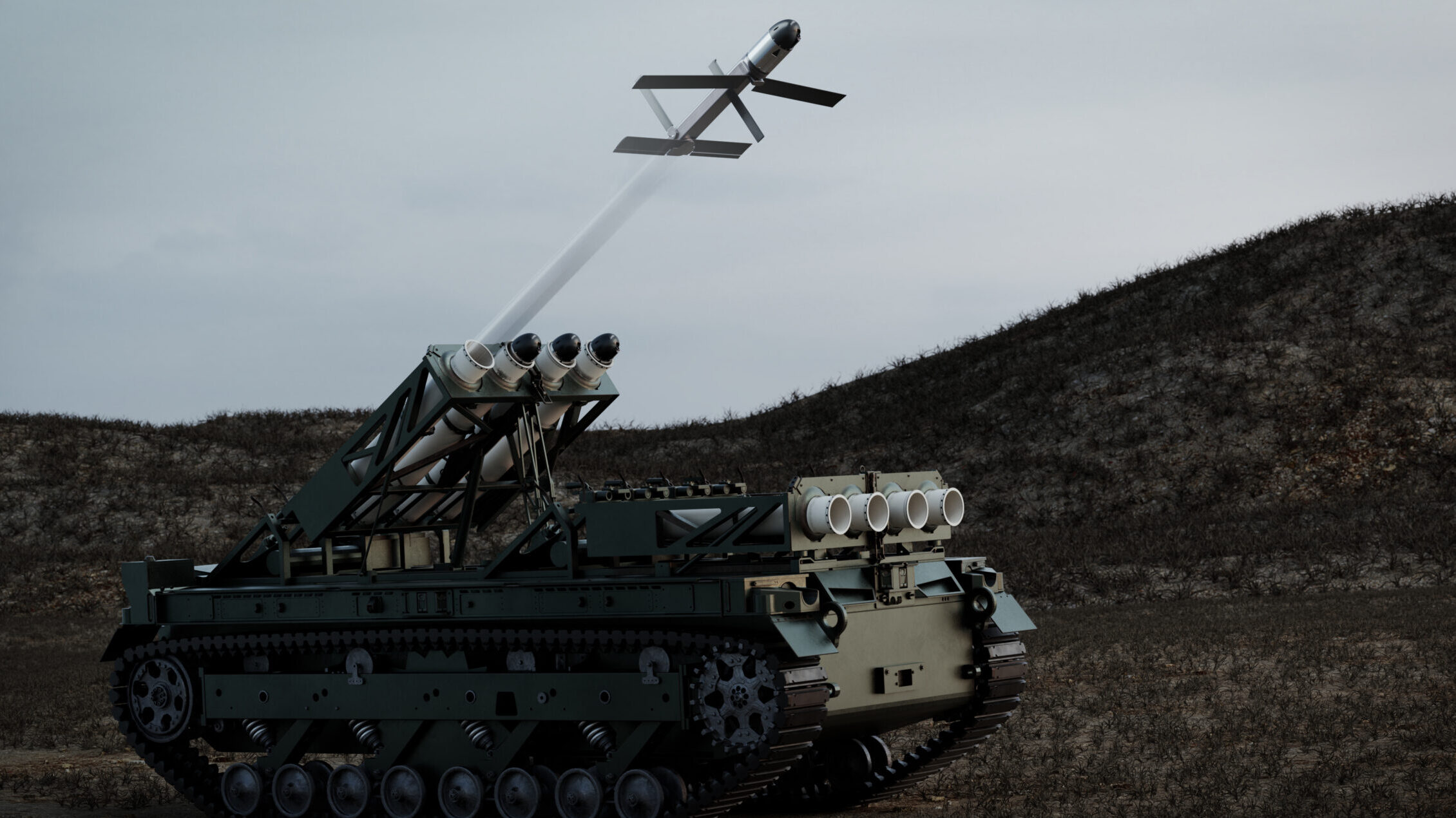
AeroVironment has introduced a new family of launched effects systems called MAYHEM, with the first model, MAYHEM 10, positioned as a modular platform for lethal and nonlethal missions. Announced at the Army Aviation Association of America gathering in Nashville, the system reflects a wider shift in defense technology: launched effects are no longer being framed only as one-way strike tools, but as adaptable battlefield nodes that can switch roles across intelligence, electronic warfare, communications and precision attack.
That repositioning matters because it shows how manufacturers are responding to lessons from fast-changing conflicts, especially the premium now placed on adaptability. In the candidate source text, AeroVironment executives emphasized that the system can support intelligence, surveillance and reconnaissance, electronic warfare, precision strike and communications relay. The key idea is not simply that one vehicle can do many things, but that mission configuration can change quickly enough to keep pace with battlefield iteration.
MAYHEM 10 carries a 10-pound payload and is described as deployable from air, ground and sea platforms. AeroVironment said the system has an operational range of up to 100 kilometers and endurance of 50 minutes. It was inspired by the company's Switchblade 400, which the firm described as its sister system. The company also said the air vehicle uses an open, modular architecture developed with Parry Labs, while collaborative attack or swarming functions are being developed with Applied Intuition.
Why modularity is becoming the main product feature
The most significant detail in the announcement is not the payload figure or range. It is the emphasis on open interfaces and multi-mission payload sets. Defense buyers increasingly want systems that can be reconfigured late in production and adapted in the field, rather than locked into a single mission profile. AeroVironment's executives explicitly tied that need to the speed of hardware and software change seen in the Ukraine-Russia war, where drone and counter-drone tactics have evolved in short cycles.
That gives MAYHEM a role that is as industrial as it is tactical. A platform that can remain unconfigured until late in the production line offers manufacturers and militaries a way to compress response time. Instead of treating each requirement as a separate procurement stream, they can work from a common vehicle and swap mission packages in days. If that model works in practice, it could shorten the path from software update or payload change to operational deployment.
The company also said the system is intended in part as an anti-armor weapon, with the ability to fit the Javelin Multi Purpose Warhead in a similar fashion to other products. That puts MAYHEM 10 in an increasingly crowded but strategically important category: relatively small autonomous systems that promise higher-volume precision effects against mobile or protected targets. In current procurement thinking, the appeal is obvious. Militaries want more affordable and scalable ways to contest armor, air defenses and battlefield networks without relying exclusively on larger, more expensive missiles.
Swarming remains a promise until tested
One of the more consequential claims around the new system involves collaborative attack, commonly described as swarming. AeroVironment said testing for that capability is expected in late summer, which means the feature remains prospective rather than demonstrated in the information provided here. That distinction matters. Swarming is one of the most marketable concepts in autonomous warfare, but operational performance depends on communications resilience, task allocation, deconfliction, target handoff and survivability under electronic attack.
Until testing results are public, the swarming piece should be treated as an intended capability rather than an established one. Even so, the inclusion of that roadmap is a signal about where the market is heading. Manufacturers are trying to sell not just individual expendable systems, but networked effects that can operate cooperatively across domains and mission types.
MAYHEM's design language also reflects a broader convergence inside the drone and loitering munition sector. The traditional lines between reconnaissance platforms, attack drones, communications relays and electronic warfare tools are eroding. The more valuable system is increasingly the one that can carry different payloads, shift roles quickly and plug into a broader digital ecosystem.
Why the launch matters
- It shows AeroVironment extending beyond a single-purpose loitering munition identity.
- It highlights how battlefield demand is shifting toward rapidly reconfigurable systems.
- It links open architecture to operational tempo, not just procurement flexibility.
- It places swarming on the near-term development roadmap, though that capability is still awaiting testing.
The unveiling of MAYHEM does not by itself prove a new standard has arrived. Announcements are easier than field performance, and modularity claims only matter if logistics, software integration and payload swaps work under operational pressure. But the direction is clear. Defense firms are trying to build launched effects that function less like single-use munitions and more like flexible, software-shaped platforms.
If that model succeeds, it could reshape how armed forces think about medium-range autonomous systems. Instead of procuring separate tools for strike, surveillance, relay and disruption, they may prefer common vehicles with interchangeable roles. AeroVironment is betting that the battlefield now rewards that kind of agility. MAYHEM is its argument that the future launched effect is not defined by one mission, but by how many missions it can absorb without slowing down.
This article is based on reporting by Breaking Defense. Read the original article.
Originally published on breakingdefense.com