The Army has given its future assault aircraft a historically loaded name
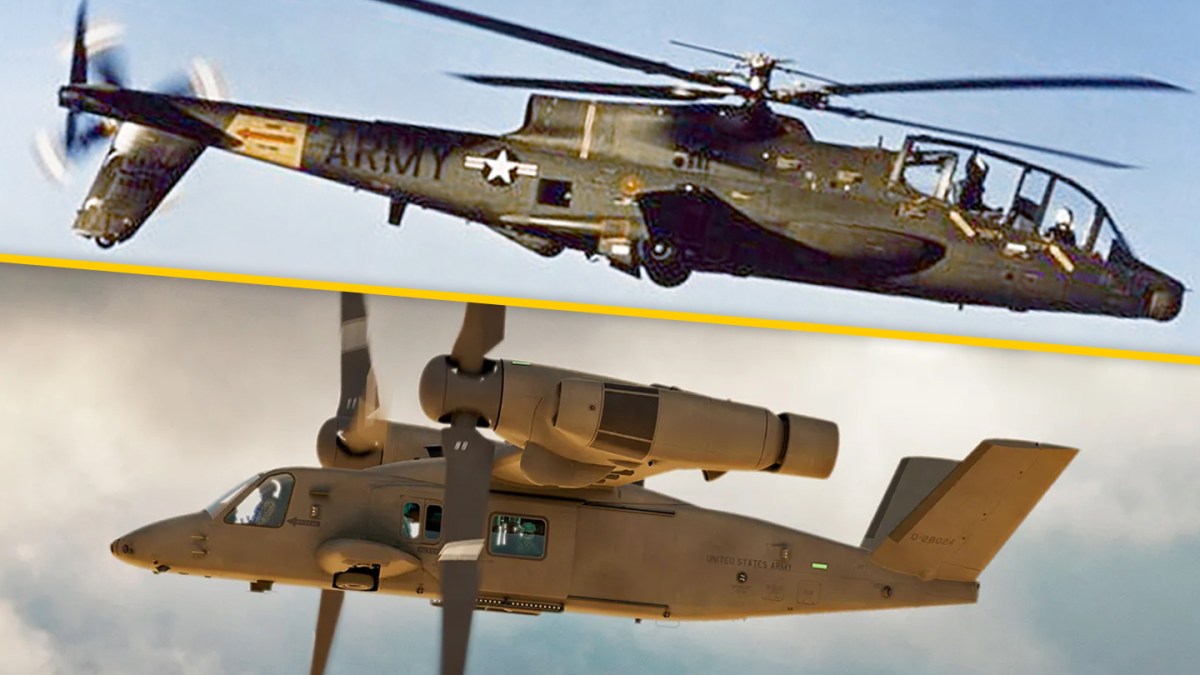
The U.S. Army has officially named its new MV-75 tiltrotor the Cheyenne II, according to reporting from The War Zone. The name was unveiled at the Army Aviation Association of America’s Army Aviation Warfighting Summit in Nashville, Tennessee, and marks a symbolic milestone for one of the Army’s most important rotorcraft modernization efforts. The original Cheyenne name belonged to the Lockheed AH-56, a Cold War-era helicopter remembered as technically ambitious but ultimately troubled. By reviving that name, the Army is linking its future aircraft to a legacy of bold aviation experimentation.
The choice also follows the Army’s longstanding practice of naming helicopters after Native American tribes, placing the Cheyenne II alongside names such as Apache, Chinook, and Lakota. Maj. Gen. Clair A. Gill, quoted in the source material, framed the name as more than ceremonial, arguing that it reflects identity, mobility, and the ability to operate in harsh environments. Those themes align closely with what the Army wants the MV-75 to represent.
This is not a minor branding decision. The aircraft sits at the heart of the Future Long-Range Assault Aircraft program, or FLRAA, which is one of the service’s most visible aviation modernization projects. In 2022, the Army selected Bell’s design, derived from the V-280 Valor tiltrotor, as the winner of the competition. The service is betting that the new platform can deliver a major leap in speed, reach, and operational flexibility over the helicopters it is meant to supplement or replace.
The aircraft is arriving faster than originally expected
The naming announcement comes as the Army is also moving faster on the fielding timeline. The source text says the service confirmed in January that it planned to accelerate delivery of the MV-75 by multiple years, with first examples expected in 2027 instead of 2031. That is a meaningful shift. In major military aviation programs, timelines frequently move to the right, not to the left. Pulling fielding forward suggests institutional urgency and a belief that the platform addresses increasingly pressing operational demands.
Those demands are not hard to identify. Modern military planning places a premium on mobility over long distances, rapid insertion, survivability, and the ability to move forces in contested or logistically difficult theaters. A tiltrotor aircraft is attractive because it aims to combine some of the vertical lift advantages of a helicopter with higher speed associated with fixed-wing flight. That is exactly why the Army’s decision to adopt Bell’s design drew so much attention when the competition concluded.
The Cheyenne II name reinforces that the program is moving from concept and competition into identity and fielding. An aircraft becomes easier to communicate to soldiers, lawmakers, suppliers, and the public once it has a proper designation and story attached to it. In that sense, names matter in military procurement because they help turn a development effort into a recognizable capability.
The historical callback is ambitious by design
There is also an unmistakable message in reviving the Cheyenne label. The AH-56 Cheyenne was famous for being ahead of its time, but it was also plagued with difficulties and never entered service in the way originally intended. Using the name again is therefore not a cautious choice. It is an explicit embrace of ambition. The Army is effectively reclaiming a symbol of unrealized rotorcraft innovation and attaching it to what it hopes will be a successful next-generation assault aircraft.
That works if the program delivers. It creates a strong narrative of unfinished technological ambition finally finding a durable modern form. If the program stumbles, the comparison will become harder to ignore. Either way, the naming decision raises the symbolic stakes.
The timing also reflects the Army’s broader push to modernize aviation with platforms better suited to future operations. The MV-75 is not just another rotorcraft purchase. It is being presented as a pivotal moment for Army Aviation, in Gill’s words, and the service appears to view it as central to how soldiers will move in the years ahead.
Why the MV-75 matters beyond aviation enthusiasts
Programs like FLRAA are easy to treat as specialized procurement stories, but they have wider implications. Military air mobility affects force posture, crisis response, alliance commitments, and deterrence. A platform that can move troops faster and farther changes the planning assumptions behind real-world operations. It can influence how commanders think about distance, exposure, and tempo.
The acceleration to 2027 and the public naming announcement therefore matter together. One says the program is gaining urgency. The other says the Army is ready to define the platform more clearly in public. That combination usually signals confidence, even if substantial work remains before full operational use.
For now, the major facts are clear from the supplied reporting: Bell’s V-280-derived design won the FLRAA competition in 2022, the Army has advanced its fielding timeline, and the aircraft now carries the name Cheyenne II. The Army is not just modernizing hardware. It is trying to reset expectations for what assault aviation should look like. The MV-75’s new name makes that aspiration official.
This article is based on reporting by twz.com. Read the original article.
Originally published on twz.com