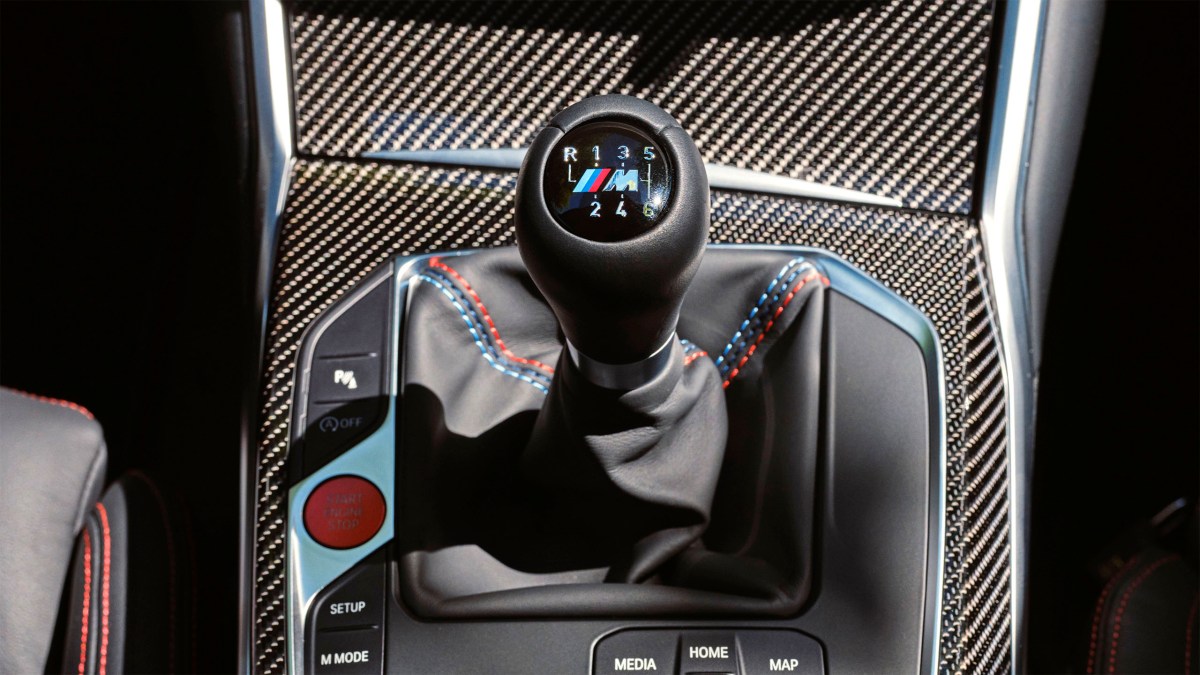
BMW is not ready to let the manual die
BMW is signaling that the manual transmission still has a place in its performance lineup, even as the engineering challenge of keeping it alive gets harder. According to The Drive, M division vice president Sylvia Neubauer said the company is investigating ways to preserve manual gearboxes despite the rising torque figures produced by modern high-performance vehicles.
That comment matters because it cuts against a broader industry trend. Across the auto market, manuals have been disappearing under pressure from emissions rules, tighter efficiency demands, and the raw mechanical limits of handling more power. In performance cars especially, the move toward higher torque has made it harder to justify a manual on technical grounds alone.
The engineering problem is getting harder
The source text describes an internal debate at BMW in which some see the manual as something that no longer makes much sense. That view is not difficult to understand. More torque means more stress on components, narrower tolerance for driver error, and greater complexity if an automaker wants to preserve both durability and brand reputation.
Neubauer's reported promise of a solution suggests BMW still sees strategic value in offering a stick shift, at least in selected models. That value is not simply nostalgia. Manuals remain one of the clearest markers of enthusiast intent, and they help distinguish a performance brand in a market increasingly defined by automation, electrification, and software-led driving experiences.
If BMW can find a workable path, it would be preserving a feature that is as much about identity as mechanics. For buyers who still want a more involved driving experience, the manual remains a shorthand for authenticity and control.
A wider industry in transition
The same industry roundup underscores how many manufacturers are reassessing strategy at once. The Drive reports that Polestar plans to end Chinese production of the Polestar 3 SUV and concentrate manufacturing in the United States. It also says Honda is reviving an R&D unit it had closed earlier in the decade as it looks to strengthen its competitive position, particularly against Chinese manufacturing.
Those moves point to a market being reshaped on several fronts at the same time: supply chains, regional manufacturing, product planning, and powertrain choices are all in motion. BMW's manual-transmission challenge fits into that larger picture. Automakers are trying to decide which legacy attributes still matter enough to save as they modernize their lineups.
The roundup also notes that Jeep is refining how it positions the Wagoneer and Grand Wagoneer after discovering that some customers misunderstood the size distinction between the two models. Renault chairman Jean-Dominique Senard, meanwhile, will not seek reelection when his term ends next year, and Mercedes-Benz is recalling around 3,500 electric G-Class SUVs because wheel bolts may loosen over time.
Seen together, these items show an industry where the work of adaptation is happening everywhere at once. Even a seemingly narrow question like whether a manual survives in a BMW M car sits alongside larger issues of manufacturing geography, product clarity, leadership turnover, and EV quality control.
Why manuals still matter
BMW's position suggests the company believes there is still commercial and symbolic upside in resisting a full break with driver-focused traditions. That does not mean manuals will remain common. More likely, if BMW succeeds, they will become increasingly selective offerings tied to a small number of enthusiast models.
But scarcity can strengthen meaning. In a market where performance is often measured in software updates, launch control times, and torque delivery curves, the manual keeps alive a different idea of what a performance car is for. It puts skill, rhythm, and physical involvement back into the equation.
Whether BMW can solve the torque problem will decide how long that idea survives in practice. For now, the company's message is clear: the manual is under pressure, but it is not finished yet.
This article is based on reporting by The Drive. Read the original article.
Originally published on thedrive.com