A monitor built for one thing above all else
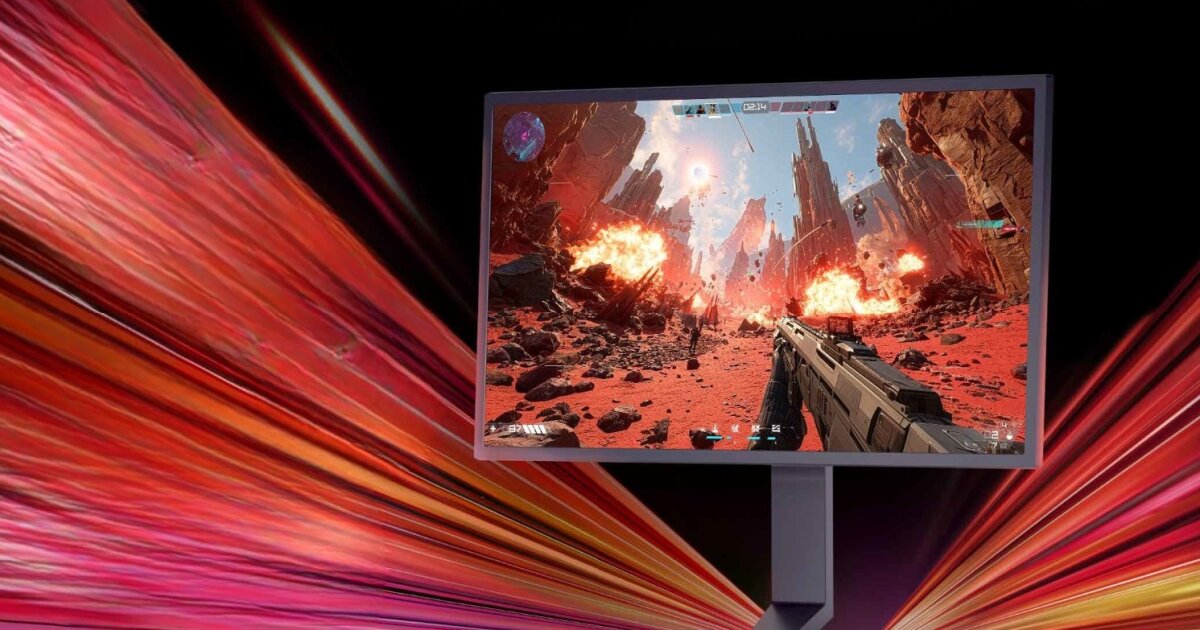
LG’s upcoming UltraGear 25G590B is not trying to be a general-purpose display. Its value proposition is narrower and more aggressive than that. The company is billing it as the world’s first Full HD gaming monitor with a native 1000-Hz refresh rate, a specification aimed squarely at the upper edge of competitive play where tiny reductions in visual delay are treated as meaningful performance gains.
That framing matters because the monitor is not being presented as a premium all-around experience. It is being sold as a specialized tool. At 24.5 inches and 1080p, the display is optimized around speed, consistency, and competitive readability rather than cinematic image quality or multitasking flexibility.
The number is the story
Refresh rates in gaming monitors have been climbing for years, moving from 144 Hz to 240 Hz, then 360 Hz and beyond. Each step has been marketed around smoother motion and faster feedback. LG’s claim at 1000 Hz pushes that logic close to its practical limit, at least in current mainstream consumer hardware.
According to the source, another monitor had crossed the 1000-Hz threshold earlier in 2026, but only at a reduced 1280 x 720 resolution. LG’s distinction is that it is keeping the rate at Full HD. That is an important technical and marketing line because 1080p remains common in esports settings, where players often prioritize frame rate and clarity over higher resolution.

Why 1000 Hz matters, and why it may not for everyone
In theory, a monitor refreshing up to 1000 times per second reduces visual delay and makes motion easier to parse during fast action. In first-person shooters, that can support earlier recognition of movement, quicker target identification, and better tracking during rapid lateral engagement. Those benefits are real in principle, but the source is also careful about who is likely to notice them.
For casual players, the jump from 240 Hz to 1000 Hz may be difficult to perceive in ordinary play. The gains are likely to matter most for highly trained competitors using systems capable of generating extremely high frame rates. In that context, shaving small fractions of latency can become operationally meaningful, especially in environments where matches are decided by narrow timing margins.
That tension is central to the product. It is overkill for many users, but deliberately so. The monitor exists because some segments of gaming hardware no longer need to justify themselves to the average player. They only need to serve the narrow group willing to optimize aggressively for speed.
Resolution as a strategic choice
LG’s decision to anchor the display at 1080p is not a compromise in this context. It is part of the design logic. Full HD is easier to drive at extreme frame rates than higher resolutions, and it remains standard in many esports environments. That means the monitor’s headline specification is tied to an ecosystem that can actually use it, provided the paired PC is powerful enough.
The source also notes the inclusion of Motion Blur Reduction Pro, which points to a broader effort to keep fast motion readable rather than merely claiming a large number on a spec sheet. In competitive play, clarity under motion matters as much as raw refresh rate, because a technically fast panel that produces unreadable blur would undermine its own purpose.

A specialized future for enthusiast displays
The 25G590B suggests that gaming monitor development is splitting into increasingly distinct paths. One path continues toward broader visual immersion: larger panels, higher resolutions, richer color, and cinematic presentation. The other path, represented by products like this one, strips the experience back to responsiveness and control.
That second path mirrors how competitive gaming has matured. Elite players and serious amateurs now occupy a hardware niche that rewards optimization the way motorsport or professional audio does. The point is not that every user benefits equally. The point is that some users care enough for the edge to justify specialized equipment.
What the monitor really represents
More than anything, LG’s 1000-Hz panel is a marker of where the esports hardware market sees opportunity. Manufacturers are no longer just improving mainstream displays and hoping competitive players will notice. They are designing products specifically around the premise that latency itself is a feature category worth selling.
That does not guarantee mass appeal. In fact, the source argues the opposite. The display is likely to be excessive for most people. But that is precisely why it is notable. When a company builds a product this focused, it is acknowledging that parts of the gaming market now support hardware whose main purpose is to remove marginal delay rather than broaden general usability.
In other words, the UltraGear 25G590B is not trying to win the living room. It is trying to win the argument that for some players, every millisecond still matters enough to buy a monitor built almost entirely around that fact.
This article is based on reporting by New Atlas. Read the original article.

Originally published on newatlas.com