A New Window into the Depressed Brain
Major depressive disorder (MDD) is a leading cause of disability worldwide, yet its underlying biology remains incompletely understood. Decades of research have pointed to the hippocampus—a brain region critical for memory and emotion—as a key player. People with MDD often show reduced hippocampal volume, altered connectivity, and a tendency to remember negative events more vividly than positive ones, suggesting that the brain's plasticity machinery is compromised.
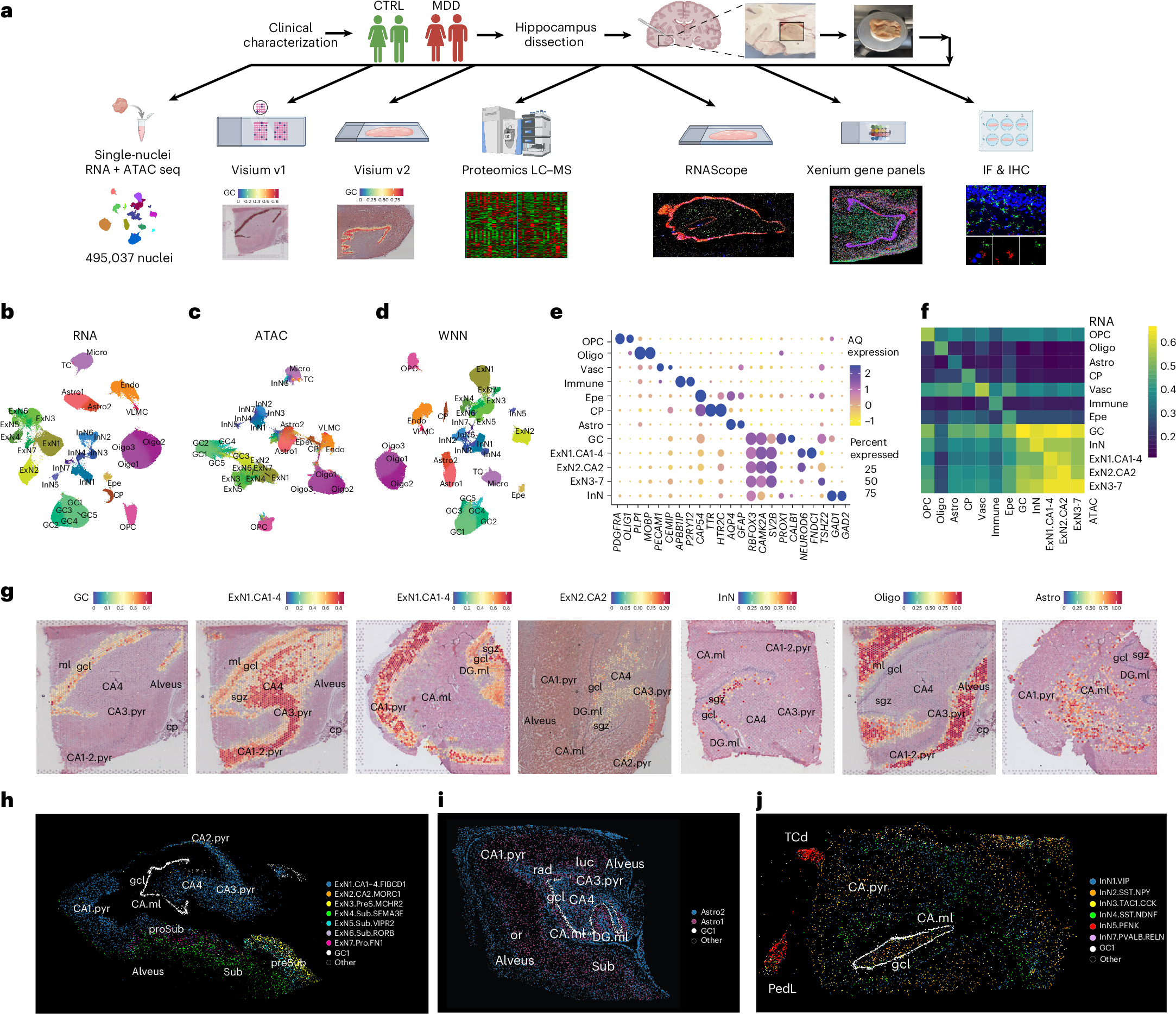
Now, in a landmark study published in Nature Medicine, an international team of researchers has constructed the largest multiomic atlas of the adult human hippocampus to date. By integrating analyses of neurogenic trajectories, cell-type- and subfield-specific gene expression, chromatin accessibility, and protein expression, they provide the most detailed molecular portrait yet of how the hippocampus fails in depression—and where future treatments might intervene.
Mapping the Hippocampus at Single-Cell Resolution
The researchers examined postmortem hippocampal tissue from nonmedicated individuals with MDD and compared it to well-matched controls. Rather than treating the hippocampus as a uniform structure, they focused on the subgranular zone of the dentate gyrus, a niche where new neurons are born throughout life in a process called adult hippocampal neurogenesis. This region has long been hypothesized to be disrupted in depression, but studying it in humans has been technically challenging.
The atlas integrates multiple layers of molecular information:
- Neurogenic lineage trajectories to trace the development of new neurons across stages.
- Cell-type-specific gene expression profiles for excitatory and inhibitory neurons.
- Chromatin accessibility data to understand gene regulatory networks.
- Protein-level expression to confirm findings at the functional level.
This comprehensive approach allowed the team to identify a distinct neurogenic lineage in the adult human hippocampal subgranular zone and examine how it diverges in depression.

Key Findings: A Stalled Neurogenic Process
The central discovery is that neurogenesis appears to be stalled in the hippocampi of individuals with MDD. The normal progression of neural stem cells to mature neurons is interrupted, leading to fewer functional new neurons. This stall is not a single event but involves coordinated changes across multiple developmental stages, from early progenitor proliferation to later neuronal maturation and integration.
The study links this stalled process to specific molecular mechanisms:
- Transcriptional regulation changes that alter the expression of key neurogenic genes.
- Stress-related reprogramming, suggesting that chronic stress leaves a lasting molecular mark on the hippocampus.
- Interferon signaling, a component of the immune system, appears activated across developmental stages, pointing to a role for neuroinflammation.
These findings provide the strongest evidence yet that impaired adult neurogenesis contributes to the hippocampal pathology seen in MDD, and they begin to explain why the hippocampus is smaller and less plastic in depressed individuals.
Molecular Drivers: Stress, Immunity, and Metabolism
Beyond the neurogenic niche, the atlas reveals widespread molecular disruptions in the hippocampal circuitry. Both excitatory and inhibitory neurons show dysregulation of transcription factor networks that control cell states, meaning the basic identity and function of these neurons are altered.
Several interconnected pathways emerge as central contributors:
- Cellular stress: Neurons in MDD appear to be under chronic stress, which may impair their ability to maintain healthy function and plasticity.
- Excitatory–inhibitory imbalance:The fine-tuned balance between excitation and inhibition in the hippocampus is disturbed, a pattern often associated with cognitive deficits and mood dysregulation.
- Impaired synaptic plasticity: The molecular machinery for learning and memory, which relies on strengthening and weakening of synapses, is disrupted.
- Reduced metabolic capacity: Neurons seem to have less energy available, possibly making them more vulnerable to stress and degeneration.
- Immune activation: Gene signatures indicative of microglial activation and inflammatory signaling are elevated, adding to the growing evidence that neuroinflammation is a feature of depression.
Together, these changes underpin the reduced hippocampal circuit plasticity and contribute to the hippocampus-dependent cognitive symptoms—like memory problems and negative memory bias—that are hallmarks of MDD.
Genetic and Epigenetic Regulation Overlaps with Other Diseases
A particularly striking aspect of the study is the finding that the gene expression changes in MDD are driven by both genetic and epigenetic factors. Chromatin accessibility data suggest that the physical packaging of DNA is altered in a way that affects how genes are turned on or off, not just in neurogenic cells but across hippocampal cell types.
The authors also report overlapping pathogenetic mechanisms with other disorders. The same pathways implicated here—immune signaling, cellular stress, and transcriptional dysregulation—are known to play roles in autoimmune diseases, neurodevelopmental conditions, and neurodegenerative disorders such as Alzheimer's disease. This raises the possibility that depression shares fundamental biological roots with other brain illnesses, and that successful treatments may target common mechanisms.
Implications for Therapy and Future Research
These findings open up several promising avenues for new depression treatments. If neurogenesis is stalled, then therapies designed to reactivate the neurogenic process could help restore hippocampal function. The identification of specific regulators, including interferon signaling, provides concrete molecular targets for drug development.
Because the study used tissue from nonmedicated individuals, the results reflect the disease itself rather than the effects of antidepressant medication. This is important for designing interventions that address the root cause of hippocampal dysfunction.
Future research will need to:
- Validate these molecular targets in animal models and in living patients using advanced imaging or biomarkers.
- Determine which of the identified pathways are most amenable to pharmacological intervention.
- Explore whether existing drugs that affect the immune system or metabolism could be repurposed for depression.
- Investigate the causal relationships between the molecular changes and clinical symptoms.

Conclusion: A New Understanding of Depression's Biology
This study marks a major step forward in understanding the pathogenesis of hippocampus-dependent cognitive symptoms in major depressive disorder. By creating the largest and most detailed molecular atlas of the adult human hippocampus, the researchers have shown that neurogenesis is genuinely disrupted in depression and have uncovered the complex interplay of stress, immunity, and metabolism that drives this disruption.
The work not only strengthens the case that adult hippocampal neurogenesis matters in humans but also provides a rich resource for the field. With new therapeutic targets on the horizon, this atlas could guide the development of more effective, biologically informed treatments for the millions of people living with major depression.
This article is based on reporting by Nature Medicine. Read the original article.
Originally published on nature.com