A Landmark Evaluation of Epigenetic Clocks
How reliable are epigenetic aging clocks when it comes to measuring the effects of longevity interventions? A new study published in Nature Medicine takes a comprehensive look at this question, evaluating 16 different epigenetic aging clocks across a broad array of pharmacological and lifestyle interventions. The findings, made available online on August 21, 2026, offer what researchers describe as one of the most extensive assessments yet of these biomarkers’ responsiveness to anti-aging strategies.
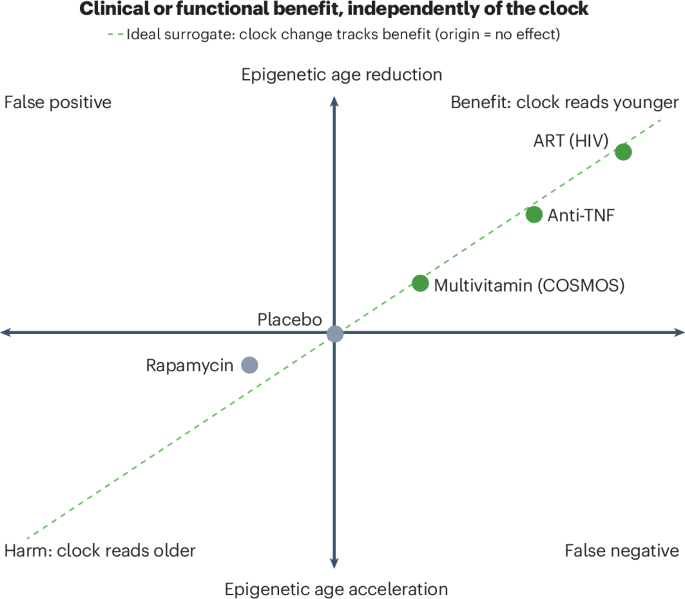
Epigenetic clocks are mathematical models that estimate biological age based on DNA methylation patterns. These clocks have become widely used in aging research as surrogate markers of aging, since they capture molecular changes that correlate with healthspan and lifespan. However, until now, it has been unclear how consistently these clocks respond to interventions aimed at slowing or reversing aging. The new study directly addresses this gap by subjecting 16 clocks to a wide range of interventions, from pharmaceutical compounds to lifestyle modifications.
What Are Epigenetic Aging Clocks?
To understand the significance of this work, it helps to recall what epigenetic aging clocks measure. DNA methylation is an epigenetic modification that affects gene expression without altering the underlying DNA sequence. As organisms age, methylation patterns shift in predictable ways, and scientists have leveraged these changes to build statistical models that estimate chronological age and, in some cases, biological age.
Different clocks have been developed for different purposes. Some, like the Horvath clock, are pan-tissue and designed to estimate age across multiple cell types. Others, such as the Hannum clock, are based on blood samples. More recent clocks, including PhenoAge and GrimAge, incorporate clinical biomarkers to predict mortality risk. Each of these clocks captures distinct aspects of aging, and their responses to interventions can vary. The new study's head-to-head comparison of 16 clocks is therefore particularly valuable for understanding which tools are best suited for clinical trials and preventive medicine.

Comprehensive Testing Across Interventions
According to the article in Nature Medicine, the research team tested the responsiveness of the 16 clocks to a “broad array of pharmacological and lifestyle interventions.” While the abstract and public metadata do not list every intervention included, the study's scope is described as extensive, covering both drug-based approaches and behavioral changes such as diet, exercise, and stress reduction. This suggests the research went beyond single-intervention analyses and instead sought to compare how different types of interventions influence epigenetic aging readouts.
One important aspect of the study is that it likely aggregated data from multiple existing trials or observational cohorts. By pooling diverse datasets, the authors could assess whether the clocks were consistently sensitive to interventions across different populations and study designs. This approach increases confidence in the findings and may help explain why some previous studies have yielded contradictory results when using a single clock.
Implications for Longevity Research
The results of this study have significant implications for the field of longevity medicine. For researchers, the ability to select the most responsive epigenetic clock for a given intervention is crucial for designing clinical trials. If some clocks are more sensitive to lifestyle changes while others pick up on pharmacological effects, a tailored approach could improve the detection of true biological age changes.
From a clinical perspective, having validated biomarkers that respond reliably to longevity interventions could accelerate the approval of therapies and nutritional programs. As interest in anti-aging medicine grows, both among academics and the public, there is a pressing need for surrogate endpoints that can be measured over months or years rather than decades. Epigenetic clocks offer that promise, but only if their responsiveness is well-characterized. This study provides a key step toward that goal.
Comparing 16 Clocks: A Methodological Leap
Most prior analyses of epigenetic clocks have focused on one or a few clocks at a time. By evaluating 16 different clocks in a single framework, the study reduces the risk of cherry-picking results and allows for direct cross-comparison. This is particularly important because the clocks are built on different CpG sites and algorithms, and their outputs can differ dramatically for the same individual.
The authors likely also addressed technical variability, such as batch effects and platform differences, which can confound epigenetic measurements. If the study includes such corrections, it would further strengthen the reliability of the comparative analysis. Even without specific details, the publication in a top-tier journal like Nature Medicine suggests that the methodology underwent rigorous peer review.

What This Means for Consumers
For the general public, the study serves as a reminder that not all biological age tests are created equal. Commercial epigenetic tests are becoming increasingly popular, with companies offering “biological age” reports based on saliva or blood samples. Consumers should understand that the particular clock used by a test may influence the results they see and how those results respond to lifestyle changes.
The new research may lead to better-informed choices among these tests in the future. If certain clocks are shown to be more responsive to lifestyle interventions, consumers who are actively trying to improve their healthspan might prefer tests based on those clocks. Conversely, for individuals simply interested in tracking age-related changes, a more stable clock might be preferable.
Limitations and Future Directions
As with any scientific study, there are limitations that must be acknowledged. First, the number of interventions tested may be broad, but it is unlikely to cover every possible longevity therapy. Second, the clocks’ responsiveness may vary depending on the population studied, such as age, sex, and health status. Third, the study's findings, while informative, do not necessarily establish that changes in epigenetic clocks directly correspond to changes in lifespan or healthspan. Achieving that level of evidence will require long-term prospective studies.
Future research will likely build on these findings by expanding the repertoire of interventions, refining clock algorithms, and integrating multi-omic data. The ultimate goal is to develop a suite of biomarkers that can accurately predict the effect of an anti-aging intervention in a short time window, thereby accelerating the pace of clinical trials and the approval of therapies that promote healthy aging.

Conclusion
In summary, the Nature Medicine study represents an important milestone in the validation of epigenetic aging clocks as tools for longevity research. By examining 16 clocks across a wide range of interventions, the study provides a systematic overview of their responsiveness. While details of the specific results remain under embargo or limited by the available metadata, the very existence of such a comprehensive comparison is a sign of the field’s maturation. As longevity science moves from the lab to the clinic, having accurate and responsive biomarkers is essential, and this study brings us one step closer to that reality.
This article is based on reporting by Nature Medicine. Read the original article.
Originally published on nature.com