XPENG leans into a technology-company identity
XPENG’s latest announcements suggest the Chinese automaker wants investors and the broader market to judge it on more than vehicle deliveries. In a recent update summarized by CleanTechnica, the company linked its second-quarter financial results with progress in what it calls physical AI, including work on its IRON humanoid robot, its VLA 2.0 intelligent driving platform, and a broader push into software and technical services.
The immediate financial picture is mixed but notable. XPENG reported second-quarter revenue of $2.91 billion, up 8.0% year over year and 51.5% from the first quarter, according to the source text. Gross margin reached 20.7%, compared with 17.3% in 2025. At the same time, vehicle margin fell to 12.1%, down from 14% a year earlier, and the company posted a net loss of $200 million.
Those figures point to a company in transition. Higher revenue and stronger overall gross margin indicate momentum, but the lower vehicle margin and continued losses show that expansion into advanced software and robotics is not yet translating into clean operating leverage. The core question is whether XPENG can turn technology spending into durable, higher-margin business lines before competition and capital intensity catch up with it.
Services, not just cars, lifted the quarter
One of the most important details in the source text is that a large share of XPENG’s improved gross margin came from services rather than from its vehicle business. CleanTechnica reported that the bulk of this services revenue came from technical R&D services provided to Volkswagen Group. That matters because it changes the story investors might tell about XPENG.
Automakers are often valued on manufacturing scale, pricing power, and efficiency in producing and selling vehicles. A company that can also sell technical development capability to another major automotive group has a different profile. It begins to look less like a company simply trying to win market share in electric vehicles and more like a company attempting to monetize software, engineering, and platform expertise across the industry.
That distinction helps explain why the company’s technology narrative is now central to its financial narrative. If services and software collaboration are becoming meaningful sources of margin, then XPENG’s research programs are not just future bets. They are increasingly tied to present-day commercial output, even if that output is still small relative to the scale of its automotive business.


R&D spending is buying capability, but also losses
The downside of that strategy is visible in the bottom line. The source text says most of XPENG’s $200 million net loss in the quarter was due to a 35% increase in R&D expenditure. Administrative and selling costs also rose, driven largely by global expansion and multiple new model launches.
That combination is familiar in high-growth technology companies and difficult in auto manufacturing. Heavy spending on engineering, market entry, and launches can make sense if it accelerates product maturity and locks in future demand. But it also leaves little margin for execution mistakes. In XPENG’s case, the company appears to be accepting near-term losses in exchange for a stronger long-term position in intelligent driving, robotics, and services.
The important point is that this is not simply a story about demand softness or operational weakness. Based on the provided text, the quarter’s losses were strongly connected to deliberate investment. Whether that proves wise will depend on how quickly XPENG can convert those programs into products that scale economically and whether its technology differentiation remains clear in a crowded market.
VLA 2.0 is central to the thesis
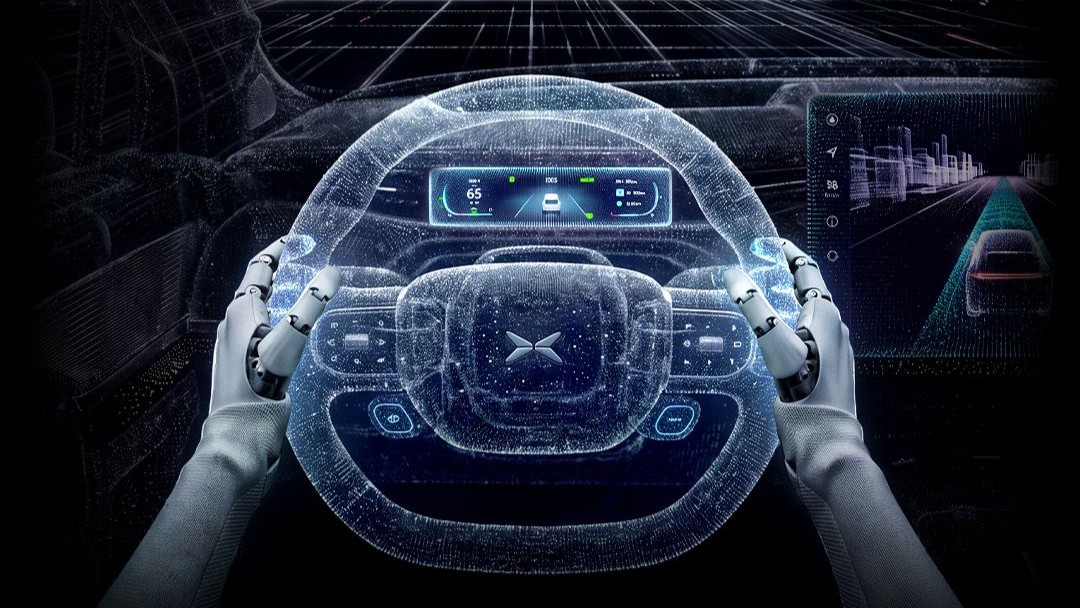
Alongside the financial results, XPENG announced what CleanTechnica described as the first major upgrade since the release of VLA 2.0. The new version, identified as 6.3.0, is expected to roll out as an over-the-air update in the coming weeks.
The article frames that update around a practical engineering challenge: intelligent driving systems must improve in ways that remain safe, reliable, and responsive while still operating within the latency, computing-power, and power-consumption limits of existing hardware. That is a critical point because advanced driver software only creates broad value if it can run effectively on deployed vehicles rather than requiring constant hardware replacement.
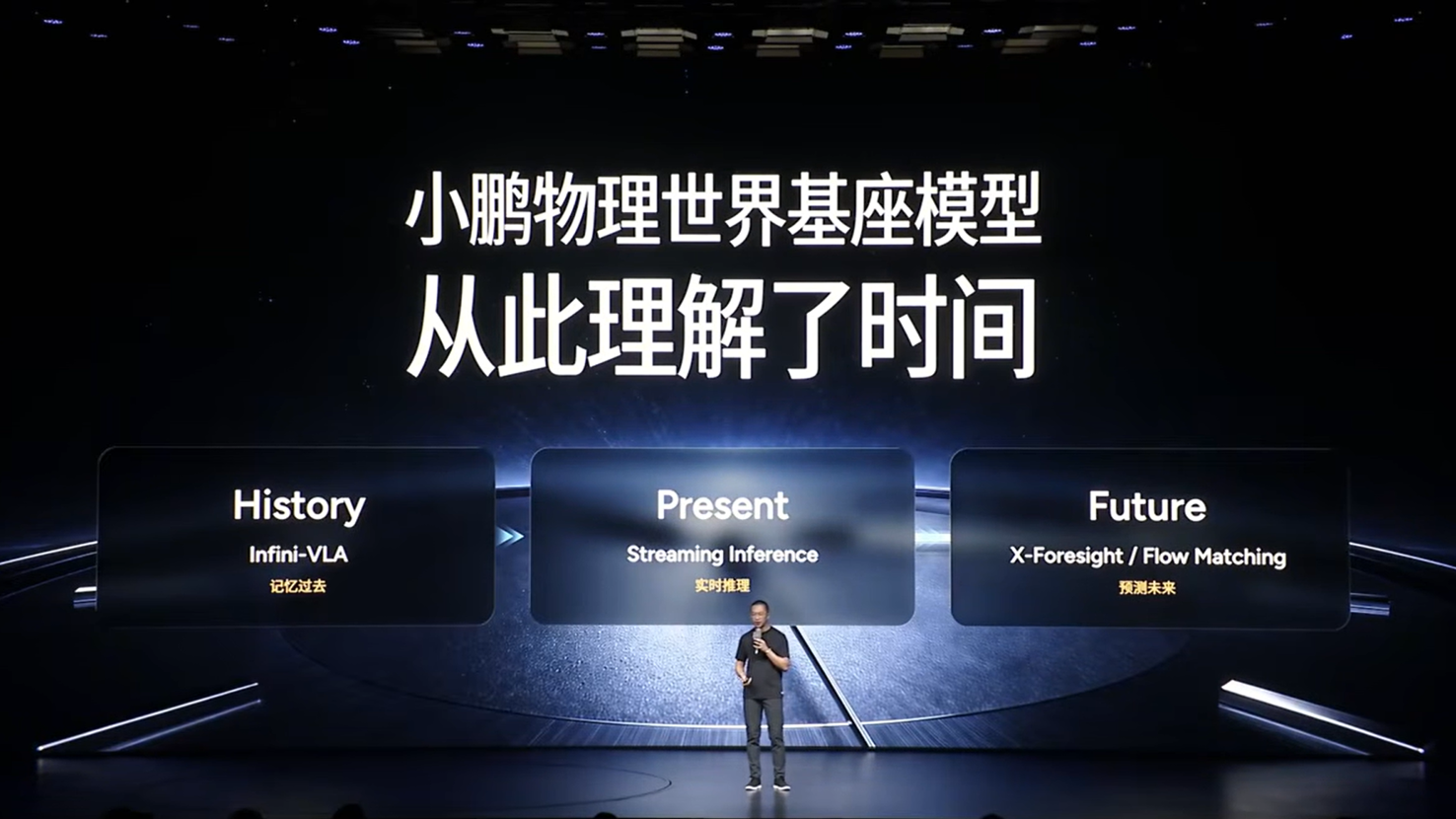
CleanTechnica says the updated VLA 2.0 model incorporates time in addition to spatial understanding, describing it as perceiving in four dimensions. Even with the provided source text truncated before the full technical explanation, the implication is clear enough to support a conservative interpretation: XPENG is trying to improve how its system understands motion and change over time, not just static objects around the vehicle.
That matters because real-world driving is a prediction problem as much as a perception problem. A system that better tracks what is likely to happen next can potentially make smoother and safer decisions. XPENG is therefore positioning VLA 2.0 not as a marketing feature refresh, but as a meaningful architecture upgrade inside its intelligent driving stack.
Physical AI extends beyond the vehicle
The broader framing around physical AI is also significant. The source text says XPENG has highlighted developments related to its IRON humanoid robot in the same stretch of announcements as its intelligent driving update and financial results. Even without detailed technical disclosures in the excerpt provided, the company’s messaging shows an effort to connect robotics and automotive autonomy under one strategic umbrella.
That is an ambitious positioning move. It suggests XPENG sees its future not only in electric cars, but in embodied systems that perceive, decide, and act in the physical world. For now, the article makes clear that many of these developments have not yet been realized in revenue or profits. The company is still asking the market to believe that these capabilities will become commercially meaningful later.
That gap between narrative and monetization is the main risk. Robotics and advanced autonomy attract attention, but investors eventually want evidence that research programs can support margin, cash flow, and repeatable product advantage. XPENG’s own numbers show it is not there yet.
What the quarter really shows
The most grounded reading of XPENG’s recent announcements is that the company is building a hybrid identity. It remains an automaker with the cost pressures, launch expenses, and margin volatility that come with that business. But it is also trying to become a supplier of high-value technical services and a developer of software and embodied AI systems that may command stronger economics over time.
The second quarter gives both sides of that argument. Revenue growth and stronger gross margin support the idea that the strategy has traction. Falling vehicle margin and a sizable net loss show the transition is expensive and incomplete. The Volkswagen-linked services revenue offers one concrete sign that XPENG’s technical capabilities already have external value. The VLA 2.0 update shows the company is still pushing aggressively on the software side.
For now, XPENG’s physical AI story is less about proven transformation than about the shape of a company in the middle of one. The next few quarters will matter because they will show whether software, services, and autonomy can keep growing into something large enough to change the economics of the business, rather than simply adding to the cost base.
This article is based on reporting by CleanTechnica. Read the original article.
Originally published on cleantechnica.com