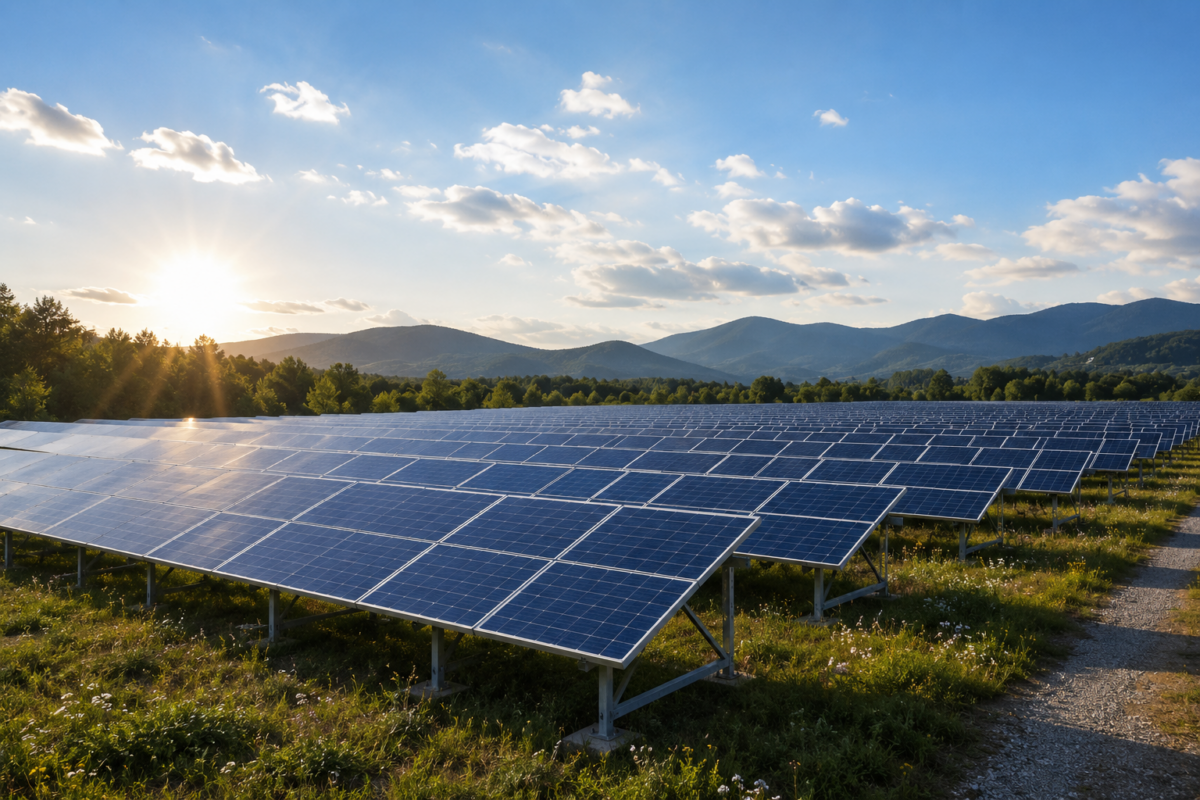
A global review points to measurable local climate effects
Solar power plants are designed to transform sunlight into electricity, but a new systematic review suggests they also reshape the environmental conditions around them in ways that are increasingly measurable. According to research highlighted by pv magazine, a China-based team reviewed 147 studies covering 609 photovoltaic installations worldwide and examined how solar projects affect 11 climate-related variables tied to land surface processes.
The result is not a simple story of harm or benefit. Instead, it is a more complicated picture in which solar PV systems produce mixed but often significant changes in the environments where they are built. The review found reductions in wind speed, albedo, and land-surface or soil temperatures, along with increases in soil moisture. By contrast, changes in air temperature were reported as largely non-significant.
That matters because utility-scale solar is expanding quickly across deserts, agricultural regions, industrial sites, and other large land areas. As deployment grows, so does the need to understand not only how much electricity these systems generate, but also how they alter the land-atmosphere interactions of the places they occupy.
What the researchers looked at
The study described in the source text set out to answer three broad questions: which climate variables are affected by PV-driven land surface changes, at what scales those changes occur, and what mechanisms might explain them. To get there, the researchers started with 4,909 publications related to PV systems and land processes before narrowing that body of work into the meta-analysis.
The breadth of the dataset is notable. With 609 installations included across the reviewed literature, the analysis reaches far beyond one region or one project type. That scale gives the findings weight because it suggests the observed effects are not isolated curiosities but patterns showing up repeatedly across many installations and study contexts.
The most consistent findings point to PV arrays as a structural modifier of near-surface conditions. Panels intercept sunlight, cast shade, alter airflow, and change how the ground absorbs and releases heat. In aggregate, those changes can influence temperature, reflectivity, evaporation, and moisture retention around the site.

Why reduced wind and higher soil moisture stand out
Two of the most intriguing results are reduced wind speed and increased soil moisture. Lower wind speeds around PV installations are plausible because arrays physically obstruct airflow and alter turbulence near the ground. That, in turn, can influence evaporation and heat exchange.
Increased soil moisture may sound surprising in installations often associated with hot, dry, sun-rich locations, but it fits the logic of shading and altered surface energy balance. If the ground beneath and around panels receives different amounts of radiation and experiences less evaporative loss under some conditions, moisture can persist longer. The review suggests this effect appears strongly enough across the literature to register as a meaningful global pattern.
Those findings could have practical implications for how solar farms are managed. Site vegetation, dust control, soil stability, and ecological restoration strategies may all be shaped by a better understanding of these microclimatic effects. In some contexts, higher soil moisture could support ground cover or reduce erosion risk. In others, altered conditions might require new land-management approaches.
Not all temperature effects are equal
One important takeaway from the review is that not every temperature metric moves in the same direction. The source text says land-surface and soil temperatures tended to decline, while air temperature changes were largely non-significant. That distinction is important because public discussions about large solar developments sometimes blur the difference between ground-level thermal effects and broader atmospheric warming.
The review instead points to a more nuanced thermal footprint. Solar plants can cool some surface measures while not necessarily producing a strong or consistent change in the air temperature readings people usually associate with local weather. That does not mean the installations are environmentally neutral. It means their effects operate through several physical pathways, not one simple heat story.

Why this research matters now
As solar moves from a niche technology to a dominant infrastructure class, second-order effects become first-order planning questions. Land-use conflicts, biodiversity concerns, agricultural compatibility, and water management are all increasingly part of the clean-energy buildout. Research like this helps move debate beyond slogans by identifying what solar infrastructure is actually doing on the ground.
It also creates a stronger basis for future project design. If developers and regulators know that PV arrays can reduce wind speed, alter reflectivity, cool soils, and increase moisture, they can test layouts, vegetation plans, and maintenance practices against those realities. Over time, the industry may be able to optimize not just for kilowatt-hours, but also for land stewardship and local environmental performance.
The authors also framed the work as a map for future research directions. That is appropriate. A meta-analysis can identify broad signals, but it cannot settle every site-specific question. Climate zone, panel spacing, elevation, soil type, vegetation, and installation design are all likely to matter. What the review does provide is a strong indication that PV systems are active participants in land-surface processes, not passive additions to them.
The next phase of solar maturity
For years, the central question around solar was whether it could scale. In many markets, that question has largely been answered. The next phase is more refined: how can solar scale well? Studies like this one show why the answer depends not only on module efficiency and grid integration, but also on ecological literacy.
Photovoltaic plants remain a crucial tool for decarbonization. But the new review underscores that the clean-energy transition is also a land transition. Understanding how solar infrastructure changes wind, moisture, temperature, and reflectivity at the surface will be essential to building projects that are both productive and environmentally intelligent.
This article is based on reporting by PV Magazine. Read the original article.

Originally published on pv-magazine.com