A month of normalization after a bright March
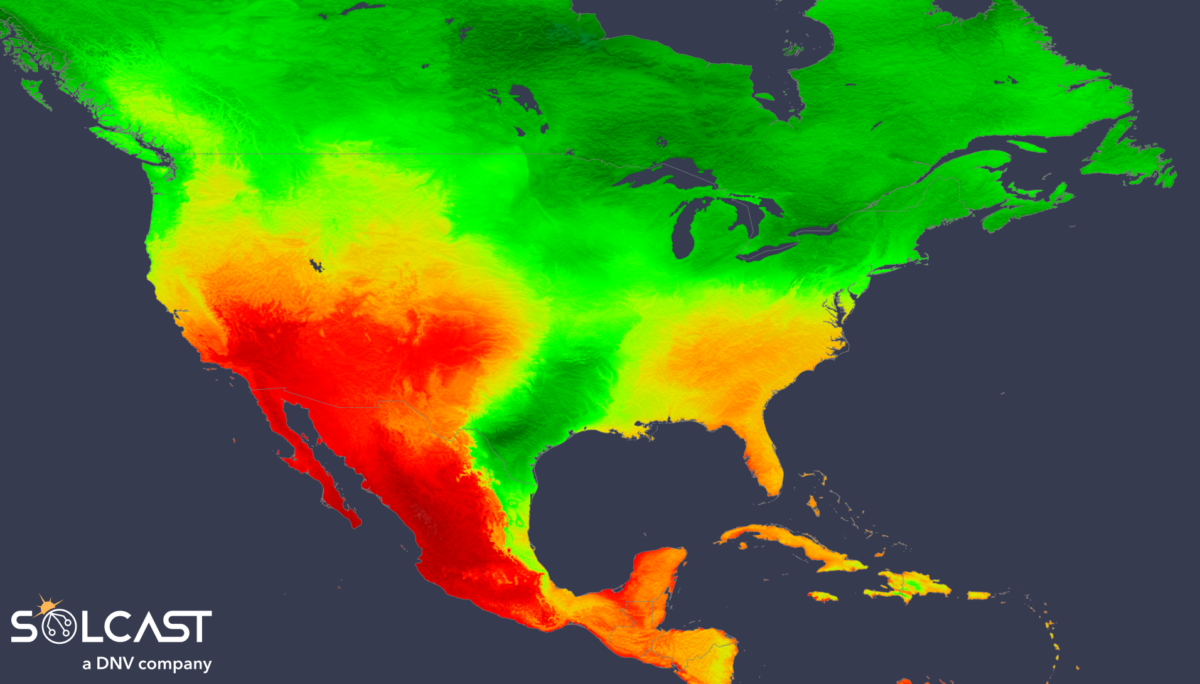
April 2026 marked a clear reversal in North American solar conditions after March’s widespread high irradiance. According to Solcast analysis reported by pv magazine, weakening high-pressure systems over both the Atlantic and Pacific brought more cloud cover into the western United States and pulled conditions there back toward long-term averages.
That shift may sound modest, but it matters for a sector that increasingly depends on precise forecasts and weather-linked production planning. When irradiance swings from one month to the next, generation expectations, grid balancing, and short-term market assumptions can move with it.
The April pattern was not uniform across the continent. While the western U.S. lost the unusually favorable conditions seen in March, the eastern states remained sunnier and warmer than average. Canada stayed under cold, cloudy conditions linked to polar vortex disruptions, and coastal Texas posted significantly reduced irradiance because of tropical moisture and heavy rainfall.
What changed in the atmosphere
The report attributes the month’s solar pattern to the breakdown of paired high-pressure systems that had dominated both coasts earlier. In March, those systems supported widespread irradiance highs across North America. In April, their weakening produced a more mixed outcome.
For the western U.S., that meant a return to more ordinary cloud cover and a normalization of solar conditions. In Mexico, earlier sunshine gains were effectively neutralized. The eastern U.S., by contrast, retained an above-average brightness pattern even as the Atlantic high weakened.
This is the kind of atmospheric change that illustrates why monthly solar performance cannot be judged solely from seasonal assumptions. Broad regional trends can flip quickly when pressure systems reorganize.
Why this matters for the solar industry
For project operators and grid planners, average conditions are not inherently bad. In some cases, a return to climatological norms can actually simplify expectations after an unusually strong month. The problem is not average weather. The problem is volatility relative to what was recently observed or forecast.
After a high-irradiance March, some market participants may have been primed for continued strength. April interrupted that pattern, especially in the western U.S. That kind of swing can affect short-term revenue expectations, operational planning, and the interpretation of asset performance.
Weather normalization also matters for how the industry communicates output trends. A drop from one month to the next may reflect changing cloud patterns rather than a deterioration in system performance. Distinguishing those factors is essential when fleets grow large and regional comparisons become more important.
Canada and coastal Texas stood out
Two areas in the report deserve special attention because they highlight different sides of weather risk. Canada remained under persistent cold and cloudy conditions tied to disruptions of the polar vortex. That is a reminder that high-latitude solar variability can remain heavily influenced by large-scale circulation patterns even outside the winter core.
Coastal Texas, meanwhile, saw significantly reduced irradiance because of tropical moisture and heavy rainfall. For a state with major solar expansion and growing grid relevance, such conditions matter not only for plant output but also for system planning in a region already balancing complex weather and demand interactions.
The contrast is instructive. One area was shaped by lingering cold-cloud dynamics from the north. Another was affected by moisture-heavy weather from the south. Both ended up with weaker solar conditions, but for different meteorological reasons.

The East-West split is operationally useful
The eastern United States staying sunnier and warmer than average while the western U.S. moved back toward normal is more than a weather footnote. It underscores the value of geographically diversified solar portfolios.
When one region underperforms relative to a prior month, another can sometimes offset part of that weakness. That does not eliminate risk, but it changes how developers, utilities, and power traders think about regional exposure.
It also reinforces the importance of high-resolution forecasting tools. As the report notes, the findings were based on analysis using the Solcast API. In a maturing solar market, the quality of irradiance intelligence increasingly shapes operational decisions as much as panel hardware does.
A reminder that climate signal and monthly weather are not the same thing
One of the easiest mistakes in clean-energy discussion is to blur long-term climate trends with short-term monthly weather outcomes. April’s reversal is a useful reminder that even in an expanding solar economy, output conditions can move sharply from month to month because of ordinary atmospheric variability.
That does not weaken the case for solar. It strengthens the case for better forecasting, better storage integration, and better planning around variability. Solar systems do not operate in a static sky. Their value depends partly on how well grids and operators manage the changing conditions above them.

What the April data suggests going forward
The main takeaway from April 2026 is not that solar conditions turned poor across North America. It is that the continent moved from a broadly favorable, high-irradiance setup in March to a more mixed and regionally differentiated pattern one month later.
That kind of reversion can have real business consequences, especially when output expectations are set by exceptionally bright prior periods. It also shows why weather analysis remains central to the economics of solar deployment.
As North American solar capacity keeps rising, these regional swings will matter more, not less. Operators will need sharper tools to separate true performance issues from atmospheric noise. Investors will need to read monthly production signals with more discipline. And grids will need to absorb the fact that renewable variability is shaped as much by shifting pressure systems as by installed megawatts.
April’s solar reset was not a crisis. It was a clear demonstration that the weather can quickly rewrite the short-term story, even in a market growing on strong long-term fundamentals.
This article is based on reporting by PV Magazine. Read the original article.
Originally published on pv-magazine.com