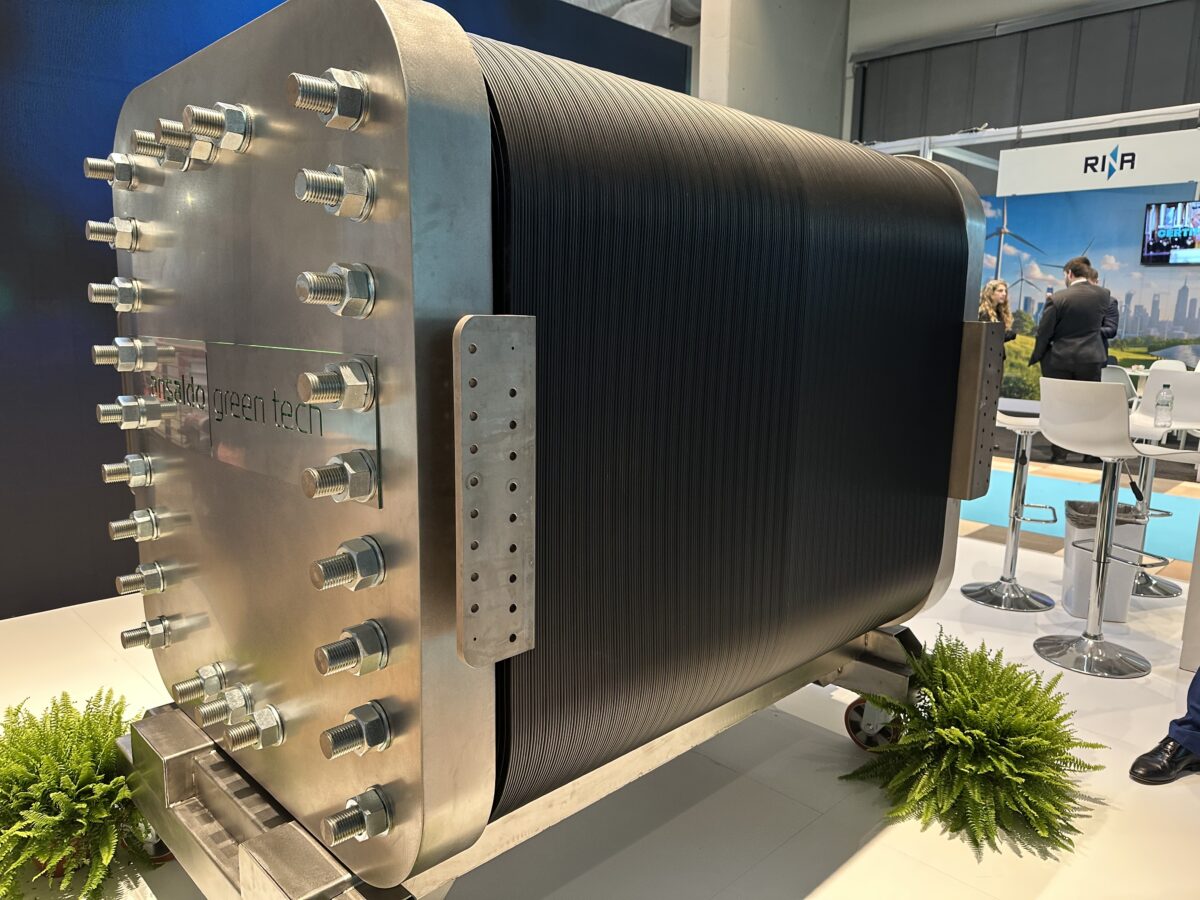
Europe expands its next round of hydrogen support
The European Commission has awarded support to nine clean hydrogen projects in the third auction run through the European Hydrogen Bank, allocating 1.1 gigawatts of electrolyzer capacity and earmarking 1.09 billion euros in funding. The result, announced after an oversubscribed bidding round, gives the clearest new signal yet that Brussels intends to keep using production subsidies to push the market forward.
The auction, launched in December, drew 58 bids from 11 countries. That gap between applications and awards is one of the most important details in the outcome. It shows that despite cost pressures and uncertain end-market demand, developers across Europe still see value in competing for long-term support tied directly to hydrogen output.
For policymakers, the logic is straightforward. The Commission said the subsidy is meant to cover part of the gap between production costs and the market price of hydrogen. In other words, the program is designed to keep projects moving in a market that still struggles to make clean hydrogen competitive without public backing.
What the auction selected
The winning portfolio spans seven countries and will receive fixed production premiums for certified and verified hydrogen. According to the Commission, the support will run for a maximum of 10 years once grant agreements are signed. The announced premium range for the selected projects runs from 0.57 euros to 3.49 euros per kilogram of hydrogen produced.
PV Magazine reported that the lowest bid in the auction came in at 0.44 euros per kilogram. That figure matters because it points to intense competition at the low end of the market, even if the final awarded support band extended higher. Taken together, the numbers show that Europe’s hydrogen sector is not moving in a straight line. Some projects appear able to bid aggressively, while others still require much larger support levels.
That spread is a reminder of how uneven the economics of hydrogen remain. Project location, electricity supply, industrial demand, infrastructure access, and financing terms can all change the cost profile dramatically. The auction results do not erase those differences. They formalize them.
A policy tool for a market that is not mature yet
The European Hydrogen Bank is effectively serving as a bridge between political ambition and commercial reality. Europe wants to scale clean hydrogen production, but the market still faces the classic early-stage problem: the cost of producing the fuel does not reliably match what buyers are prepared to pay. By offering a fixed premium, the Commission is trying to reduce that mismatch long enough for capacity to come online.
This makes the auction more than a funding exercise. It is a market-shaping instrument. The Commission is not simply choosing individual projects; it is using public money to set a framework in which producers can plan around more predictable revenue.
The oversubscription underscores the continued importance of that approach. If 58 bids arrived from 11 countries and only nine projects were selected, developers are still willing to compete hard for this kind of certainty. That does not necessarily mean the sector is healthy on its own. It does suggest that subsidy design is becoming one of the decisive variables in who builds and who waits.
What falling bids may indicate
The headline-grabbing detail in the latest round was the low bid level. A 0.44 euro per kilogram offer suggests that at least some developers believe they can operate with much thinner support than others. That may reflect confidence in project design, favorable local power conditions, or expectations about future offtake. Whatever the cause, it indicates that parts of the market are testing lower-cost pathways.
At the same time, the awarded range reaching up to 3.49 euros per kilogram shows that the sector is still far from uniform. Europe is not yet dealing with a single hydrogen market in which one benchmark price defines bankability. It is dealing with a portfolio of projects that sit on very different economic foundations.
That diversity cuts both ways. On one hand, it can help Europe develop hydrogen production across multiple regions and business models. On the other, it makes it harder to claim that scale alone will quickly solve the cost problem. Public support remains central, and the latest auction confirms that policymakers accept that reality.

The next test is delivery
The real measure of success will come after the awards. Developers now need to move from winning bids to signed grant agreements and then to actual hydrogen production. The Commission’s support structure can improve project economics, but it cannot by itself guarantee timely execution. Electrolyzer procurement, power sourcing, permitting, and downstream demand all still matter.
Even so, the third auction marks a notable step for Europe’s clean hydrogen agenda. It adds another 1.1 gigawatts of backed electrolyzer capacity to the pipeline and shows that interest remains strong enough to keep competition active. The funding size, the number of participating countries, and the spread in bid levels all point to a sector that is still being built in real time rather than one that has settled into stable commercial patterns.
For now, that may be the clearest takeaway. Europe is still using public auctions to create the conditions for a hydrogen market that does not yet fully stand on its own. The latest round suggests that strategy is drawing strong participation, but it also makes clear that the path to large-scale, cost-competitive clean hydrogen remains uneven.
This article is based on reporting by PV Magazine. Read the original article.
Originally published on pv-magazine.com